Beautifully Briefed 26.5: May All Things Be Grand

Design is grand; illustration and type are grand, too; the new BMW Alpina is a grand tourer extraordinaire; and space photography is grand indeed. Only Adobe, unfortunately, is the outlier, but on balance, a grand sendoff to Spring.

Please note: WordPress has transitioned to version 7, and in the process broken some of Foreword‘s style sheets. Apologies for the slightly uneven appearance — I’ll fix it as soon as I can.

This month’s Spine
University of Chicago Press.

I inked as many jokes as I could — penishment, one could say — but the University Presses column is still worth a read when you have a moment.

Painting Book Covers

Hyperallergic comments, “In a market flooded with design templates and AI-generated imagery, the painted cover stands out as distinctly human.” Which, they suppose, is why when you “[w]alk into any bookstore in the United States lately, […] the shelves and new-release tables resemble group exhibitions.”

Cover design by Rodrigo Corral Studio. (A 2025 Favorite Book Cover here on Foreword, too.)

The recent shift from color fields and geometric abstraction to gestural figuration on book covers may reflect a broader craving for embodiment and physical presence — proof, in other words, of the artist’s hand and subjectivity in the era of the internet. Just as painting implies time, so does the novel, demanding sustained attention to both write and to read. It’s a tension that undermines the forces driving creation and consumption in the service of ever-increasing profit margins, both in the art market and the publishing industry.

— Tara Anne Dalbow, Hyperallergic
Cover design by Jaya Miceli.

Regular readers will know this isn’t a new thing, but I think the post — whose author is much more likely to be familiar with social media and bigger-picture trends than I am — is correct in the notion that, “the painted cover seemingly aligns the book with an art-historical lineage rather than the curation of an algorithmic feed.”

Aside from misspelling Jaya Miceli’s name, there’s lots of good stuff in the article. Take a look.

Note: I hadn’t seen I Am You before, and am disappointed to have missed this great cover … that would absolutely have been in running for the 2025 Favorite Book Covers. Apologies.

Speaking of Great Book Design: Jenny Volvovski

In 2012, Jenny Volvovski “really wanted to design book covers but didn’t have any book cover work. So I hired myself to redesign my personal library.” An interesting approach, to be sure:

A small selection of items from Volvovski’s unsolicited covers collection.

That, as it turns out, has worked very well for her — she’s now amongst the elite:

Cover design by Jenny Volvovski. Was a finalist — but not selected — for my 2025 Favorite Book Covers.

“Yeah,” I hear you say, “but that’s only a runner-up.” Okay:

Cover design by Jenny Volvovski. One of my 2025 Favorite Book Covers.

In addition to the above, Beethoven, The Novel and the Blank, and The Master of Contradictions are among several that fall into the outstanding category; see many more in the “published” section of her website.

Enjoy! (Prompted by Kottke.)

Fantastic Early 20th-Century Movie Posters, and More

Eric Rohman wasn’t a name I was familiar with — he’s Swedish, so I suppose there’s an excuse — but the great design transcends not only the language barrier but the years, as well:

Poster design by Eric Rohman, 1918.

“Eric Rohman (1891–1949) was born in Nyköping and grew up in Helsingborg. He was one of the very few people in Sweden who could make a living by only producing posters. He produced about 7,000 works, according to his own estimate. 

“Rohman’s brother was the manager of one of the big cinema chains and the need for posters was great. Rohman usually worked with few colors and did not spend much time on details, he had a great ability to quickly pick out the essentials.”

Poster design by Eric Rohman, 1917.

From Laurel and Hardy and Charlie Chaplin to Ingrid Bergman and Greta Garbo, this online archive is both inspirational and sure to bring a smile to your face.

When you’re done, the site, Artvee, has countless more from artists worldwide, in hi-res where possible, all in the public domain. A fantastic resource.

(Another via Kottke.)

Special bonus #1: Quentin Blake, at 93, continues to advocate “for a discipline that’s lacked attention and prestige for far too long,” CreativeBoom writes.

Photograph courtesy of CreativeBoom.

The master illustrator of Roald Dahl’s Matilda, The BFG, and around 500 more instantly-recognizable titles has been working on a singular goal for more than three decades; the fruit of his labor, The Quentin Blake Centre for Illustration, “the world’s largest permanent public space dedicated to illustration,” opens its doors in Clerkenwell, London, this summer.

One of the famous cockatoos gifted to the world by Quentin Blake.

Update, 6 June 2026: Dezeen has a great article on both the Center and its facility: “The site, known as New River Head, was once the end of an artificial river created in the early 1600s to channel drinking water into London,” they write.

Facility by Tim Ronalds Architects. Photograph courtesy of Dezeen.

“Many of the structures on the site were created as part of the endeavour to pump this water to people’s houses. The oldest of these was the base of a windmill dating back to 1707, which stands at the entrance to the museum’s site and has been converted into a gallery space for temporary exhibitions.” Check it out.

This Month’s New Fonts

CreativeBoom‘s monthly feature has twelve choices, a couple of which I’d love to have the opportunity to use.

Ardent, by Typofounderie
Ardent, by Typofonderie.

“Jean François Porchez began designing Ardent in January 2021, starting from his earlier Le Monde Journal and asking what that typeface would need to become to serve modern screen reading. The answer involved drawing wider letterforms and more open counterforms, following the research of Ladislas Mandel and Matthew Carter on legibility and apparent size. Serifs in the italics (an unusual, but actually sensible choice) serve readability on screen, rather than print conventions. […]

Ardent’s ”angular counters,” as they call them, do stand out.

“More broadly, the font draws on a rich historical lineage: Elzevirs, Albertus, Vendôme, Meridien, even Verdana. Angular and triangular shapes sit alongside round terminals and both bracketed and unbracketed serifs, creating what Jean describes as a typeface that reveals subtle contrasts invisible at small sizes but gives graphic projects a distinct identity at large ones.”

Have to emphasize: unlike my usual selections, this is aimed at screens, not the printed page. Still, good stuff.

Tareco, by Dalton Maag
Tareco, by Dalton Maag.

“Deiverson Ribeiro’s pulled off something a bit special here. Developed at Dalton Maag, Tareco takes the beloved sweet treat of the same name as its starting point. This is not a polite, restrained script, but one with a loud, confident personality. Thick, confident strokes and precise details give these letterforms a jazz-like syncopation: a sense of forward propulsion and playful energy that helps to bring designs to life on the page.”

And seriously: who doesn’t love a biscuit?

Software Woes, Rants and Hopes
Part One: Adobe

I’ve not had much good to say about Adobe recently, I’ll admit. I’m also not thrilled to be back, bemoaning something else. It’s a shame they’ve given me another reason to.

Recently, I’ve noticed that in Photoshop, the “canvas size” dialog (among others) has looked … well, off. Windows-like, even, which is most assuredly not a compliment. But on a more fundamental level, it’s broken — it has, to use the parlance, lost its focus sequence: the standard workflow of open dialog, type a value, tab, type, enter (no mousing required) is just gone. Each value has to be manually selected and entered, a much more arduous process — it’s additional movement, clicks, and time unnecessarily added.

The old interface is on the left, “new” on the right. Screenshot courtesy of Unsung.

You can bet I’m not the only one to have noticed.

Marcin Wichary, at the excellent Unsung:

I generally avoid such harsh labels on this blog, but: this is awful work

I’m angry. (Clearly.) We should all be angry in the face of stuff like this. This is how people get fed up with software – because it feels unstable and deteriorates on its own without needing to. 

I know I brought up that an existing power user base can be a huge pain in the ass, and I am a decades-old Photoshop power user. But this is different than other examples where the product needs or at least wants to evolve past its core audience or toward a different market. For Photoshop here, nothing I see indicates any change in course or clientele – and yet all of these good moments in UI that used to help me out no longer exist.

Plus, all those transgressions are solved problems. Those issues are not buried in pages of heavily litigated patents, or in seven collective brains of world-class interface designers whose driveways are presently occupied by cash-filled trucks sent over by frontier companies. This isn’t some long lost art that requires archaeologists to decipher. This feels like carelessness and laziness in face of basic UI engineering; in a likely internally-motivated effort to refresh the interface, the team threw an entire nursery worth of babies [out] with the bathwater.

— Marcin Wichary, Unsung

“It’s not just about disservice to craft. It’s not even about disrespect for change management, trivialization of institutional memory, and disinvestment in quality assurance. This isn’t only […] sloppy coding,“ he continues. “This is a failure of imagination.”

Jason Snell, at Six Colors:

I have been using Photoshop since John Sculley was the CEO of Apple. Longtime users can be brutally resistant to change, but I would like to think that I remain open-minded. One can’t have used Photoshop for more than three decades without having adapted to change and found utility in the new features Adobe has added over the years. I’ve used generative fill. I’ve used AI-enhanced edge detection. I’m hip and with it.

But, as Wichary detected, what Adobe is doing with the Modern User Interface is not to make a new, improved, modern interface. Adobe’s own description gives it away: It’s a hammering of all of Adobe’s user interfaces so they look alike, across Creative Cloud. It’s a “multi-platform design system,” which means in addition to Adobe being committed to “modernizing” Photoshop by making it look like Premiere, it’s also going to make it look the same on the Mac as Windows.

Already, Photoshop desperately wants to run in single-window mode, with multiple documents opening in a single uberwindow—in other words, the stink of Windows. Fortunately, you can turn that feature off, and I have. […]

That all said, of course, this decision could benefit Photoshop users, because Adobe could put in the work to make the app better while also fulfilling its own corporate goals of homogeneity.

Ha ha ha. Sorry. I tried to write that with a straight face.

— Jason Snell, Six Colors

It gets worse. Nick Heer, he of PixelEnvy, noted:

If you do a little poking around in Adobe’s application bundles, a key reason for the jankiness of these user interfaces becomes apparent: it is because they are little webpages. These dialog boxes are HTML files that reference a chunky CSS file and oodles of JavaScript […].

This is loathsome.

There are people out there who will insist it is unfair to blame the tools and that bad user interfaces can be built in entirely native languages, too, which is true. Also, Adobe’s interface has always been unique and not quite at home on either MacOS or Windows. Maybe it really is possible to build a web app that feels platform native. But I have never used one — not once — and for this mess to be increasingly used in the industry-standard professional suite of creative tools is maddening.

— Nick Heer, Pixel Envy

John Gruber, on Daring Fireball, notes that, “The before-and-after screenshots look like examples from a lecture on user interface design  —  if you swap them around make the new ones ‘before’ and the old ones ‘after’. Better balance, better focus behavior, appropriate platform-native typography.”

Michael Tsai has a post on the whole “conversation” if you’d like to get a sense of just how many people are upset; for what it’s worth, it includes a comment from Adobe’s “Lead Scientist” for user interface: “These sharp edges are acknowledged, and we are working on them.” I’m sure I’m not the only one who doesn’t entirely trust their reassurances.

Wichary did provide a solution, however temporary: turn off the interface “improvements.” There’s an option buried in the settings:

Uncheck the box, then note the last line.
Part Two: Folklore

The hope part: Gruber followed up with a thought-provoking piece called, “Software as the Product of Obsession Times Voice.” He reminds us of a famous quote from Walt Disney — “We don’t make movies to make money; we make money to make more movies” — and that it applies to software development, especially for independents. To wit:

It feels like the world of software is bifurcating quality-wise. This whole thing about Adobe’s new craptacular “modern” UI language (a.k.a. “Spectrum”) exemplifies one side of that bifurcation — the bad-and-getting-worse side. Software that is the product not just of an ignorance of long-established principles of interaction design, but of a willful disdain for those principles. What Adobe is now shipping is just inexplicably bad UI, ignoring literally decades of great work and long-mastered concepts — a lot of which work was pioneered by Adobe itself!

— John Gruber, Daring Fireball

He goes on to discuss that what’s expected from Apple is “insanely great,” and that Adobe is failing so hard precisely because they’re Adobe and know better. He also mentions a concept known as software brain — read the post to get that — but, in a nutshell, it’s not about the quality of the software. It’s about the quality of the profits. Quelle surprise.

However, “[t]he other side of the software fork is not deserted. It’s just populated, more than ever, by the products of small independent developers who obsess, first and foremost, over quality and artistic vision.”

Which leads us to Folklore. Mentioned on Upgrade’s Apple 50th anniversary podcast episode, Folklore is a list of 123 great stories from Apple’s early days, from when Apple was that company obsessing, first and foremost, over quality and artistic vision.

Great stuff. Wander through the list at your leisure — and revel in the glory days.

Never doubt that a small group of thoughtful, committed people can change the world. Indeed, it’s the only thing that ever has.

— Margaret Mead

Special bonus #2: Taken, a single webpage that shows just how much information you share by … visiting a webpage. Sigh.

Special bonus #3: Boring, an interactive essay arguing that some of the items mentioned above have, in fact, gone too far — and that forces are at work to redress. Speaking of hope: let’s do that.

BMW Alpina

So, it’s finally happened: after what seems like forever — including several mentions here on Foreword — we’ve now seen where BMW is going to take the Alpina brand.

I’m both relieved and excited: it could be very cool.

Image courtesy of BMW.

Unlike BMW M, which is focused on sport, BMW Alpina will be focused on speed. Mile-munching, cross-continent stuff. (If you’re a Mercedes fan, think closer to Maybach than AMG — or maybe an amalgamation of both.) “[T]he understated character of ALPINA fits the way wealthy buyers are spending now,” writes BMW Blog. “That is the market BMW is aiming at — not M buyers, not 7 Series buyers, but the segment above both.”

“An ALPINA is for connoisseurs, meaning people that love driving, they like driving fast, but they don’t want to communicate to the outside world that they bought a race car,” said BMW Group Chief Designer Adrian van Hooydonk. “That would be an M customer. And therefore we thought that is the position, that is the opportunity for ALPINA.”

Image courtesy of BMW.

Which makes sense. It’s what Alpina always stood for: faster than standard models, more luxurious than M models. Exclusive and expensive.

Four images above courtesy of BMW Blog.

There’s nothing about this I don’t like. It’s a great design in a great color with a fantastic interior. Indeed, it’s a great presentation, and looks like a great place to park yourself for hours on end while scenery rips by.

Of course, not all is perfect: it’s only a “vision.” BMW’s concept cars tend to get watered down fairly extensively, and this one’s no exception; the first model isn’t even going to be a coupé but rather a modified 7-series sedan. They’ll be both gas — ahem, petrol — and electric, and will cost Bentley money.

The concept on stage at the 2026 Concorso d’Eleganza Villa d’Este. Image courtesy of BMW Blog.

Alpina has always been the car for people who found M too loud and Rolls-Royce too theatrical. The buyer who knew what a it was and didn’t need anyone else to. I’m excited that Alpina is going to, thankfully, continue to represent that — and seemingly, successfully transition to a new era under direct BMW control.

Read more at BMW Blog (1, 2, 3, 4, 5, 6, 7, 8, 9) or The Autopian.

This Month’s Photography Round-Up
Space #1: More from Artemis II

“NASA has released a tranche of 12,000 photos taken during the historic voyage that were shot on a combination of the Nikon D5 SLR, Nikon Z9 mirrorless, and iPhone 17 cameras that the Artemis crew took with them,” PetaPixel notes in a post showing some of their favorites. (This is Colossal has a post of their favorites, as well.)

Hank Green — of the Sci Show YouTube channel, among many others — has put together the very cool Artemis II Photo Timeline, as noted long-time Mac guy (and co-founder of the Relay network of podcasts) Stephen Hackett.

The timeline is an interactive way to scroll through photos from the mission — but pinned to NASA’s official schedule. Green also explains something I was wondering, which is why there are no credits on the photos: “the four astronauts together agreed that they did not want credit for any photos taken on the mission. I’m somewhat conflicted about this because this project is about giving as much context as possible, but of course there is also something very beautiful about not wanting to take individual credit for something that was the result of so much collaboration.”

Hat tipped to all of that. A month later, and the excitement is still palpable.

Space #2: The Milky Way
“Night at the Remarkables.” Photograph by Tom Rae.

The 2026 Milky Way Photographer of the Year winning images have been announced, and they’re stunning. “Every year, this collection reminds us that photographing the Milky Way is not only about technique or planning. It is about curiosity, patience, and the desire to experience the night sky in places where it still feels wild,” says Dan Zafra, editor of Capture the Atlas.

“Perseid Meteors Over Durdle Door.” Photograph by Josh Dury.

See all of the winning images at This is Colossal, PetaPixel, or the contest website.

Space #3: Triple Arch
The Matterhorn, the summer arch (left), the Gegenschein (center), and the winter arm of the Milky Way (right). Photograph by Angel Fux.

From high up in the Alps, a stacked image of events that took place in one night, taken from one location by one photographer, with no AI involved: a celestial phenomenon that has never been captured in this exact way before. Awesome. PetaPixel has the details.

And Finally: Lightning Bugs, Indeed
“Presence,” Australia. Photograph by JJ.

PetaPixel brings us the story of JJ, who went on a mission to capture lightning sprites, an elusive-yet-beautiful item — and got something else, too.

“Those little fireflies reminded me of why I do this in the first place. It reminded me that it wasn’t about getting something better; it was about fully appreciating things there in the moment. And this is why I named the image ‘Presence.’”

Special bonus #4: Engagement with the arts slows aging!

“[R]esearchers believe that a significant part of why engaging with the arts slows biological aging is the diverse range of visual, sensory, and physical stimuli associated with art, as well as the social interactions that often accompany it,” PetaPixel notes

“The new findings go much farther than that, though: they also found evidence that artistic engagement can have roughly the same health benefits as physical exercise. This is a huge deal, especially for those in middle- and late-age groups who may find strenuous physical exercise too difficult.”

So, be glad: taking the time to read Foreword today may have had benefits beyond entertainment. Thanks for visiting.

Beautifully Briefed 26.1: Finding What’s Needed

We’re setting into our third snow of the season here in Georgia, an extraordinary event even in a world where “normal” doesn’t seem to happen all that often any more. Thankfully, there are still gems, waiting to be discovered. Hopefully you’ll find several in the links below.

Note: The site was offline for several hours mid-month due entirely to my mismanaging an update; the backups took a minute and didn’t restore the plug-ins, so it wound up being rough around the edges for a couple of days. If you visited — or tried to — during that time, apologies.

Favorite Book Covers of 2025, and More

If you’ve not seen, set aside a few minutes to enjoy:
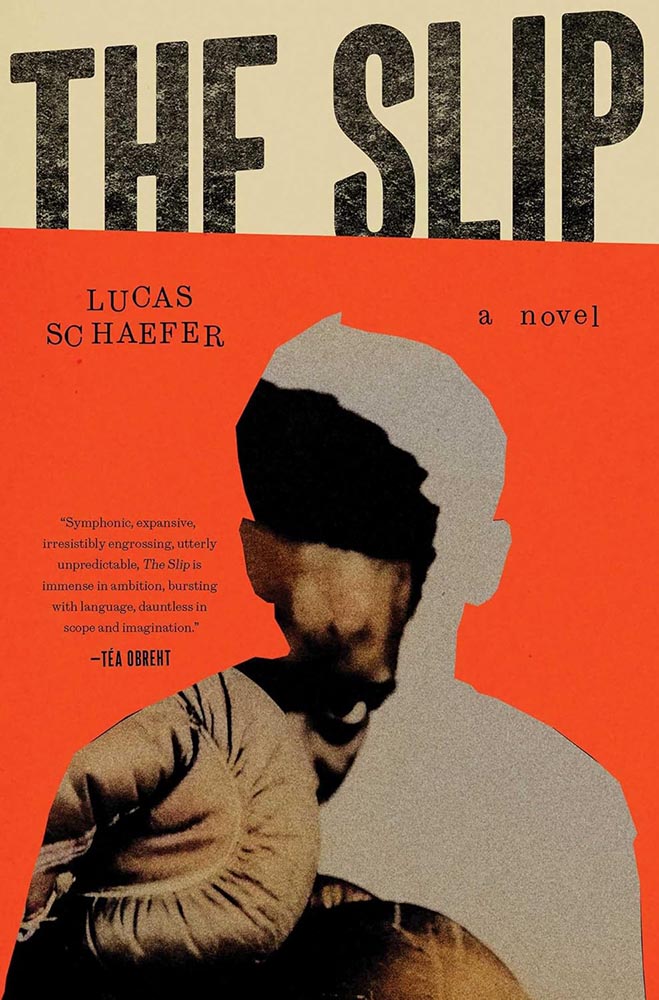
Cover design by Jack Smyth.

More than a hundred examples of book design greatness, with commentary, for the fifth year in a row. Bring a beverage.

But wait, there’s more:
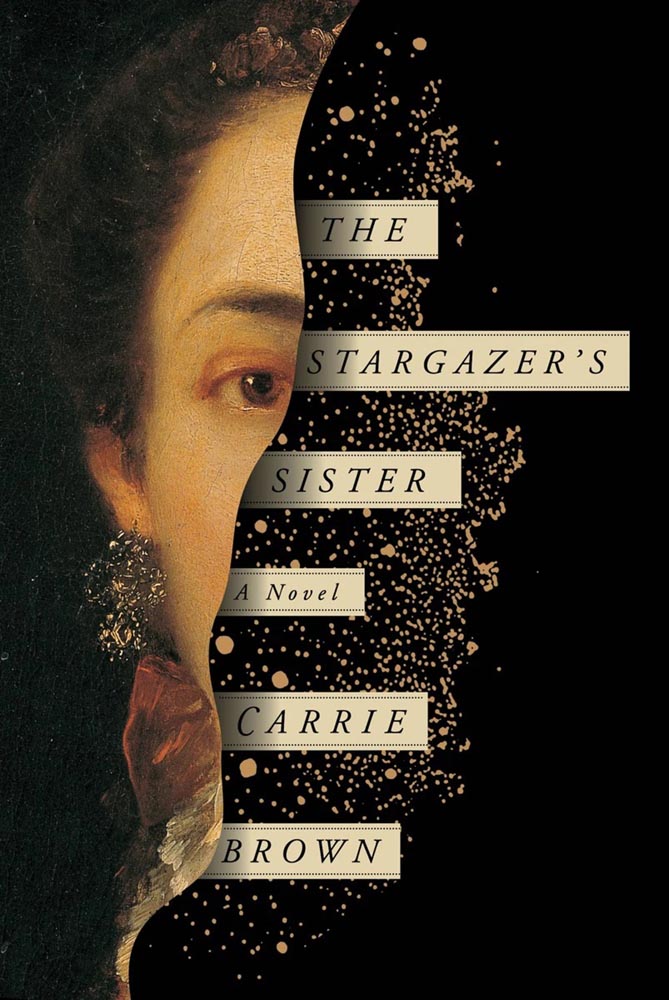
Cover design by Oliver Munday.

LitHub has posted a summary of the last decade of their favorites, too. Whew!
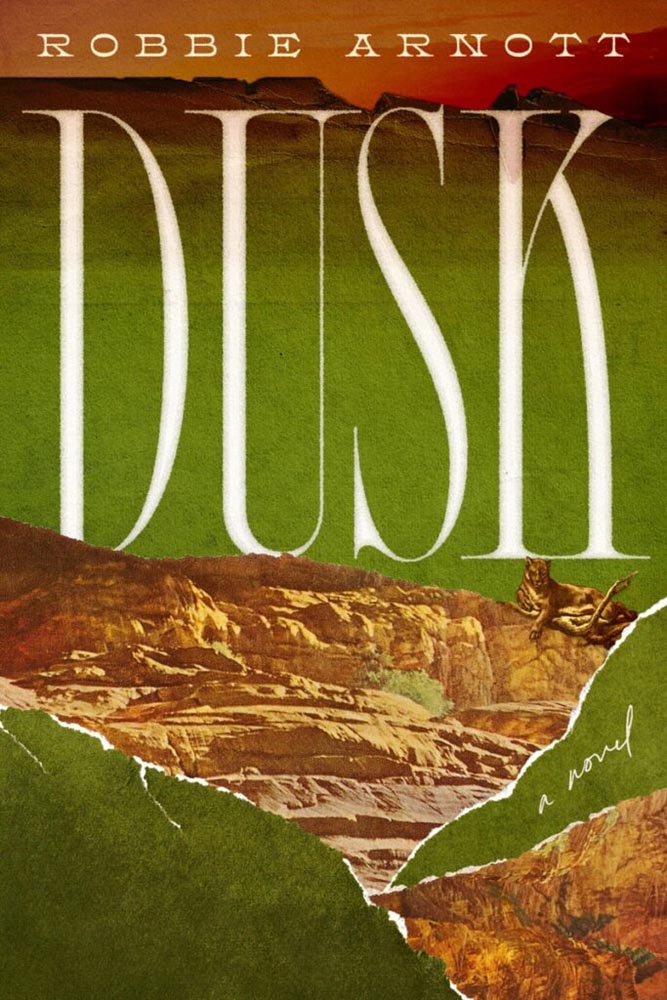
Cover design by Alicia Tatone.

Special Bonus #1: Our Culture has a feature on seven book designers to watch in 2026. None will be a surprise to regular readers, although Alicia Tatone hasn’t been highlighted here as much as she deserves (she had three cover designs, including Dusk, in the runners-up folder for my ’25 favorites, but didn’t appear in the final list).

This Month’s Spine

Meanwhile, over at Spine, my monthly column on University Press goodness has been posted, including this:
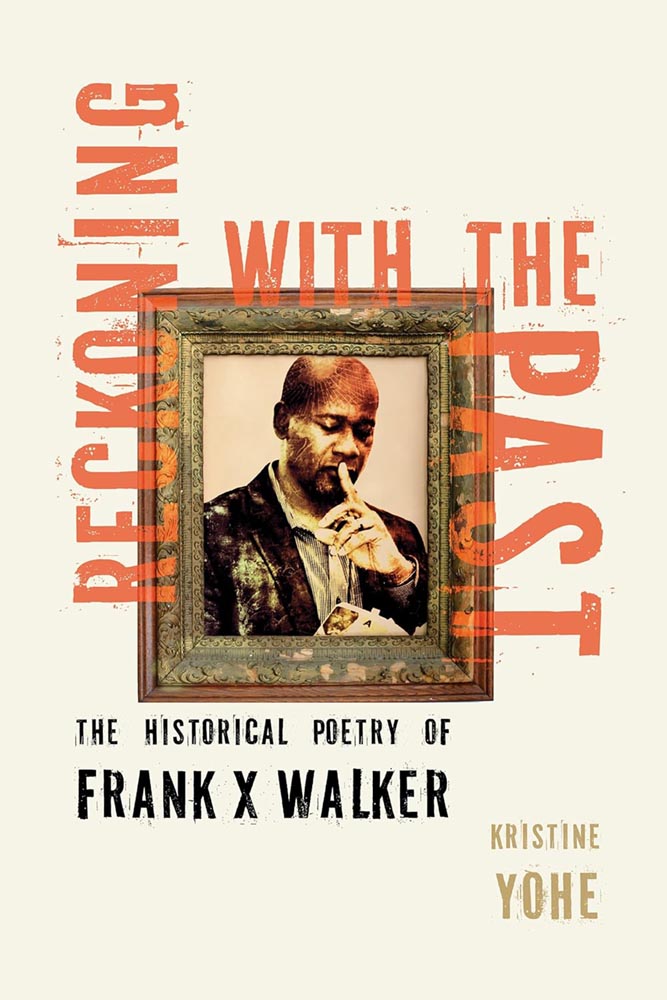
Cover design by Kat Lynch for the University Press of Kentucky.

Walker, FYI, was the first Black person to be named Kentucky Poet Laureate and coined the term, “Affrilachia.”

More from the Design Department
Heller on Roy Kuhlman

Steven Heller’s column in PRINT is always fantastic, but some introduce designers more of us should know by name — this time, Roy Kuhlman:
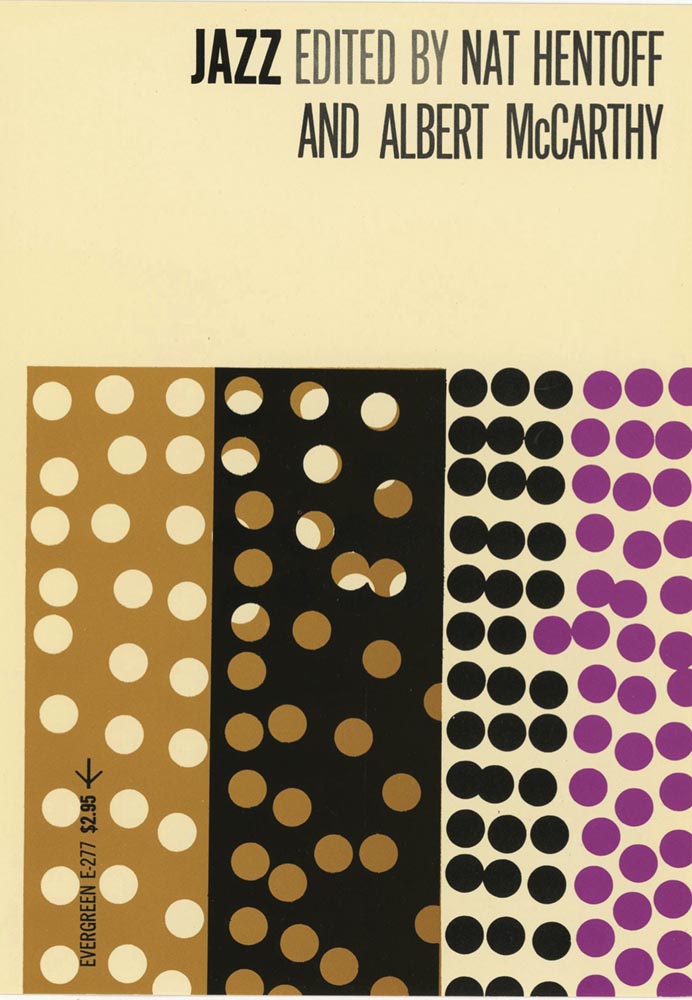
Cover design by Roy Kulhman.

“He designed almost exclusively for the edgy indie Grove Press, defining its list of literary, critical, philosophical and politically radical nonfiction titles,” Heller writes, discussing a new retrospective (that he wrote the introduction for):
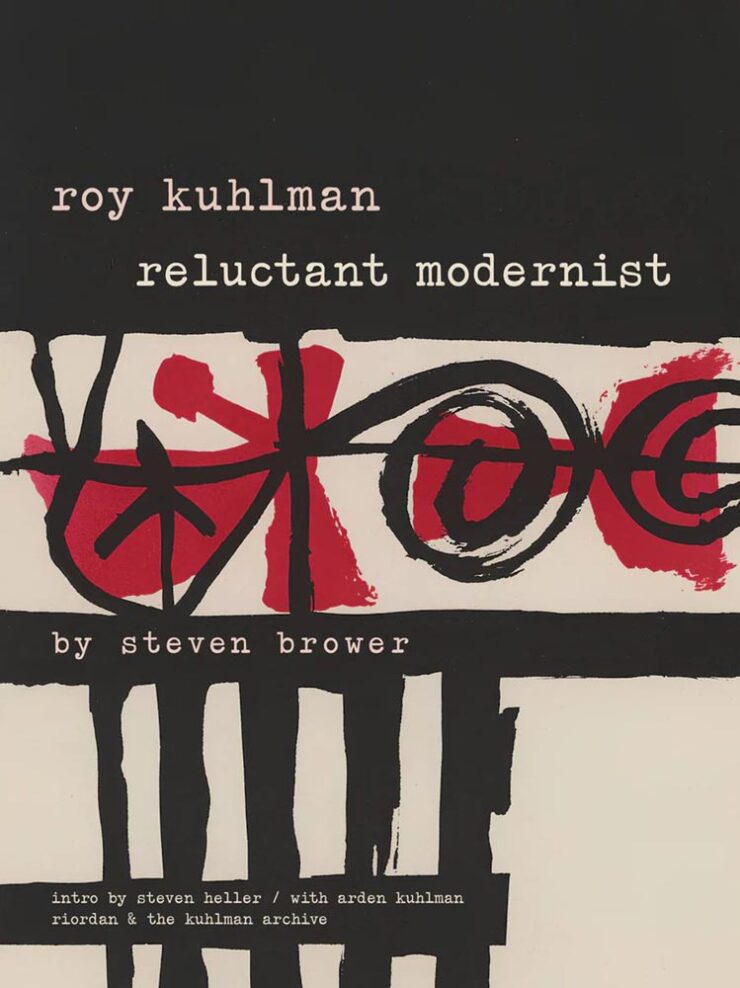
Many of his abstractions tested the reader’s perception. His lexicon of kinetic, morphing shapes was usually rendered in flat colors with painterly and collage randomness. They could stand on their own. But usually, to make them functional, he used simple sans serif or elegant classic serif typefaces; fitting the abstract nature of his manner, he’d frequently draw or paint hand-scrawled titles and subsidiary texts. Much of his work employed two or three colors, as opposed to four-color process — and he was more than adept with limitations.

— Steven Heller, PRINT

Very cool. See the rest.

January Typeface Favorites

Speaking of CreativeBoom, their regular feature on new typefaces has several that I like. Let’s start with the elegant Appeal, by new foundry We Type:
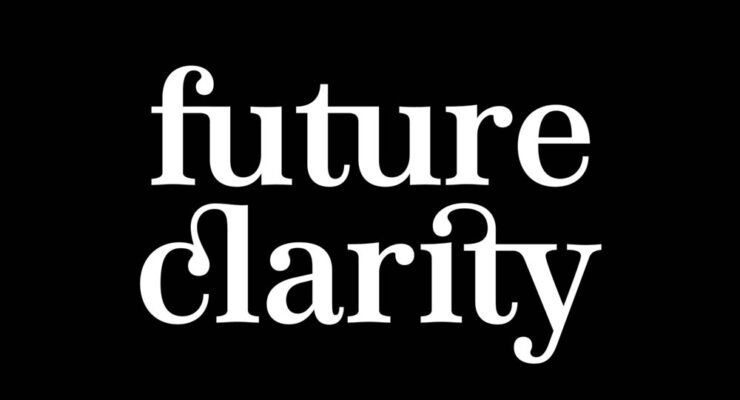
Next up, the old-style, almost-evokes-needlepoint Bárur, by MNDT Type:
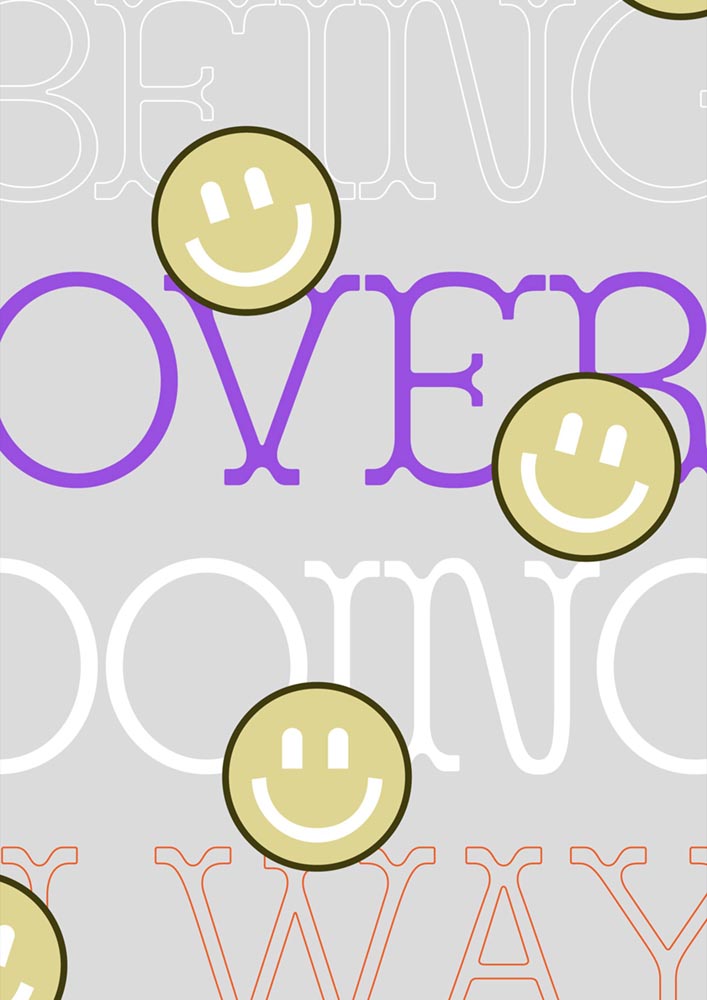
Another new foundry, Designomatt, brings us the neat and “unpretentiously functional” Stróc:
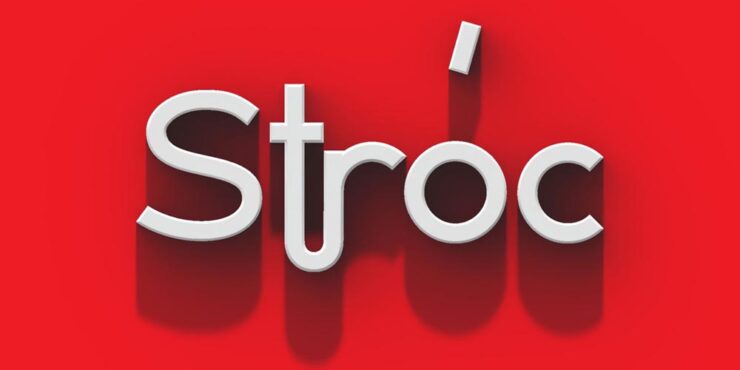
The last to highlight is probably my favorite of the bunch, this cool and well-executed script called Pennline, from The Northern Block. It’s a “meticulous resurrection of Bulletin — a script first cast in 1899 by Philadelphia’s Keystone Type Foundry — demonstrat[ing] how historical preservation and contemporary utility can coexist when approached with respect and imagination.”
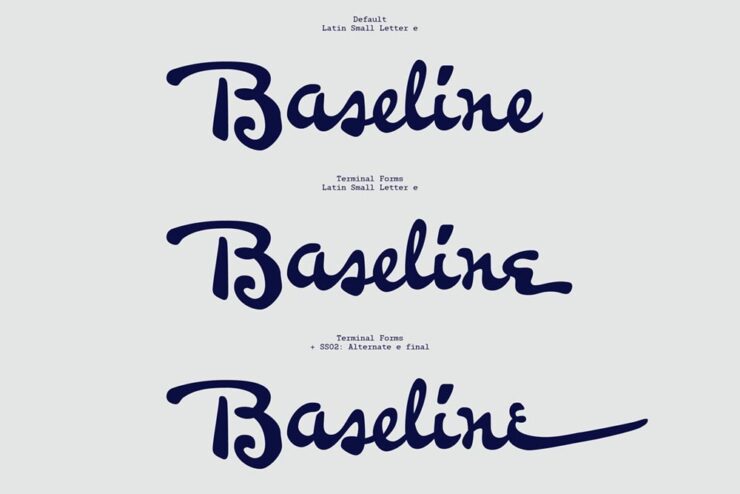
See ’em all — type joke intended — at CreativeBoom.

Faber Editions: Just My Type

It’s Nice That has a great feature on the new — actually, newly-revisited — Faber Edition titles, with their primarily type-driven cover designs:
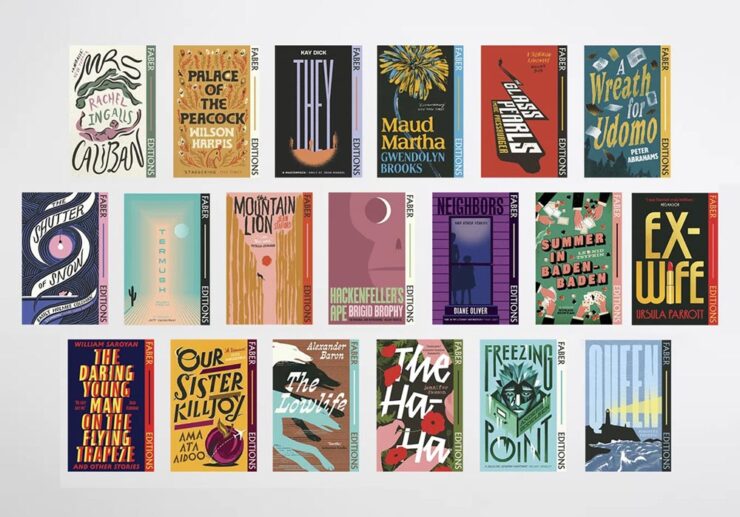
“In an industry that can often be focused on newness, Faber Editions is a great reminder of the groundbreaking literature that’s come before us, and a clear indicator of the importance of the artwork the words sit within,” writes Olivia Hingley.
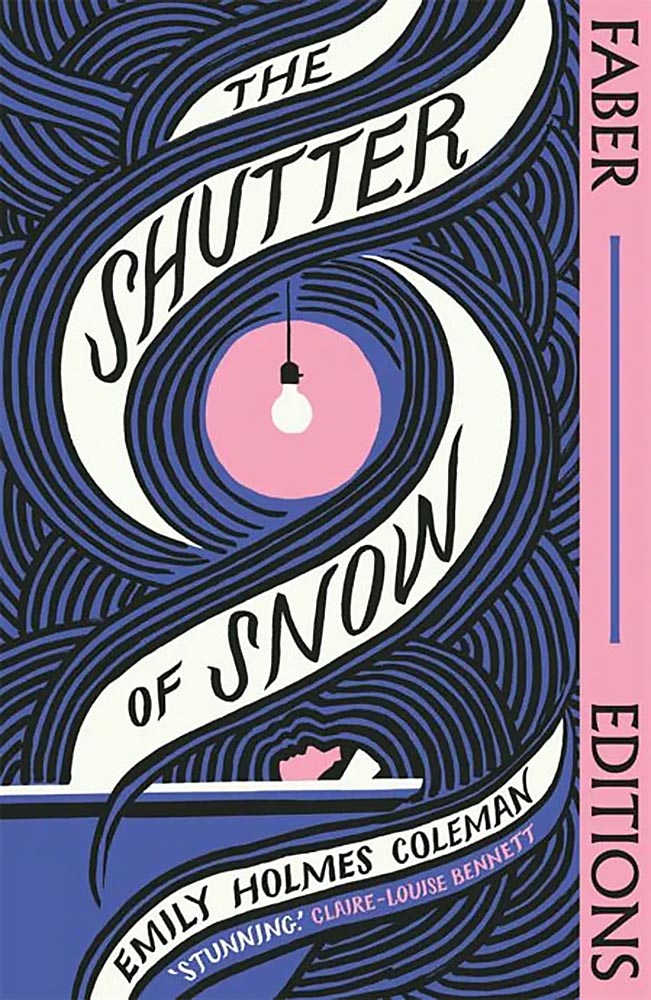
Cover design by Bill Bragg.

Faber is a UK publisher, so while these covers could be excellent because they’re British — see several examples of the US vs. UK titles in the favorites post — I’m just going to call the style interesting, the “look” of the complete series compelling, and the resulting work excellent. Read on.

Special Bonus #2: “The graphic trends you’ll want to bookmark for 2026,” also from It’s Nice That. In short: lo-fi, anti-trends continue:
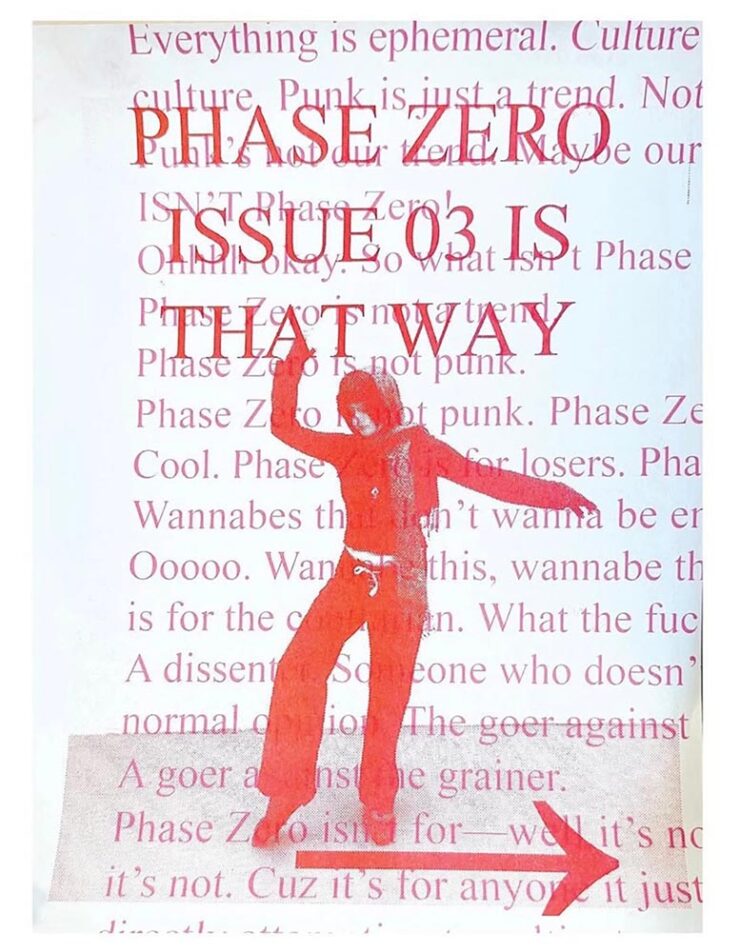
© Maya Valencia & Sydney Maggin, Phase Zero NYC, via It’s Nice That.

In other words, if AI struggles with it — if it’s authentic — it could be a winner. See the specifics.

Special Bonus #3: “AI isn’t the enemy. Our lack of nuance is,” Liz Seabrook writes at CreativeBoom. “The most powerful response is being more human.”

Life in ’26: DDOS? Or Just Velocity?
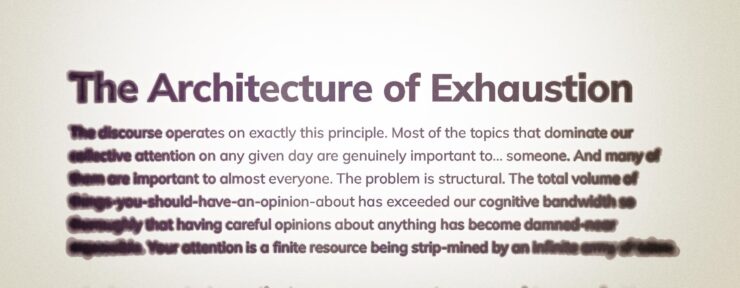
A few days apart, two new essays caught my attention and wound up feeling relevant enough — significant enough — that I wanted to share. They’re new takes on where we’re at, or, the specifics of “how.”

The first is from new-to-me author Joan Westenberg, discussing a computer term called the Distributed Denial of Service (DDOS) attack:

[The] attack works by exhausting resources. It doesn’t need to be clever. It just needs to be overwhelming. The target’s defenses are simply overrun. The server can’t distinguish between legitimate requests and attack traffic because, in a sense, all the traffic is legitimate. The attack succeeds when the system has spent so much energy processing requests that it can no longer serve its actual function.

— Joan Westenberg, “The Discourse is a DDOS”

Does that sound like it might apply to life in the ’Twenties? Yeah.

The old media ecosystem had gatekeepers, and those gatekeepers were often stupid or corrupt, but at least the stupidity and corruption were bounded. There were only so many column inches in the New York Times, only so many minutes of evening news. A finite supply of attention-worthy items existed, and someone had to decide which ones made the cut. That selection process was biased and imperfect, but it performed an important function: it told you, implicitly, that you didn’t have to have an opinion about everything. Most things that happened in the world weren’t important enough to make it into your awareness at all. Local political disputes in New South Wales? Nobody in Washington DC gave a [crap], and vice-versa. This was as close to optimal as we’ve ever got.

But the gatekeeping function has now been distributed across millions of individual users, each of whom can boost any piece of content into viral prominence if it happens to resonate with the right combination of tribal anxieties and engagement incentives. The feed is infinite, and every slot in the feed is optimized to make you feel something strongly enough that you’ll engage with it. Outrage works, and so does fear. Disgust works, and righteousness
really […] works. Nuance and careful reasoning don’t work at all, because by the time you’ve finished a thought that begins with “Well, it’s complicated…” someone else has already posted a much simpler take that makes people feel validated, and the algorithm has moved on.

— Joan Westenberg, “The Discourse is a DDOS”

Om Malik, long-time in-the-trenches tech nerd (and fellow Leica enthusiast), completely agrees:

Authority used to be the organizing principle of information, and thus the media. You earned attention by being right, by being first in discovery, or by being big enough to be the default. That world is gone. The new and current organizing principle of information is velocity.

What matters now is how fast something moves through the network: how quickly it is clicked, shared, quoted, replied to, remixed, and replaced. In a system tuned for speed, authority is ornamental. The network rewards motion first and judgment later, if ever. Perhaps that’s why you feel you can’t discern between truths, half-truths, and lies.

— Om Malik, “Velocity Is the New Authority. Here’s Why.”

Westenberg has a suggestion I wholeheartedly recommend:

What I do know is that the feeling of being overwhelmed, of never being able to keep up, of having strong opinions about everything and confident understanding of nothing, is not a personal failing. It’s a predictable response to an impossible situation. Your brain is being DDoS’d, and the fact that you’re struggling to think clearly under that onslaught is evidence that your brain is working normally. The servers aren’t broken. They’re overloaded. And until we figure out how to reduce the load or increase the bandwidth, the best any of us can do is recognize what’s happening and try, when possible, to step away from the flood long enough to do some actual thinking.

— Joan Westenberg, “The Discourse is a DDOS”

“Find one topic,” she says, and start there. Get with experts, get evidence, get uncomfortable, actually get into it … but just get into that one.

And stay true to the idea that it shouldn’t — can’t — get away from you.

I get some feedback for my lack of participation in social media. I don’t hate social media; if anything, the past few weeks of mayhem organized resistance in Minneapolis proves it has a place. But I long ago heeded advice to narrow my focus. Instead of burying my head in the sand — tempting though it may be at times — I choose to concentrate on those things that a) really hold interest and b) things I actually want to be part of my life.

Both of these essays summarize the situation well, and both offer insights on how we got here. Westenberg’s offers good advice. When you have a spare few minutes, read both.

(DDOS article via Doc Searls, whom I don’t link to often enough. Om’s article via Daring Fireball.)

Wikipedia Turns 25

Let’s please turn to something that the Internet does right.

Whenever I worry about where the Internet is headed, I remember that this example of the collective generosity and goodness of people still exists. There are so many folks just working away, every day, to make something good and valuable for strangers out there, simply from the goodness of their hearts. They have no way of ever knowing who they’ve helped. But they believe in the simple power of doing a little bit of good using some of the most basic technologies of the internet.

— Anil Dash, “Wikipedia At 25: What The Web Can Be”

“When Wikipedia launched 25 years ago today, I heard about it almost immediately, because the Internet was small back then, and I thought ‘Well… good luck to those guys,’” Dash writes.1I, too, remember those days of a small Internet — not a young person anymore. While I miss the community it felt like, the resources available today, of which Wiki might be at the fore, are without parallel. But it’s grown into something something amazing: the encyclopedia that’s free in every sense of the word.
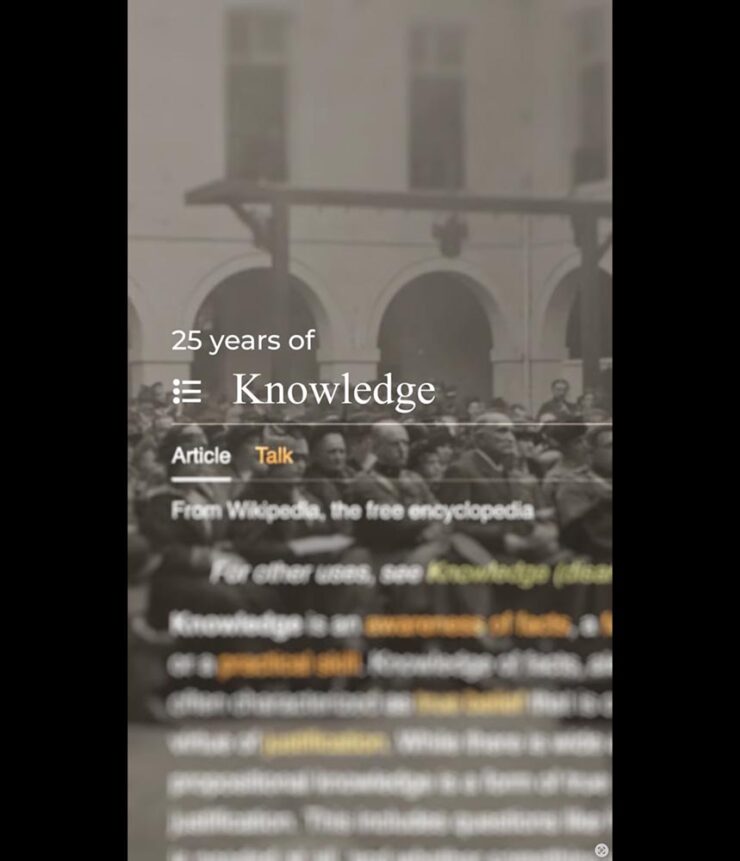
One of the YouTube shorts published by Wikimedia Foundation.

Like countless others, I value being a contributor, in an incredibly small way, to the collective effort that is Wikipedia. Indeed, editors “span continents, professions and motivations,” a CreativeBoom article writes. “Together, their stories underline that, even in an age of AI, knowledge is still human and it still needs humans.”

“The site is still amongst the most popular sites on the web,” Dash agrees. “[B]igger than almost every commercial website or app that has ever existed. There’s never been a single ad promoting it. It has unlocked trillions of dollars in value for the business world, and unmeasurable educational value for multiple generations of children.”

Of course, all is not perfect. Like Universities, DEI, and whatever else, Wikipedia has become a target; Grokipedia, for instance, exists specifically to undermine Wiki’s centrality and success. (And, it’s important to note, Groki used Wiki as a basis … because it’s open and freely available. No hypocrisy.)

In fact, so many rely on Wikipedia that access has become a thing. Luckily, some large enterprise users of the site have recognized that the trillions they’ve earned as a result of having access to Wiki’s collective knowledge is worth paying for:

[T]he Wikimedia Foundation announced API access deals with Microsoft, Meta, Amazon, Perplexity, and Mistral AI, expanding its effort to get major tech companies to pay for high-volume API access to Wikipedia content, which these companies use to train AI models like Microsoft Copilot and ChatGPT. […] In April 2025, the foundation reported that bandwidth used for downloading multimedia content had grown 50 percent since January 2024, with bots accounting for 65 percent of the most expensive requests to core infrastructure despite making up just 35 percent of total pageviews.

— Benj Edwards, Ars Technica (15 Jan 2026)

Anil Dash best finishes up: “Twenty-five years later, all of the evidence has shown that they really have changed the world.” I couldn’t agree more.

Happy 25 to Wikipedia. May there be countless more.

Special Bonus #4: In an excellent article, Ars calls 2025 “the year AI came back down to Earth.” And while we’re on the subject of excellence, Cory Doctorow’s essay for The Guardian applies.
Cory Doctorow in The Guardian.
Follow-Up: BMW Alpina and Honda Formalize Logos

Alpina, for formerly-independent tuner of BMW cars (and SUVs), has, as of the first of this year, officially become a division of BMW, akin to MINI or Rolls-Royce. With it comes a new logo — well, at least, this:

Conservative, cool, collected. Definitely part of a bigger corporation now.

That’s slightly different that what I covered back in June of 2023; the “A” is less dramatic, probably for the better. BMW calls the new logo “calm and confident,” saying the upcoming models will “master performance and comfort.”

[Alpina] recently entered into an agreement to be purchased by BMW itself, not unlike AMG becoming part of Mercedes-Benz; starting in 2026, they are scheduled to represent the middle ground between BMW and Rolls-Royce — hopefully continuing the comfort, power, and style. It seems that the new ground will be the upmarket models only (that is, no 3-series-based items, and possibly even no 5-series), so think of items $200,000 and up.

— Beautifully Briefed, June 2023

Here’s the old logo, for reference:
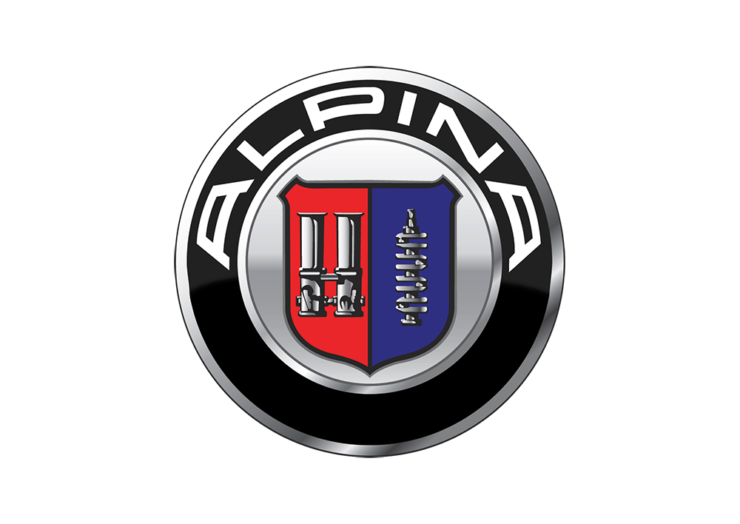
Alpina’s now-old logo: exhaust and crankshaft, sir. Nuthin’ like it.

And: they’re going to update the wheels!
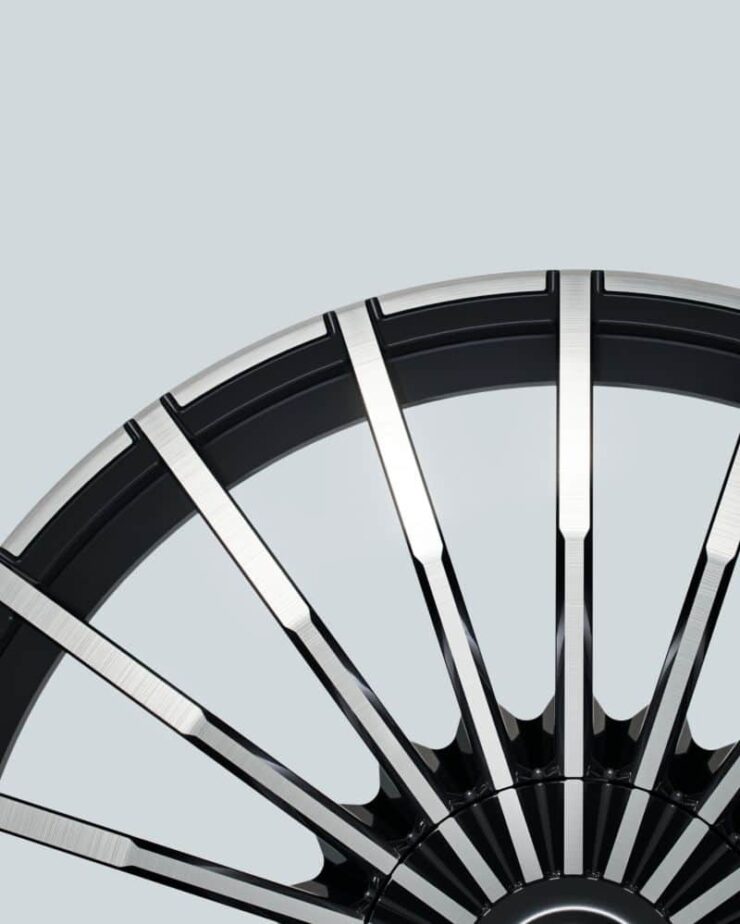
Photo via BMW Blog.

As someone who’s become much more familiar with Alpina in the ten years I’ve owned BMWs, these wheels are iconic. Here’s the existing version, on one of my favorite pieces of unobtainium:

Photo via BMW Blog.

That’s a 2016 Aplina B4 BiTurbo Coupé, by the way. Not quite my favorite B3 Touring, but in either case, “drool” doesn’t quite cover it. (Neither were available in the States.)

Curious to see whether this is successful. Expectations are high.
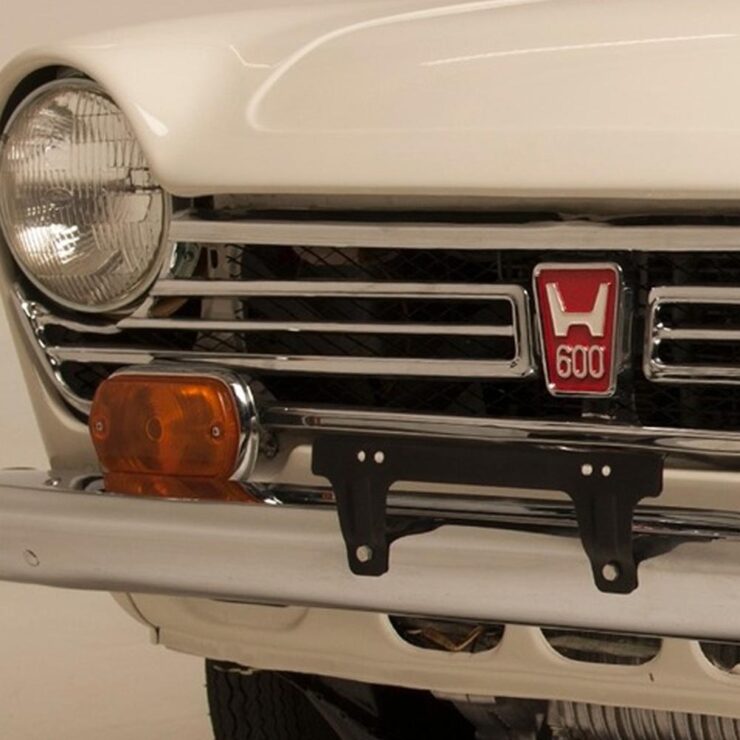
The “old” H logo, shown on a 1971 600. (See wiki for more info.)

Meanwhile, Honda initially said — and I reported, two years ago — that their new, slightly-retro “H” logo would be limited to electric cars. Of course, electric as a strategy has changed; they decided this month to make it official for all their cars.

Motorsports, too. Here’s their F1 engine with the new logo:
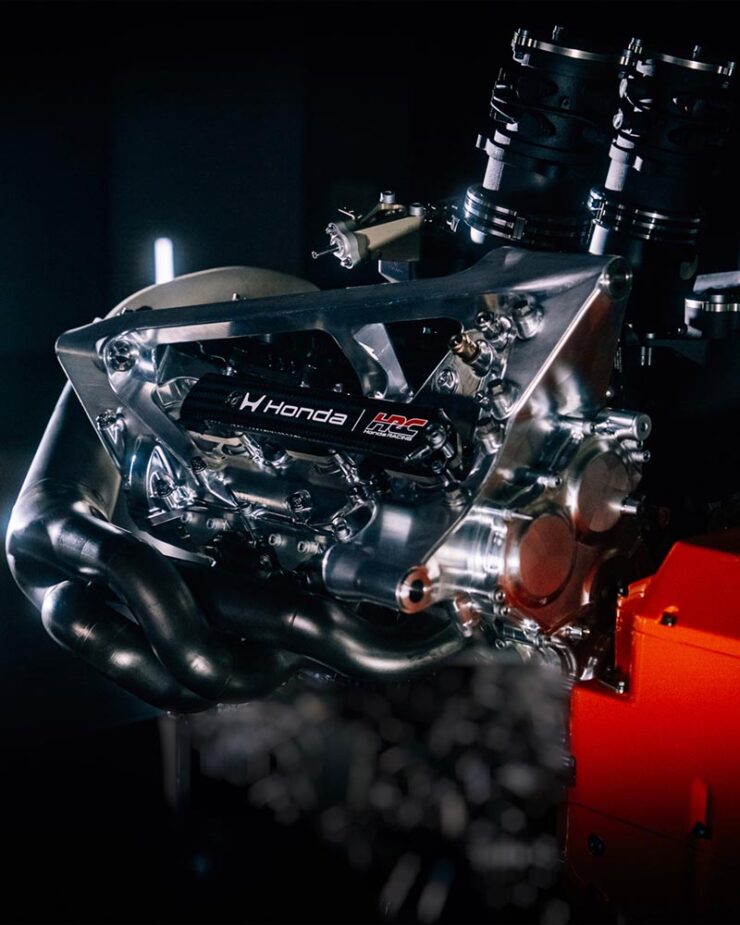
Photo via The Drive.

I love that both Honda and BMW are, at their heart, engineering companies.

Get the full story on BMW Alpina at Dezeen or BMW Blog (logo, wheels). Honda’s details are available at The Drive (logo, F1) or The Autopian, where you can enjoy some sharp commentary on Honda’s press release.

January Photography Round-Up
2025 Architecture Master Prize

“Arbour House.” Photograph by Younes Bounhar (Interior Architecture).

I suppose it’s no surprise that an architectural photography selection tops this round-up, but the annual Architecture Photography MasterPrize highlights “compelling perspectives on buildings, cities, landscapes, and interior spaces, revealing the rich visual language of the built environment.”

In other words, “catnip.”
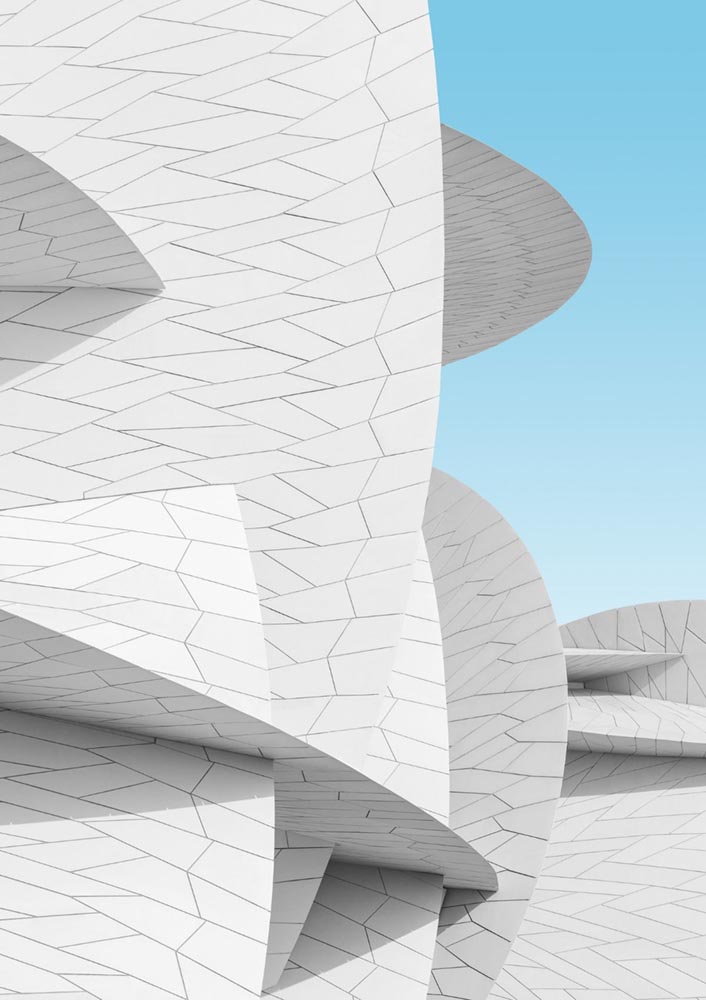
“Details (Series).” Photograph by Guanhong Chen (Other Architecture).

There’s a huge variety of winning photographs, from professionals, amateurs, and students alike — all excellent. (They have awards for designs, firms, and products, as well.)
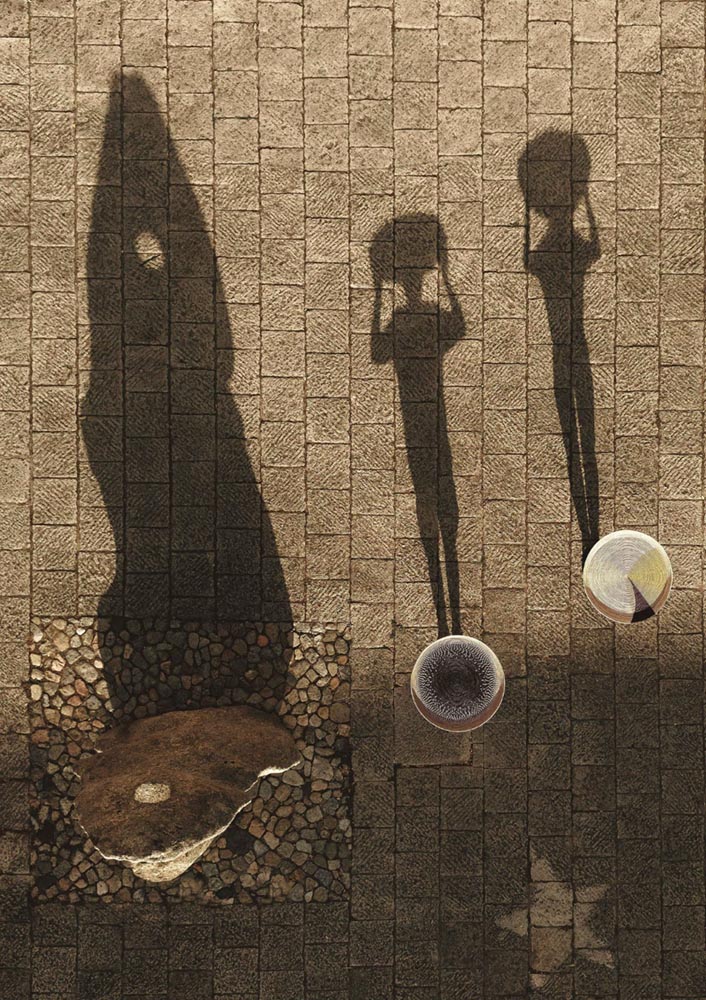
“Mustras,” Sardinia. Photograph by Barbara Corsico (Exterior Architecture).

I can’t possibly cover them all, but can provide links: photography winners, honorable mentions, student winners, and winners by country. Both Archinect and PetaPixel have stories. Enjoy!

Two Photographers, Highlighted

Photography by Dennis Lehtonen.

Neither drone images nor folks who primarily post to social media usually get featured here, but these images of Greenland are both timely and excellent. This is Colossal has a great selection of items from photographer Dennis Lehtonen.

“From Alps to Andromeda.” Photograph by Tom Rae.

“My photography style is rooted in landscape and night photography, with an emphasis on atmosphere, scale, and a strong sense of place. I’m drawn to environments that feel raw, remote, and otherworldly,” Tom Rae relates to PetaPixel. Otherworldly feels just right: good stuff.

Society of Photographers’ Photographer of the Year 2025
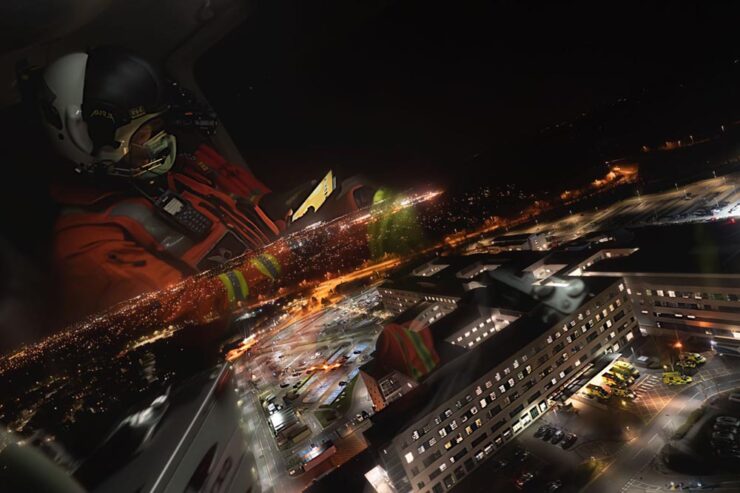
Photograph by Terry Donnelly.

I also usually don’t cover documentary-style photography — see narrow focus, discussed above — but there were several documentary-style photographs in this set of award winners that were excellent, including this Medivac flight from the UK.

However — thankfully — there were more categories:
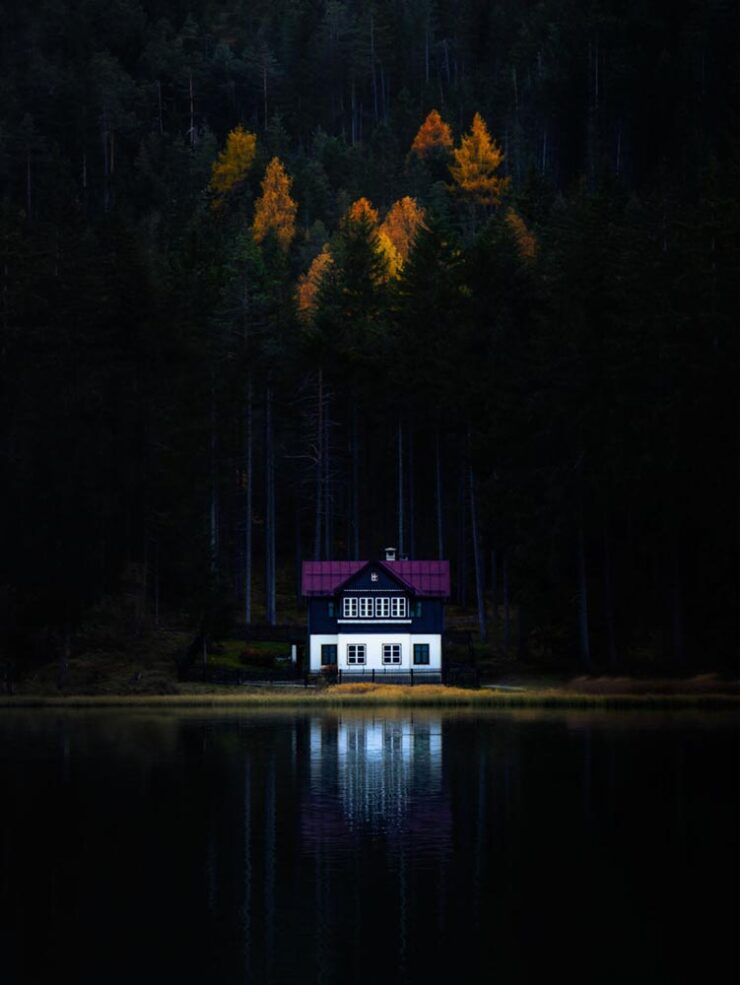
Photograph by Mark Scicluna.

It’s the winner in the “travel” category, because apparently they don’t have one called “dramatically soothing.” No matter the labelling, see the rest of the winners at PetaPixel or head over to the Society’s website for more.

Finally: Some Cats

Speaking of catnip, let’s close out with something that purrs — in soprano:
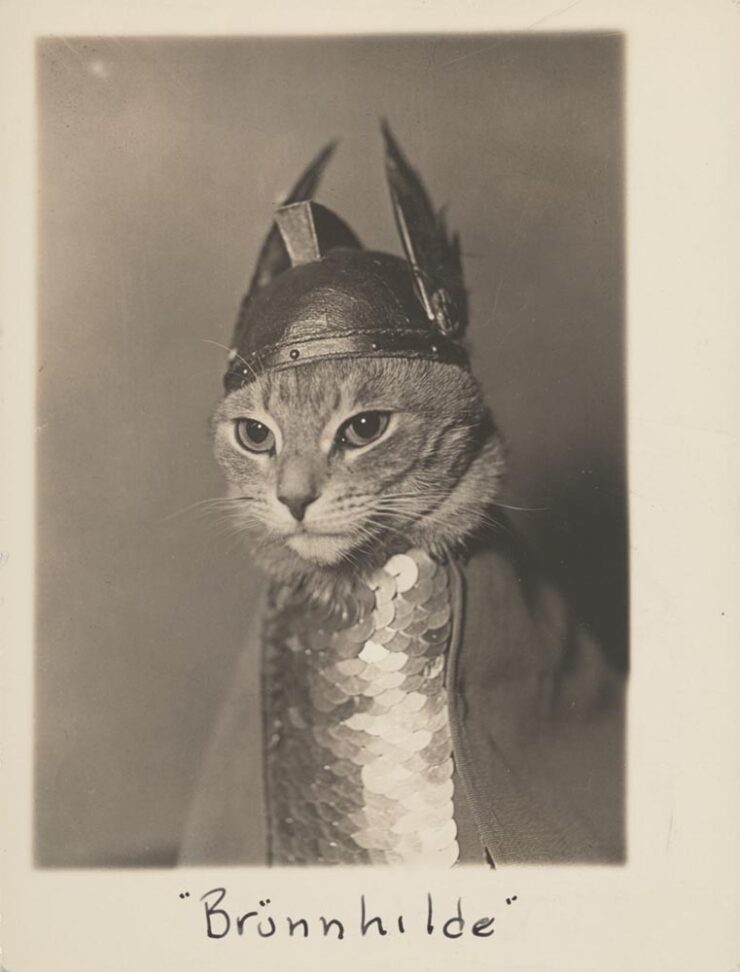
Let’s not go ’round and ’round: that deserves framing. Or at least publication. Thankfully, Phiadon has you covered:
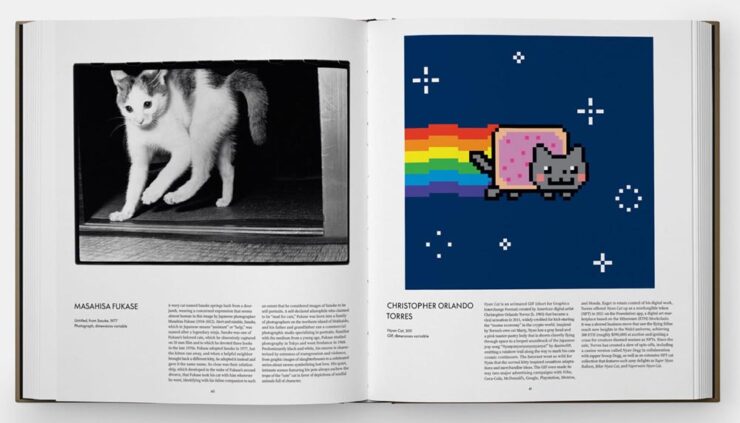
A “whimsical visual survey of the house cat in art and popular culture, exploring humanity’s enduring connection to one of our most loved animal companions.” Awesome. (Via This is Colossal.)

Have a great February, everyone!

  • 1
    I, too, remember those days of a small Internet — not a young person anymore. While I miss the community it felt like, the resources available today, of which Wiki might be at the fore, are without parallel.