
![Beautifully Briefed 26.4: Showered with… [Insert Here]](https://www.gileshoover.com/wp-content/uploads/2026/05/bb-hdr-apr26.jpg)
This month, Apple turned 50. Plus, the usual dose of great design, fonts, and photographs. Let’s spring into it!
This month’s Spine
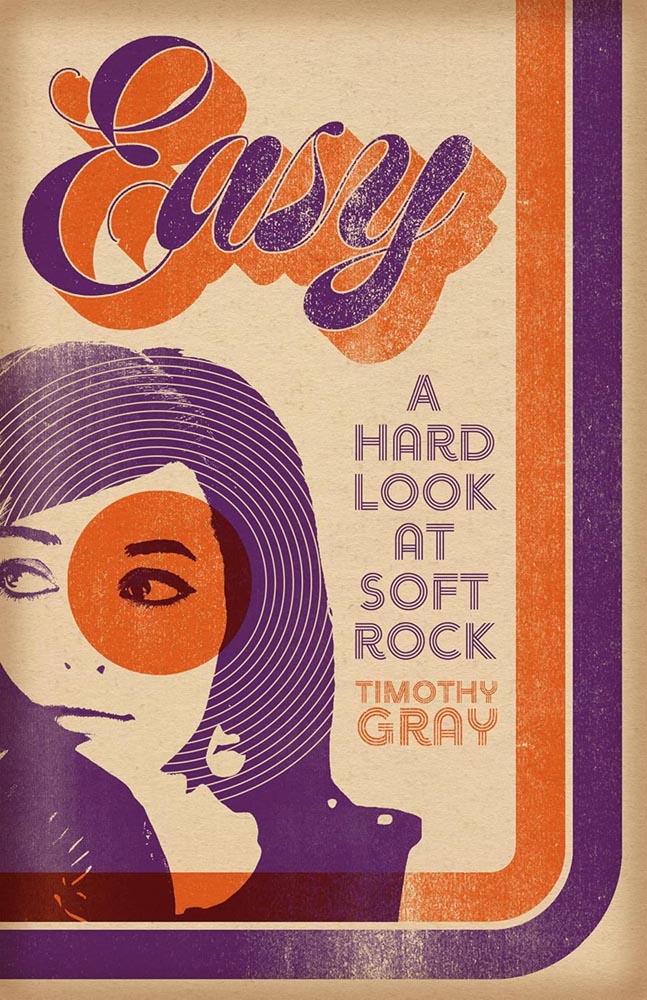
Genius placement of record label, great typography, and more — although the folks at the University of Iowa generally don’t respond to requests for information (hence the lack of designer credits), their production department deserves all the kudos. Great stuff.
See the whole list of University Press Coverage at Spine.
Apple turns 50
I’m just enough older than Apple that it’s been pretty much a constant presence in my life. Early on, it was only in schools that I interacted with them; we couldn’t afford a Mac in 1984, and I was stuck, nose pressed up against the glass, until 1990.
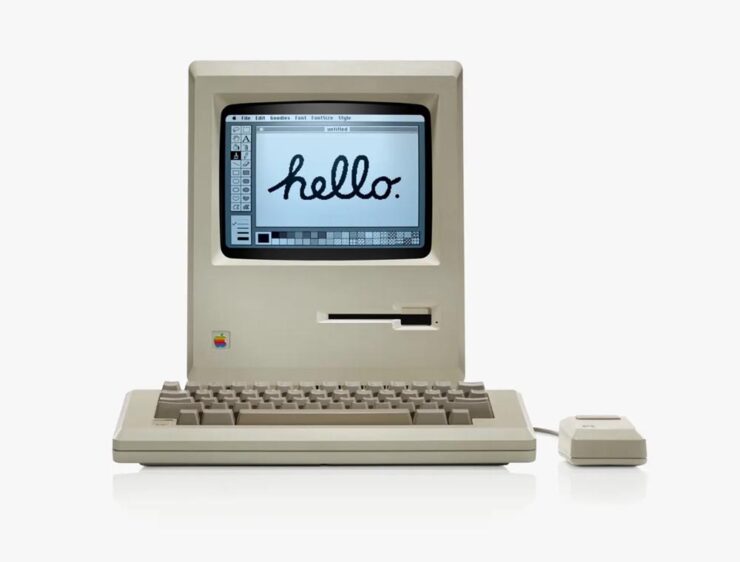
My first Mac was the same iconic beige, except it was a Mac Plus — which, together with a 20MB (!) Jasmine external hard drive and an ImageWriter — really allowed me to start down the path of making documents and publications lookgreat.
Over the years, I’ve been through many Macs (more than I should probably try to count, honestly). I still use and love the platform today.
Of course, I’ve added iPhones, iPads, and miscellaneous others, too. (Oddly, I was never an iPod person — I’ll take speakers over headphones if at all possible.)
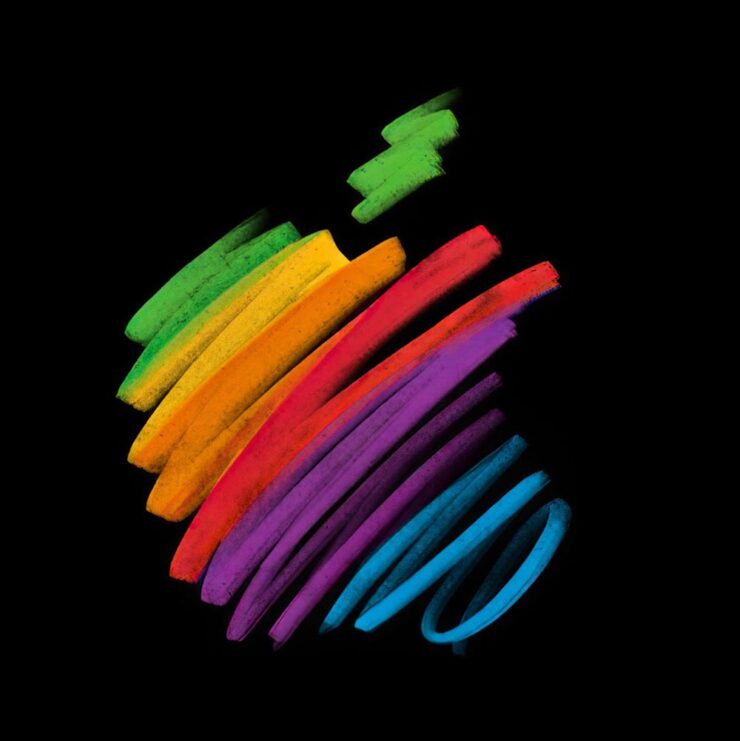
There are too many great opinions on this anniversary, frankly, for mine to really matter — so I’m going to point to a few excellent items from others, in case you’ve not read them or would appreciate some additional perspectives:
- “How Apple Became Apple: The Definitive Oral History of the Company’s Earliest Days” (Fast Company gift link, via Daring Fireball)
- “Apple is 50, bigger and stronger than ever. How does the company shape the world of 2026?” (Wallpaper*)
- “Tim Cook (Still) Believes in Crazy Ideas” (Esquire)
- “No, We’re not stupid. Our dads just got us crummy computers.” (Saturday Night Live classic skit, with links at Daring Fireball)
- “Thanks for the wild ride, Apple. Let’s keep it going.” (Jason Snell, writing for Macworld)
- “David Pogue’s ‘Apple: The First 50 Years’” (Daring Fireball — with a bonus post)
If you’d rather listen, this episode of the podcast Upgrade (Jason Snell and Myke Hurley) also covers the early — that is, really early — years:
Whew. Enjoy.
Meanwhile, I have to point at another article that will probably surprise … well, none of my regular readers: a great Architectural Record piece on the many Apple Stores and their fantastic, now-iconic look.
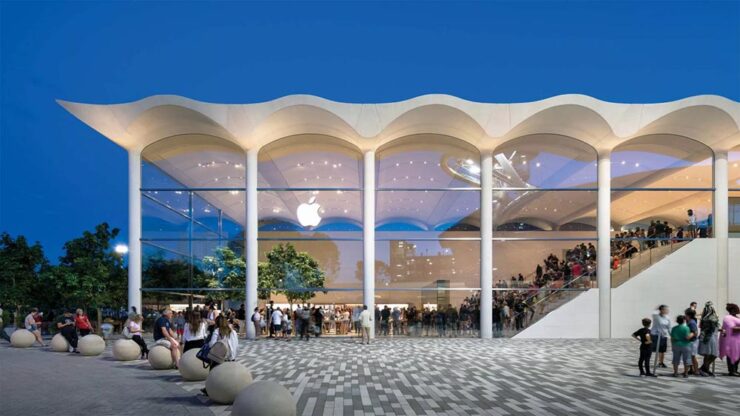
The possibility exists that I might have mocked Apple in 2001 for announcing that they’d be opening brick-and-mortar locations. (They had resellers, after all.) But, man, did I get that one wrong. Five hundred plus stores later, all over the world, Apple’s story is being told every day through great products — and great architecture.

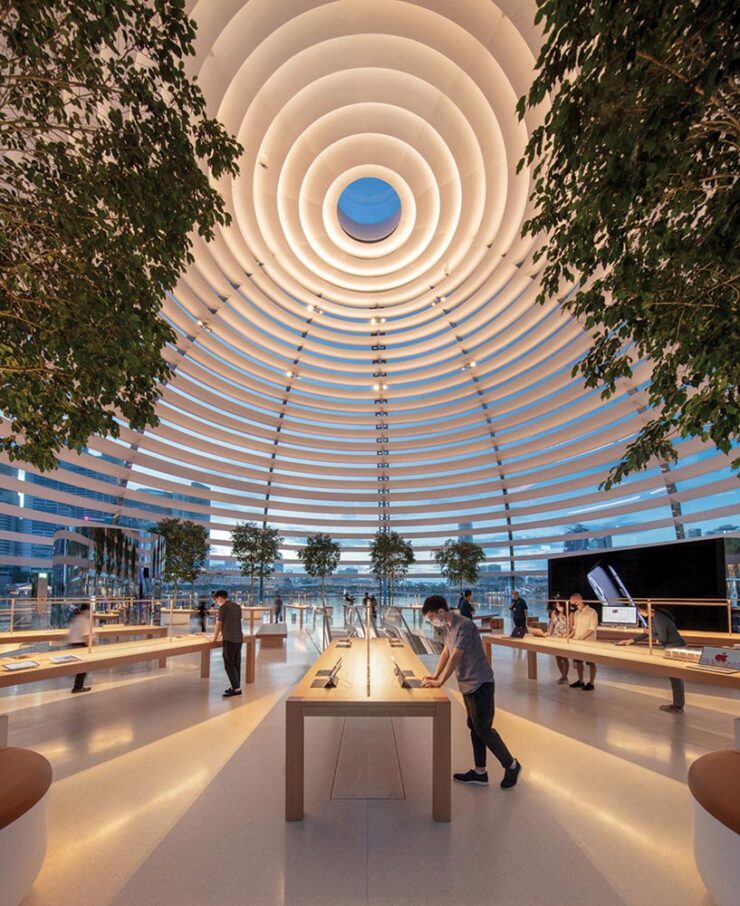
Many thanks to Apple for making my daily life better. It sounds strange to thank a company with a nearly four trillion dollar market cap, but as someone who’s been there since the dark days of the ’90s — indeed, basically all of those 50 years — they’re more than just a company to me. May there be many more anniversaries to come.
Late-breaking supplement: new Apple CEO
As it turns out, Apple’s 50th also marks a turning point:
Today we announced that I’m taking the next step in my journey at Apple. Over the coming months I will be transitioning into a new role, leaving the CEO job behind in September and becoming Apple’s executive chairman. A new person will be stepping into what I know in my heart is the best job in the world. That leader is John Ternus, a brilliant engineer and thinker who has spent the past 25 years building the Apple products our users love so much, obsessed with every detail, focused on every possible way we can make something better, bolder, more beautiful, and more meaningful. He is the perfect person for the job.
John cares so much about who we are at Apple, what we do at Apple, who we reach at Apple, and he has the heart and character to lead with extraordinary integrity. I am so proud to call him Apple’s next CEO.
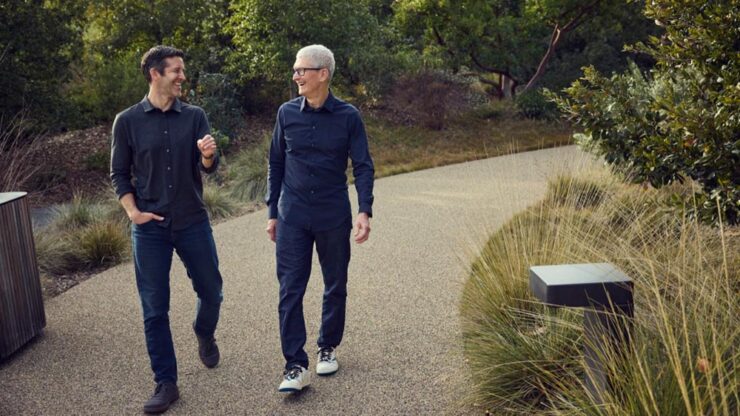
Ternus’ long-time role at Apple has been as its head of hardware. Among the things Apple does extraordinarily well, hardware arguably tops that list. Every piece of hardware has an level of quality the rest of the industry just can’t match; from the early days of the iMac to today’s MacBook Neo, from the first iPhone to the orange powerhouse that is today’s iPhone 17 Pro, there’s a feel that Apple does like no one else.
That also means, for all intents and purposes, that Apple recognizes that the next CEO isn’t going to — can’t — increase its net worth another thousand percent the way it did under Cook’s tenure. They’re going to concentrate on what they do best: products.
I hope.
For more on the CEO announcement, see also:
- “That was Tim, this is Ternus: Some first thoughts on Apple’s CEO transition” (Jason Snell, Six Colors)
- “Another Day Has Come” (John Gruber, Daring Fireball)
Special bonus #1: What happens when you put greed first. I’ve spent a minute slogging on Adobe — hopefully fairly — but Nick Heer of PixelEnvy summarizes better than I have.
Design
Penguin’s 2026 cover design award
This CreativeBoom article is framed as “Gen Z judges books by their covers” — breaking news, surely — but is really about what happens when you give some design novices1Entrants had to have no more than one year of paid creative experience, and 60% of those on this year’s shortlist were students. an assignment redesigning covers of two iconic titles. Here are a couple of winners:
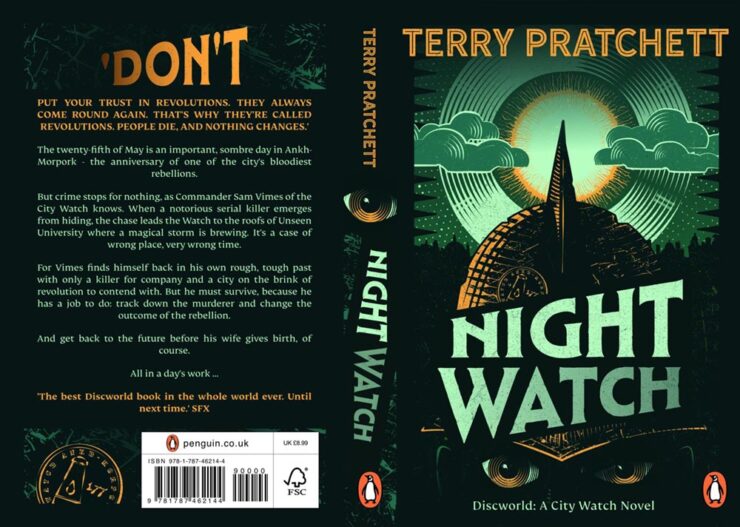
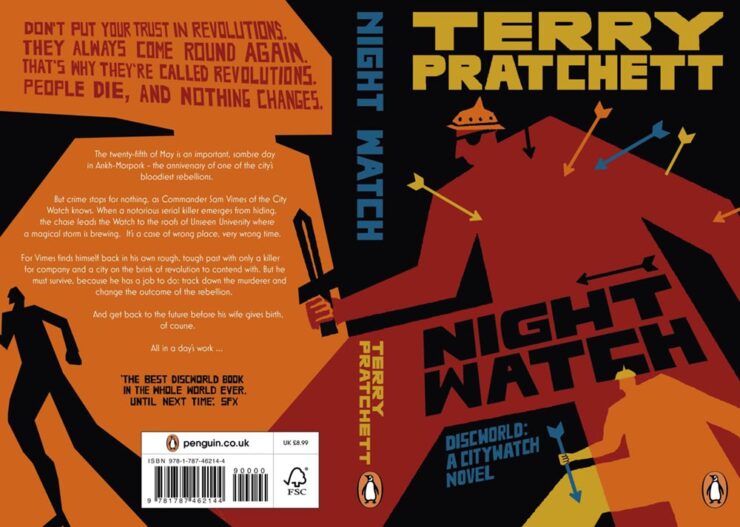
Of course, there are a couple of age-related stats in the article worth mentioning: “40% of 18 to 24-year-olds like to display books at home, with nearly a third using them as interior design objects or art pieces. Among the over-55s, that figure drops to 8%.” (Raises hand on the latter.)
The other title is the always-awesome A Wrinkle in Time. Take a look.
Post of goodness
While we’re on the subject of awesome: “Print and design studio Risotto is marking 100 months of artist postcards, all printed by hand and posted worldwide, with an exhibition that puts the beauty and breadth of Risograph on show,” It’s Nice That writes.
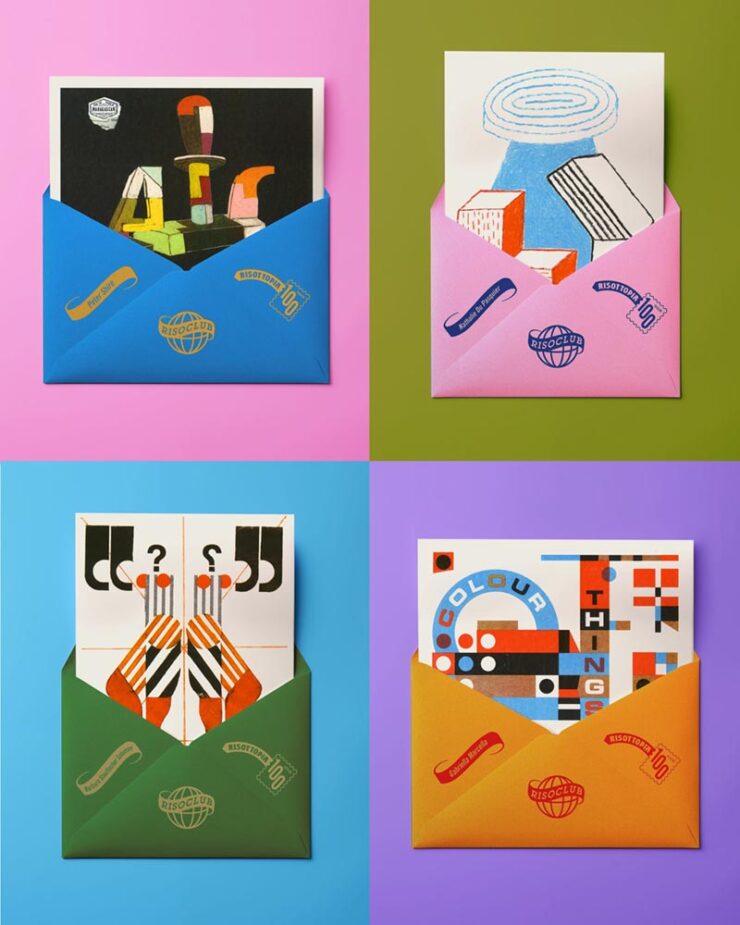
“For the Glasgow-based print and design studio Risotto, a connection to slower publishing in a fast world has been part of its fabric since its beginnings. Risotto’s Riso Club has been a constant print project running in the background at the press for the past decade: A monthly not-for-profit postcard subscription that directly supports independent artists by sending their colourful work to a community of print enthusiasts around the world,” the article continues.
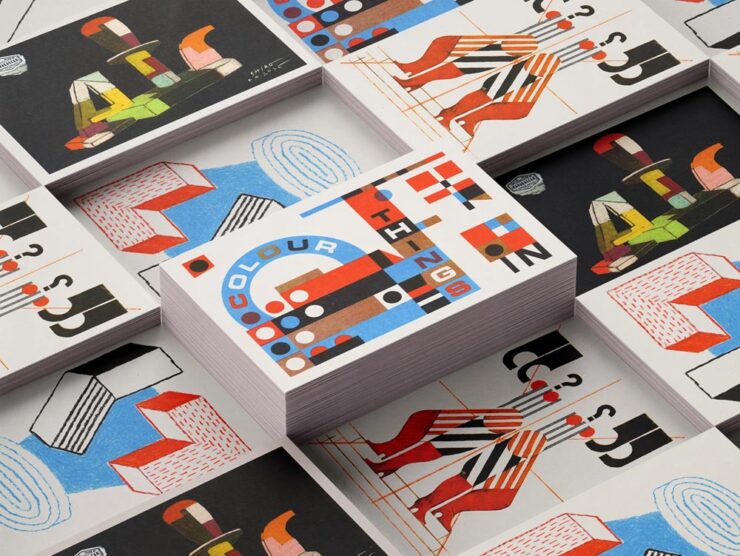
“It’s a bit of an antidote to the speed of the doom scroll or just the amount of content that’s out there,” studio owner Gabriella Marcella says. I couldn’t agree more — in fact, if I had even a smidgen of display space available, I’d subscribe (and may anyway).
Read more at It’s Nice That or CreativeBoom.
That’s the ticket
Kottke, while bringing us a quick snippet with a brand designer’s “compendium of transit tickets” from around the world, also reached back into his archives to bring us these absolute gems:
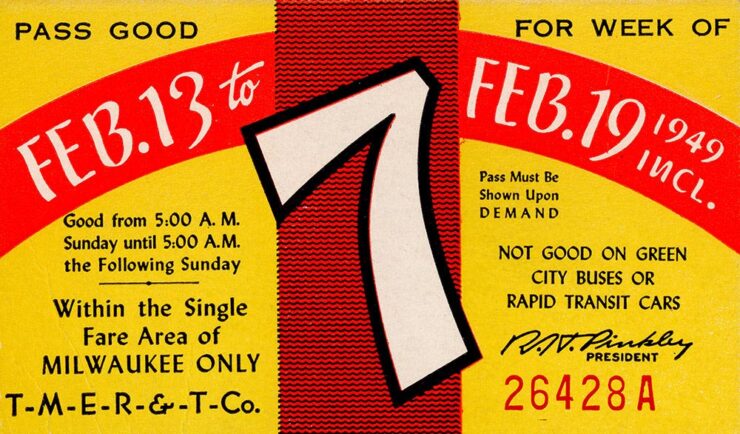
A collection of weekly bus passes from Milwaukee, WI. Years covered are 1930-1979.
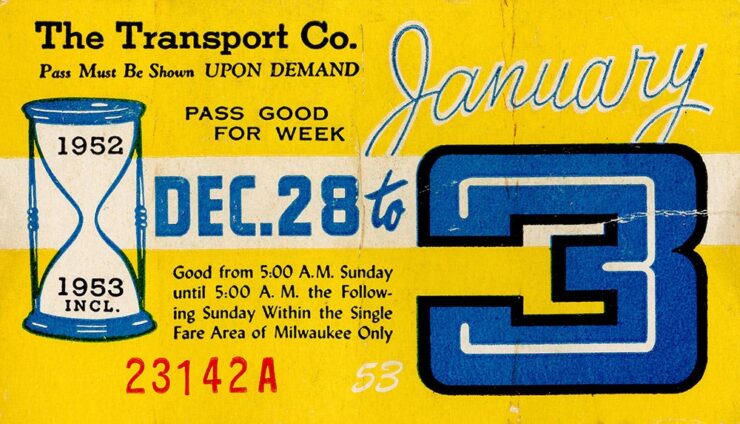
Originally posted at the not-cited-enough Present & Correct.
Special bonus #2: Extra large Pan Am ticket recreations as art, framed, for your wall:
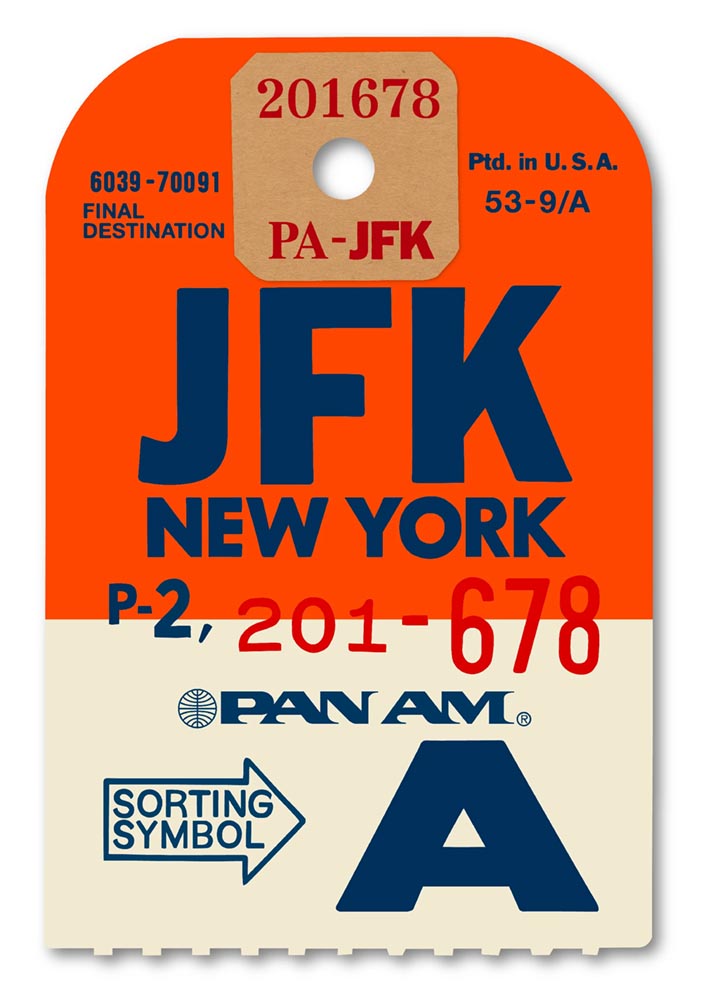
These are perfect for an Air BNB or other travel/hospitality locale — as mentioned above, my walls are full — but no matter what, looking through the destinations is fun. Check it out. (Via Daring Fireball, citing another not-cited-enough item, SimpleBits by Dan Cederholm.)
Special bonus #3: Speaking of travel and hospitality, “Letterform Archive has turned a century of vintage hotel luggage labels into 330 gorgeous stickers: a new sticker book from the San Francisco-based design archive revives the golden age of travel through the vibrant graphic art of hotel luggage labels.” Awesomeness at CreativeBoom.
April’s typography greats
Mark Simonson’s start in type
…actually has a great story attached:
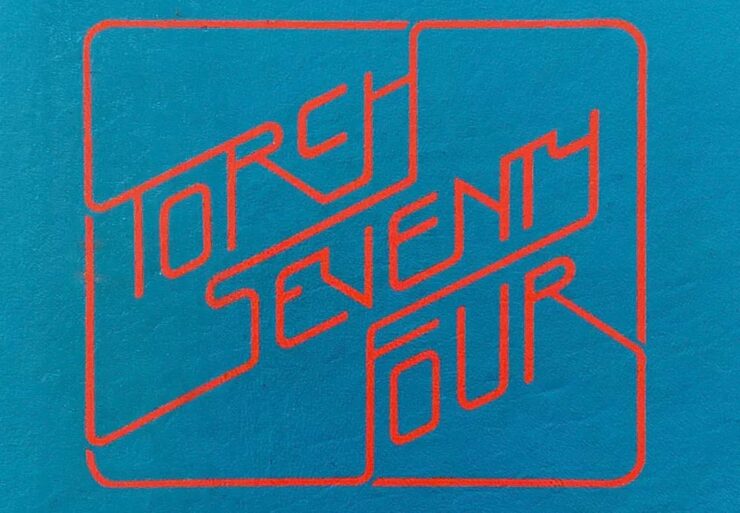
“Fifty years ago this month, March 1976, at 20 years old, is when my interest in type design began,” he writes. I’m not going to spoil it — just go read instead.
CreativeBoom‘s April selections
Nineteen in all, but as usual, I’m only going to mention a few faves:
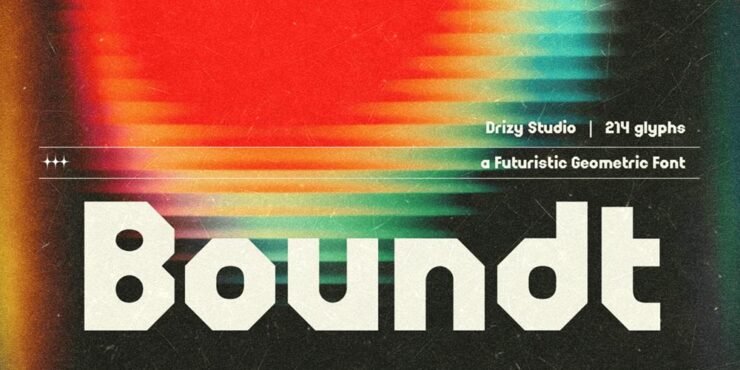
“Boundt arrives from Drizy Font with a clear visual proposition: bold, architectural geometry at display scale, informed by mechanical bolt-and-nut structures and the graphic language of vintage broadcast design. The mechanical metaphor gives the letterforms a coherence that purely decorative display faces often lack: a sense that the same underlying system generated them all.” See more.
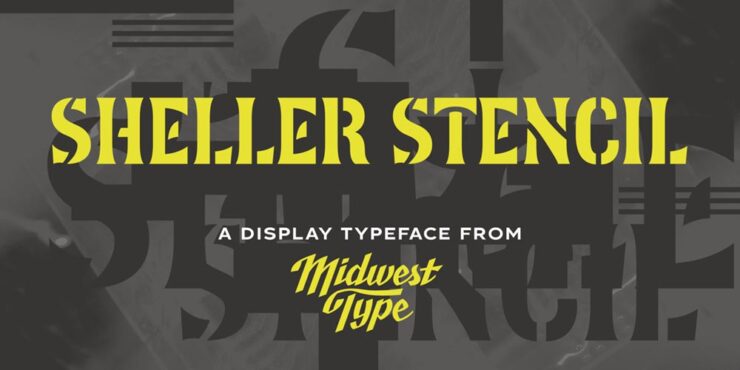
“Sheller Stencil originates in the stencilled lettering found on agricultural machinery from Tiffin, Ohio, in the late 19th century: anonymous commercial graphics that, on close examination, turn out to be genuinely inventive. Some characters split at right angles; others follow curvilinear breaks that track the Art Nouveau-inflected letterforms rather than cutting across them mechanically. The result reads as antique but carries enough formal authority for contemporary packaging, editorial work and heritage-positioned branding.” See more.

“The story behind Herald News is a personal one. Kevin Foley grew up with the Fall River Herald News (delivered it as a paperboy, absorbed its typography over years of handling), and later found himself scanning its pages to find his daughter’s name in the results after track meets. That very human relationship with a newspaper’s visual character is precisely the kind of deep familiarity from which good type design grows.”
This is a serif family was built for editorial work — and I like so much, it’s been bookmarked for when the right project comes along. See more.
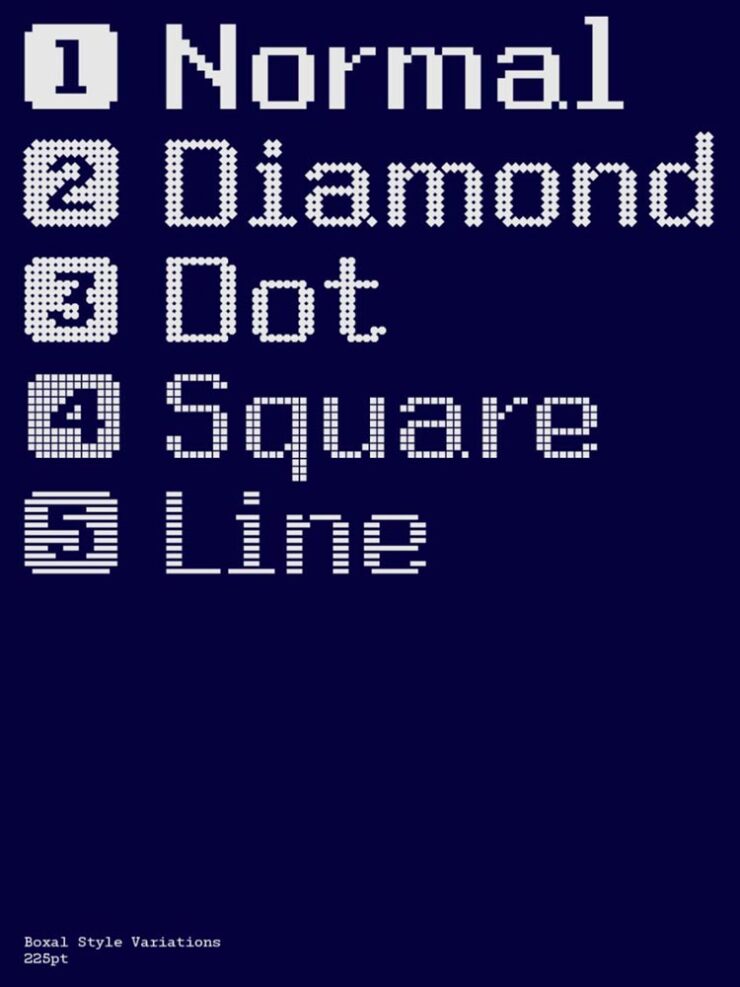
“Boxal is The Northern Block’s newest typeface – a meticulously crafted, retro-inspired pixel font that captures the nostalgic charm of classic arcade gaming while delivering modern precision and versatility. With the personal design history of founder and type designer Jonathan Hill very much in mind, Boxal draws on the pixel artistry of iconic titles like Zelda, Shinobi, and Cops and Robbers, and represents a cultural homecoming for the studio.”
Fantastically retro yet proportionally spaced, best at large sizes, preferably slowly scrolling up a screen. Awesome. See more.
Zed, for when Z just isn’t enough
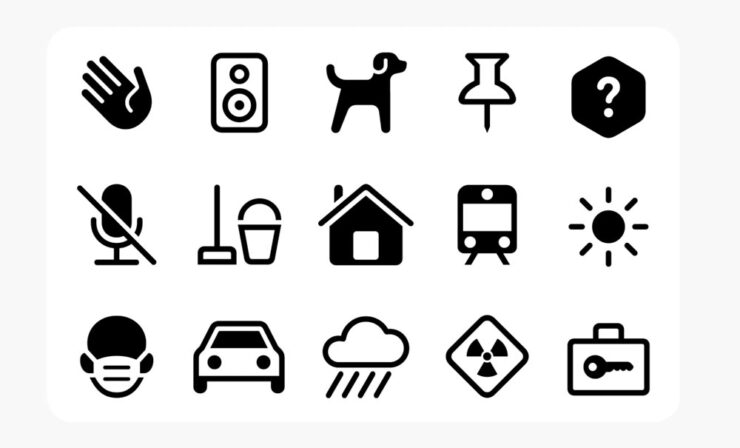
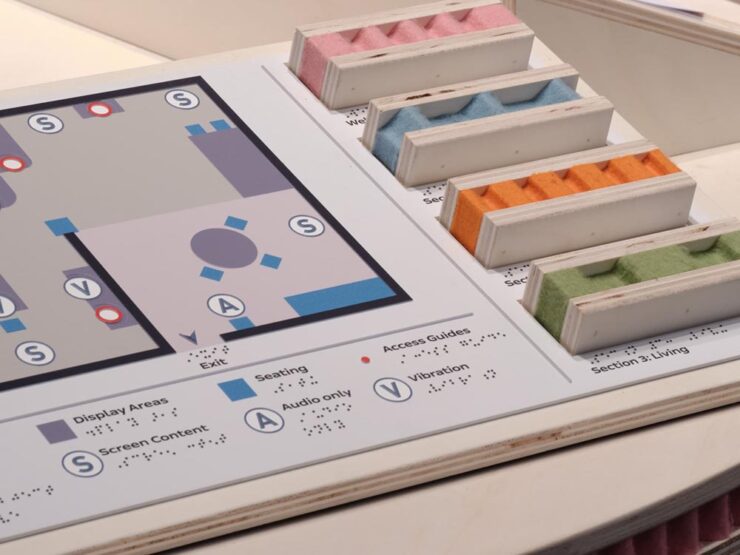
“Zed is extremely practical, both in terms of its extraordinarily broad language support and the stylistic variations available via its adjustable width, weight, roundness, and slant. It even offers Braille characters and an icon font. But Zed is also simply beautiful. It’s a font family and type system that exemplifies the belief that rich accessibility and pure aesthetic appeal are not at odds,” Daring Fireball writes. (In, admittedly, a sponsored spot — but his sponsors are so highly curated that I actually read the posts … and, occasionally, pass them along.)
HVD Bodedo
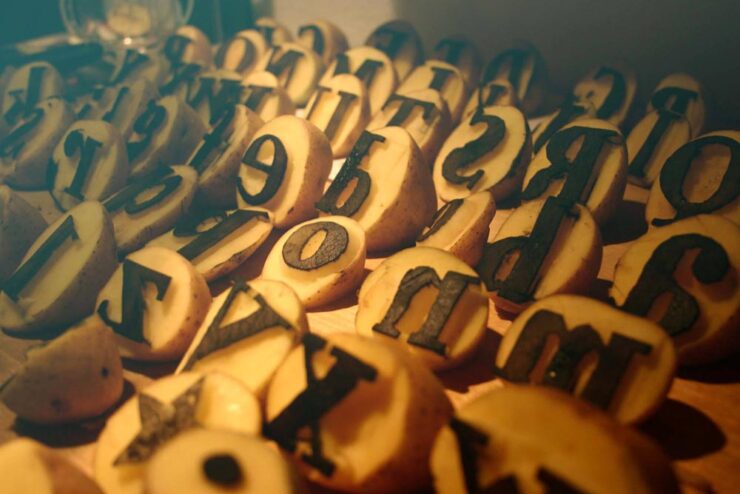
No, your eyes are not deceiving you: those are potatoes, carefully carved in the service of Bodoni. Mostly. But it’s got tasty ink content — and is free. Check it out. (Via Kottke.)
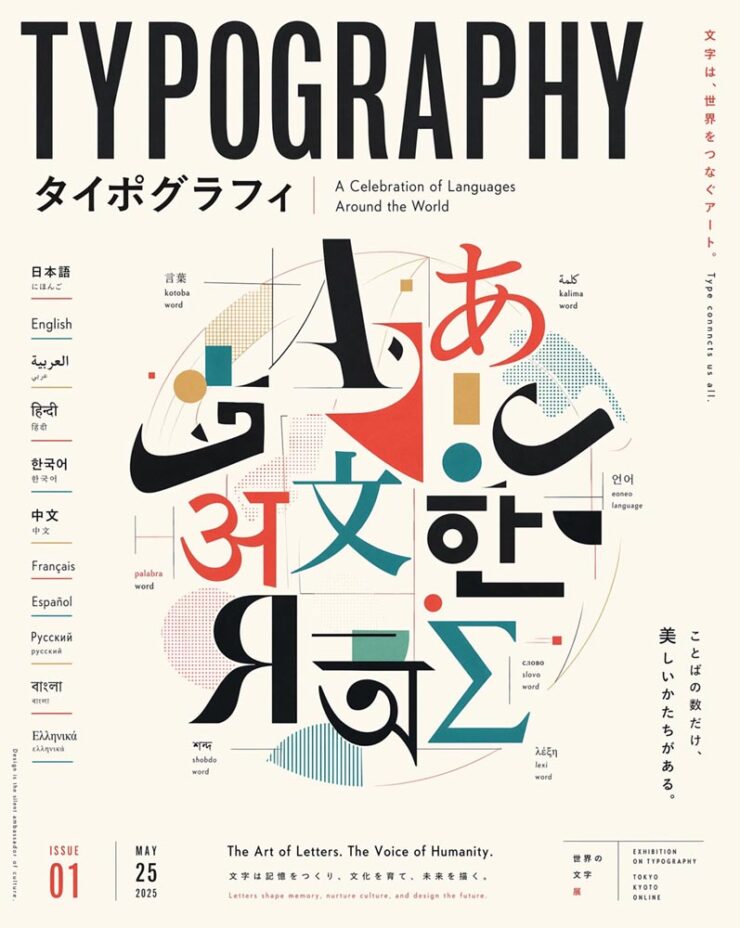
Special bonus #4: ChatGPT can now think … about type, traditionally one of AI’s weak points:
April’s Photography Round-up
Artemis II (#1)
Only a few items this time — but that partially because, at least in my mind, one event more or less dominated photography during April: the Artemis mission.
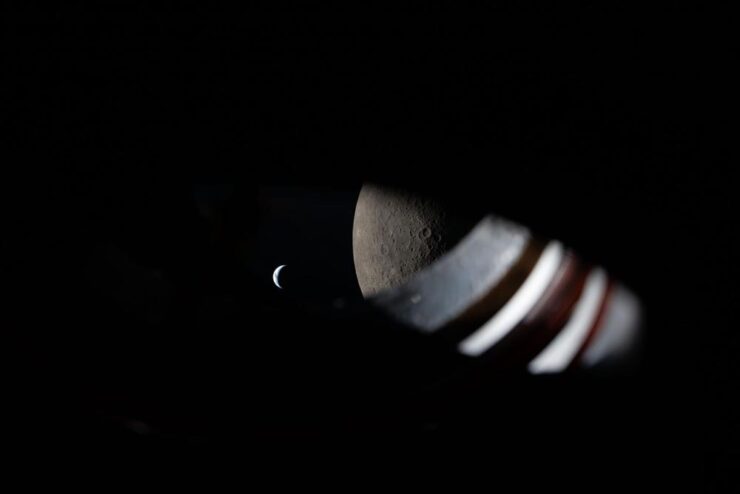
“I like perspective. As much as I enjoy the wide, sweeping shots of our Moon and Earth set against each other (and I do very, very much enjoy those), my favorite photos remind me that there were people there,” Jason Schneider writes at PetaPixel. I couldn’t agree more: the shot above, for instance, is both spare and overwhelmingly expansive. Awesome.
See also: NASA’s official photo page, the Planetary Society’s favorites, Scientific American‘s twelve favorites, and Space.com’s sweet sixteen.
Artemis II (#2)

How did that image get created — I mean, it’s practically right on the pad? “Photographer Steven Madow has been photographing rocket launches for over a decade, but arguably no rocket launch he has photographed has been as big of a deal. […] Madow set up 14 different Panasonic Lumix cameras to cover the monumental event, including seven remote cameras at the launch site. His outstanding photos are the result of years of practice and planning,” PetaPixelwrites.
For Artemis II, Madow partnered with Space Explored, a website dedicated to sharing all the inspiring stories surrounding spaceflight and exploration. Read the whole story.
Patterns: the book
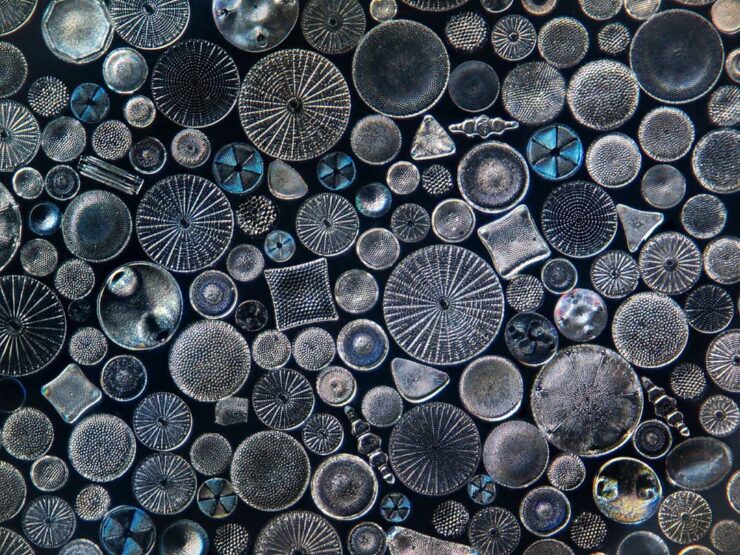
“In the words of Georgia O’Keefe, to see takes time,” says photographer Jon McCormack. His new monograph, “Patterns: Art of the Natural World,” is a “beautiful visual love letter to nature and all its intricate patterns, from microscopic and rarely-seen to vast and majestic,” writes PetaPixel.
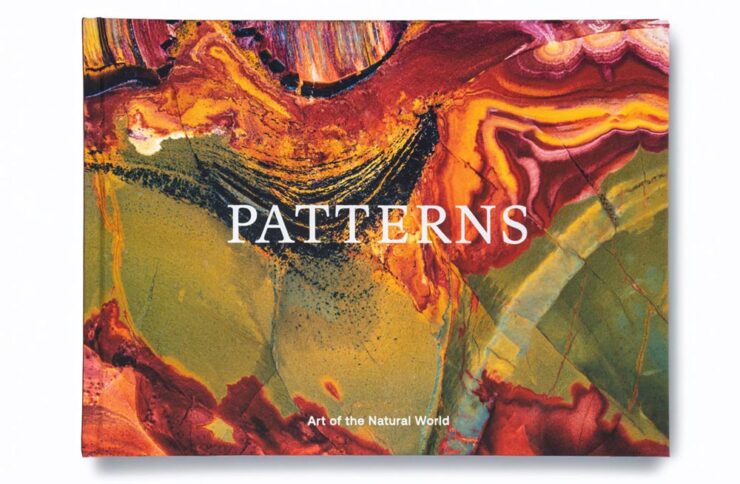
McCormack’s photographic journey, which started with a hand-me-down film camera in the rugged, rural Australian Outback and has taken him all over the world to — get this — the iPhone camera software lead at Apple. (The man has a clue, ladies and gentlemen.)
The book is something after my own heart. Read the entire piece. (You can also see the book at This is Colossal.)
Hans Hansen’s explosions
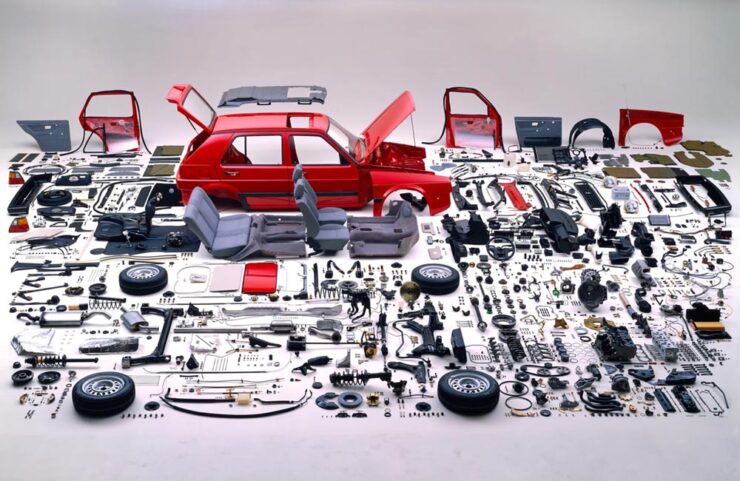
…aren’t quite what you might expect — but might be something you remember, like the above VW spot from the ’80s (which triggered a memory of the awe experience upon first seeing that collection of, well, parts).
“Hans Hansen is not necessarily well known to anyone but the most studious of photographic historians. Throughout a long career, the self-taught German photographer has quietly carved a niche as a master of still life and commercial image-making. His work explores colour and composition, as well as drawing lessons from modern artistic movements, resulting in some of the most striking and memorable product images of the 1970s, 1980s and beyond,” Wallpaper*writes.
Finally: X-ray *this*

Over at The Autopian, Jason Torchinsky writes: “Seriously! Full-scale X-rays! Of cars! Using five X-ray machines and/or a massive German-sourced X-ray machine, in a studio that features 30-inch-thick walls, British artist Nick Veasey took X-ray images of so many cars, and they’re stunning.”
Have a great rest of your Spring, everyone!
- 1Entrants had to have no more than one year of paid creative experience, and 60% of those on this year’s shortlist were students. ↩︎