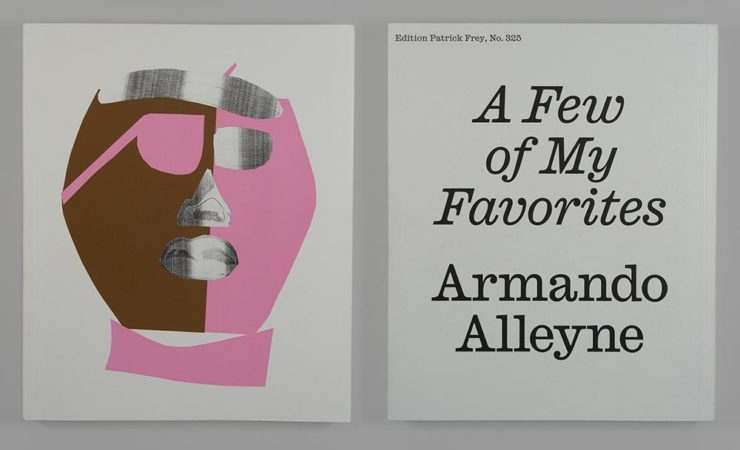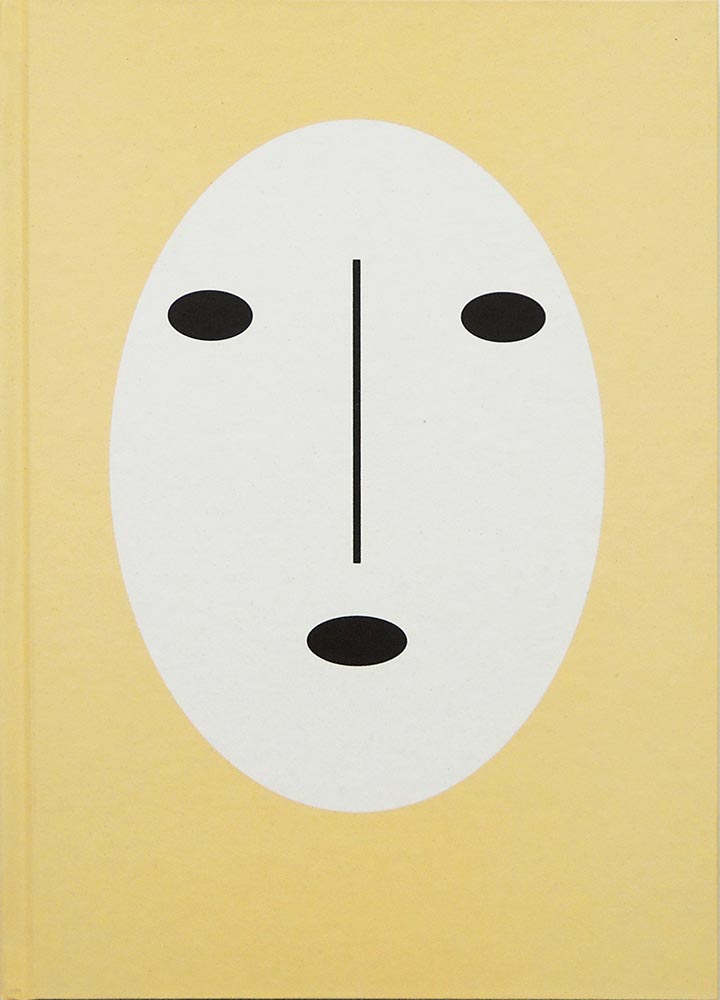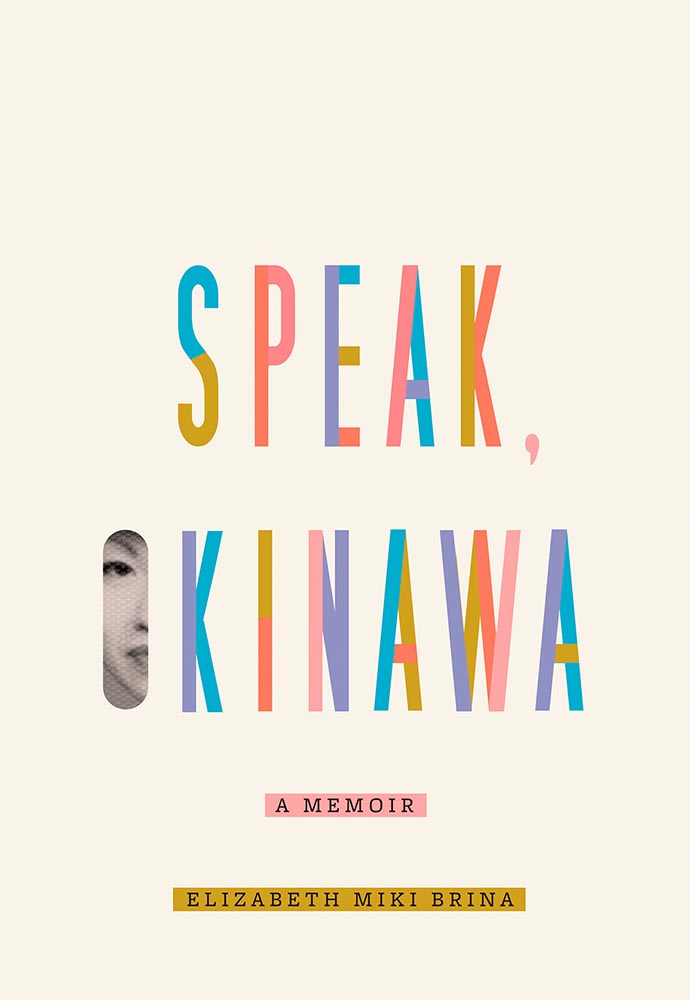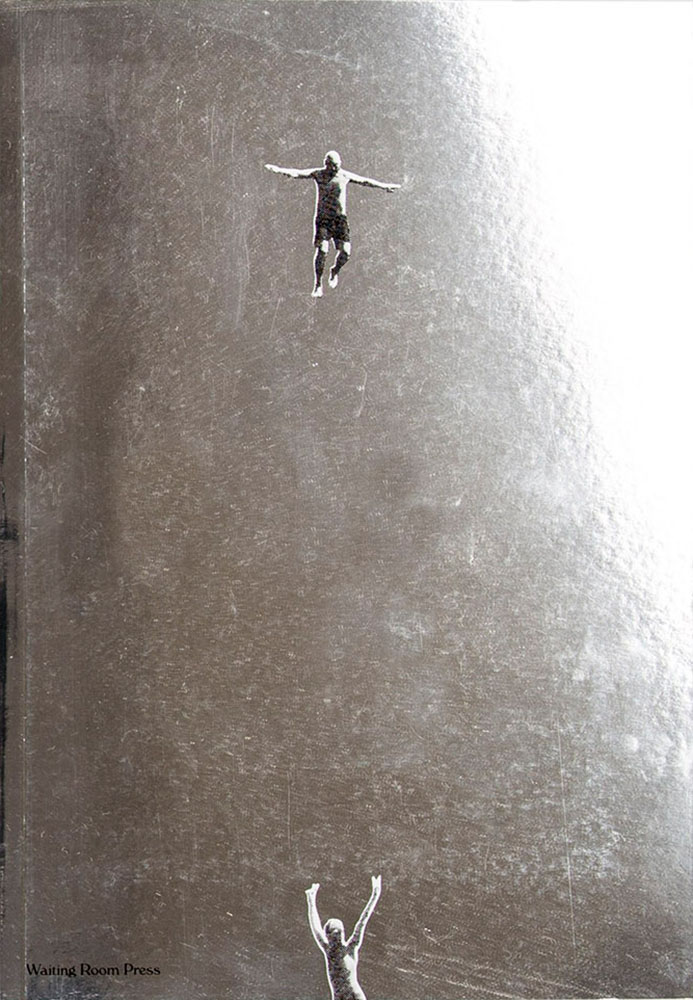
50 Books | 50 Covers (2024 Edition)

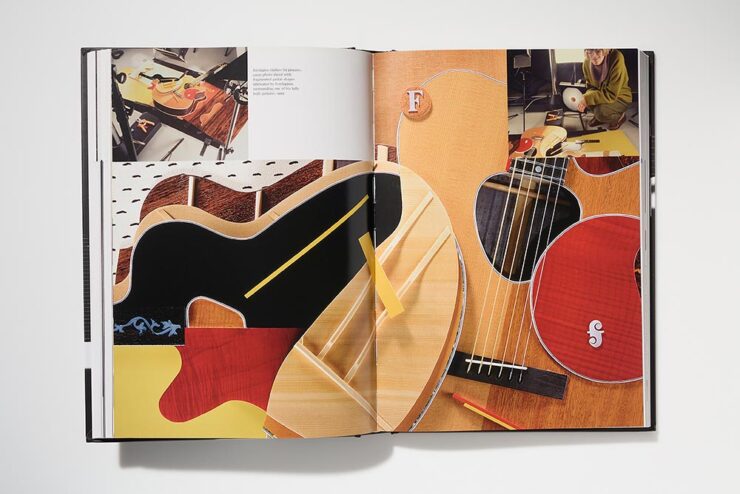
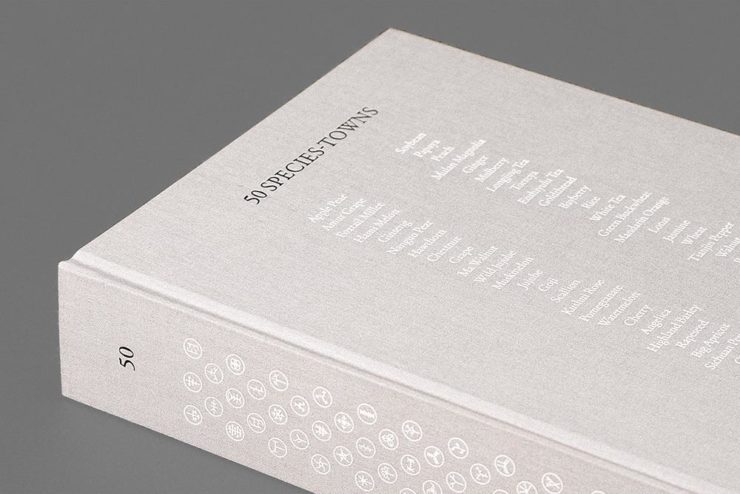
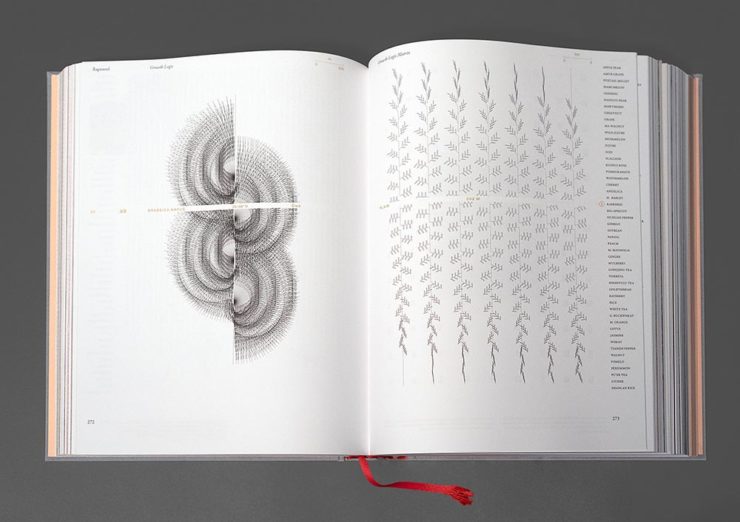
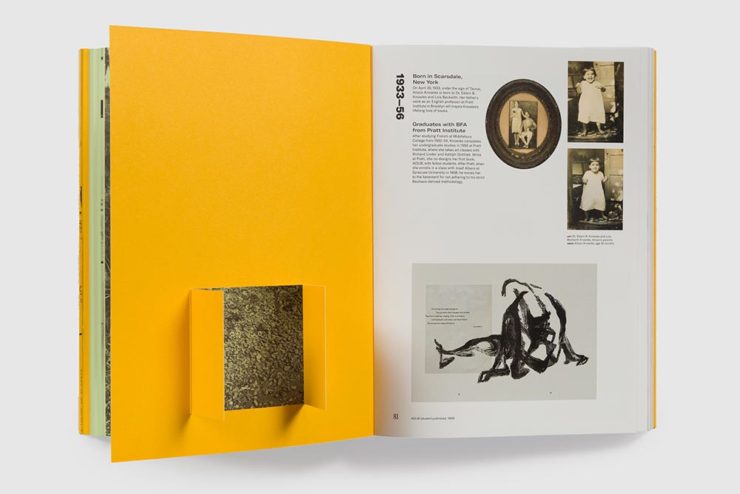
The AIGA’s book design competition has been around for 101 years now — and every year, it’s a pleasure to explore the great work featured within. This year, the jury “had the unique opportunity to view 523 entries from practitioners working in the book design field. It is encouraging that designers continue to be interested in this medium and are currently developing new ways of working with publishers and printers to push our discipline further,” said chair JP Haynie.

In order to be eligible, submitted designs had to have been published and used in the marketplace in 2024. Like last year, the winners were announced in October.

I’m sorry to be running late on this coverage, but as always with 50 Books | 50 Covers, it’s absolutely worth taking the time to go through the gallery and appreciate the dedication to craft shown within. (It just took a little longer than usual to share.)

Twenty titles are highlighted below. Taking a page from my Spine column, I’m including links to each book’s page so you can explore further. The titles are in alphabetical order.

Note: As with all posts here on Foreword, click the title to get to a dedicated page with a wider text column and, more importantly, bigger images.
Cover design by Lauren Peters-Collaer.

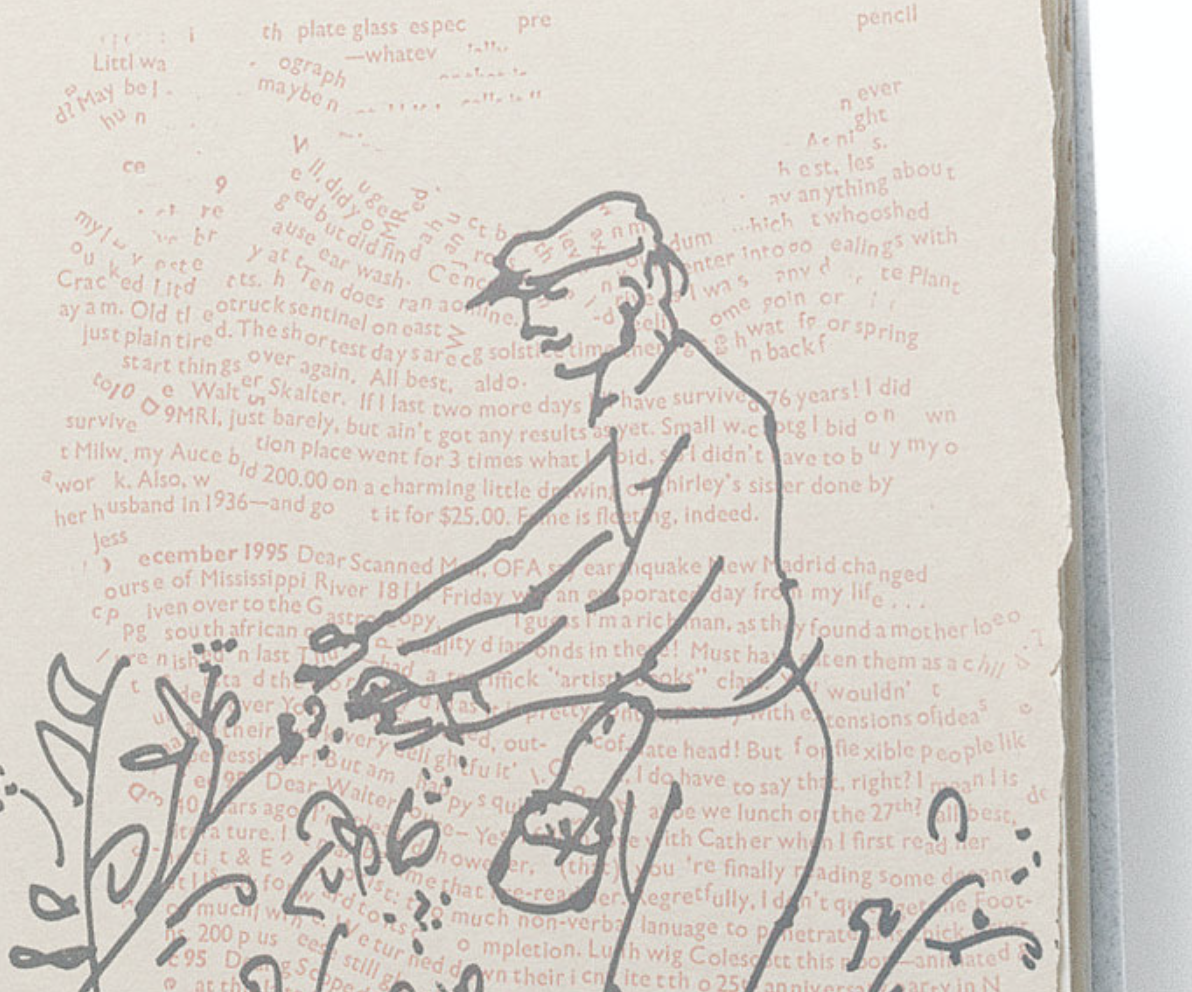
Many layers of Flattery deserved here.

Unfortunately, several of the individual AIGA gallery pages contain nothing other than the book and some rudimentary information. This is one.
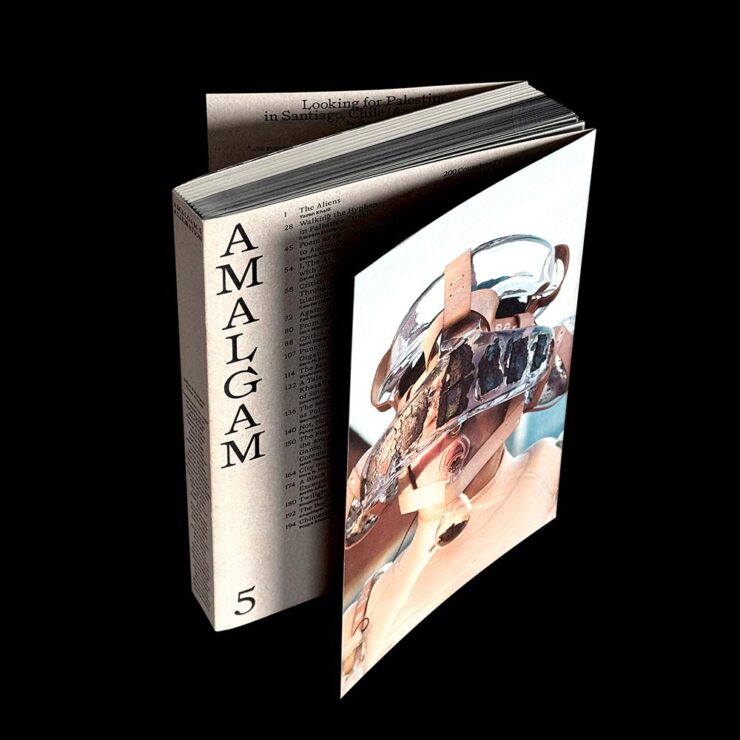
Cover design by Pouya Ahmadi; art by Tanya Aguiñiga; photography by Gina Clyne.

Two specific shout-outs here: this issue’s title, AlieNation, and those flaps. It’s not the first time I’ve seen those large reverse flaps, but here done oh-so-well; there’s useful text hidden in those areas and dynamic photography (art, really) on the “surface.”

It’s fantastic to see journals in these awards, too — an underrepresented category, to be sure.
See more about this title.

Book design by John Key.

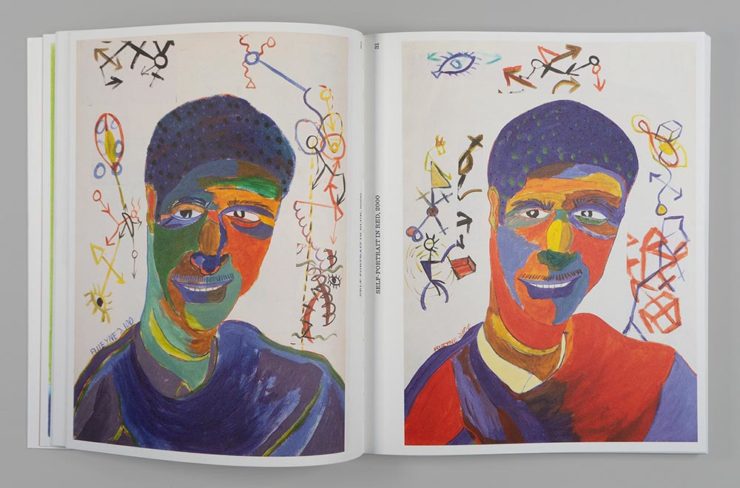
One of the best things about the 50 Books competition is that it’s about the whole project, not just the cover. We get to see interior designs like this one, designs that are interesting and contributory to the mission of the title — which, when the title is about a designer, a high bar indeed.

See more about this title.

Cover design by Chris Allen.

Wading into this minefield — even as a book designer — could be an issue, to put it mildly. This one’s got just the right character, leaning into the great (and perfectly cropped) image, simple-yet-effective use of color, and large text to, um, score a lot with a small input.

See more about this title.

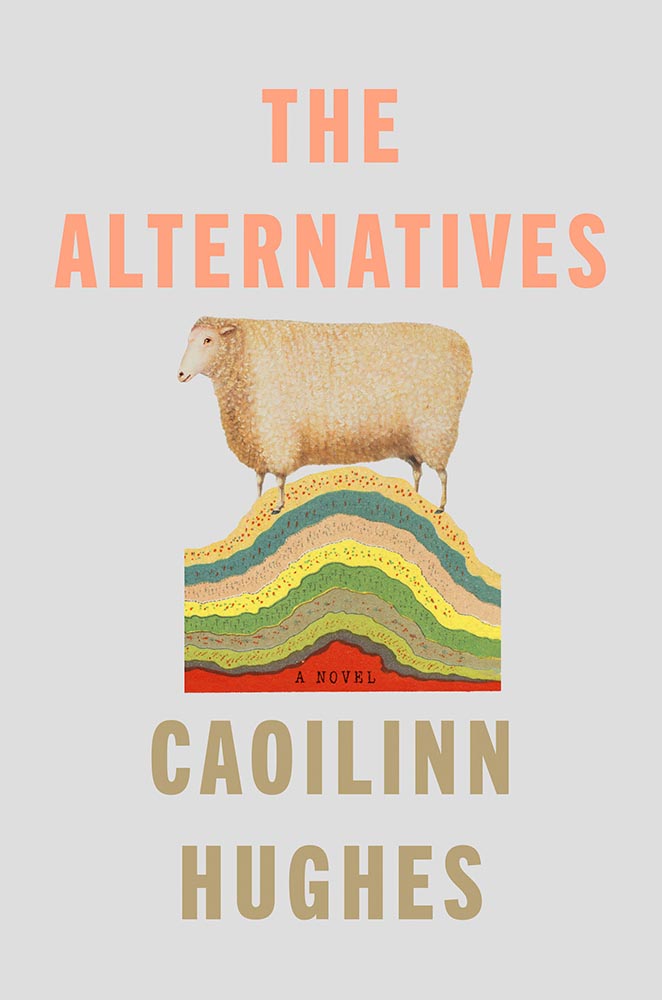
Cover design by Lauren Peters-Collaer.

Billed by The Washington Post as “riding a unicycle up and down a set of Escher staircases,” this novel deserves a cover design that’s not quite what’s expected.

Delivered.

See more about this title.

Jacket design by Jennifer Griffiths.

As I mentioned above regarding 50 Books, one of the great things about 50 Covers is that we often get to see not only the cover image but the jacket as a whole.
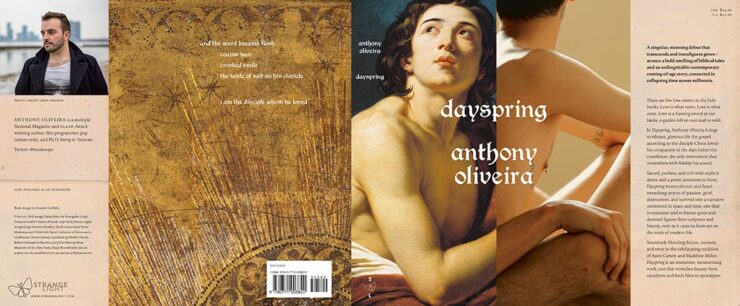
Jacket design by Jennifer Griffiths.

The cover is awesome, a juxtaposition in just the right way. But the jacket as a whole is more complete, more contextual, and in this case, calmly supportive of the more provocative front cover.
See more about this title.

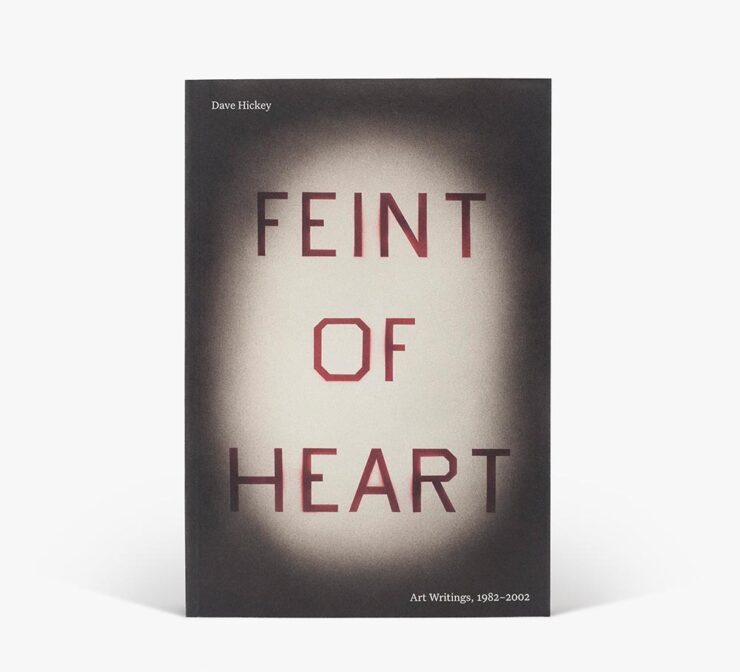
Cover design by Mark Thomson.

I’m surprised that this style of vignetting isn’t used more often, using both the light area to draw the viewer’s attention to the title and the dark areas as a holding area for other necessary text. Falls into what I like to call, “simply, elevated.”
See more about this title.

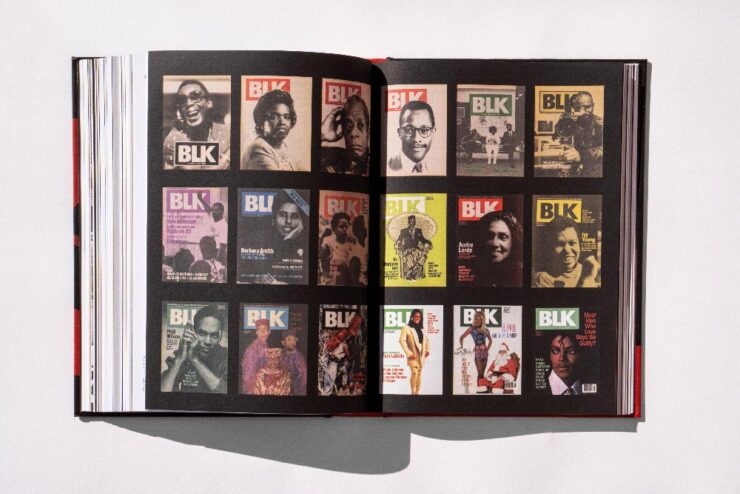
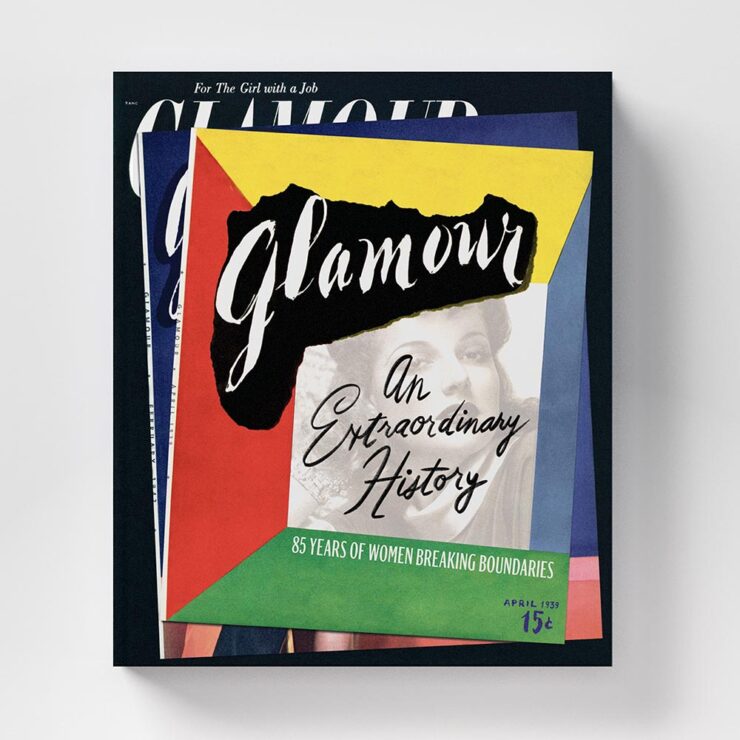
Cover design by Alexandra Folino.

This title has an interesting cover, yes, but it’s the highly competent interior design that really caught my eye:
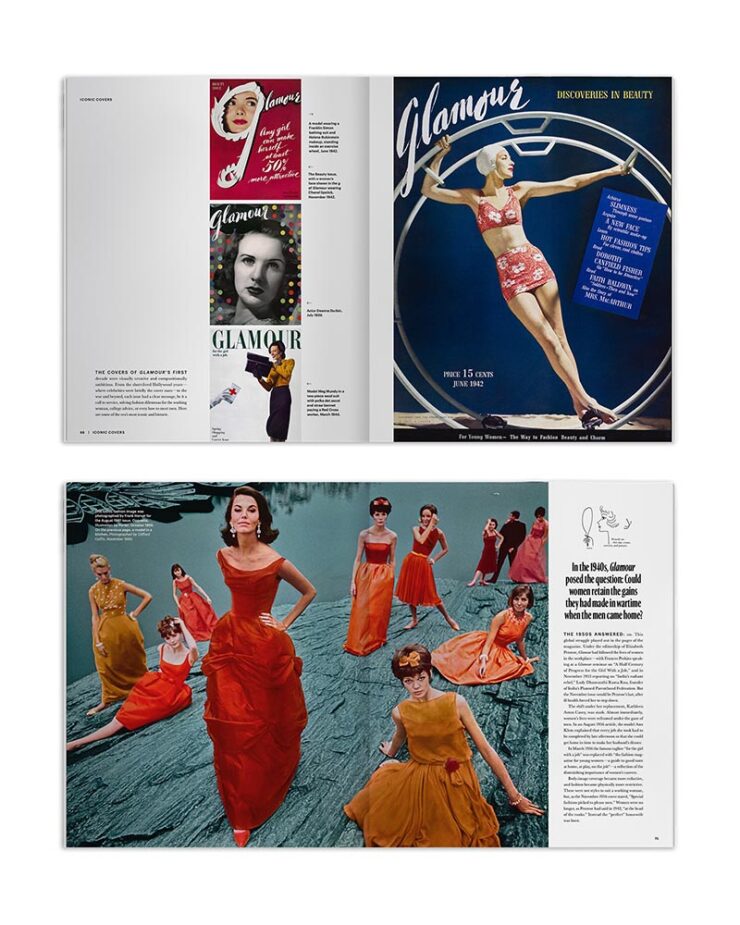
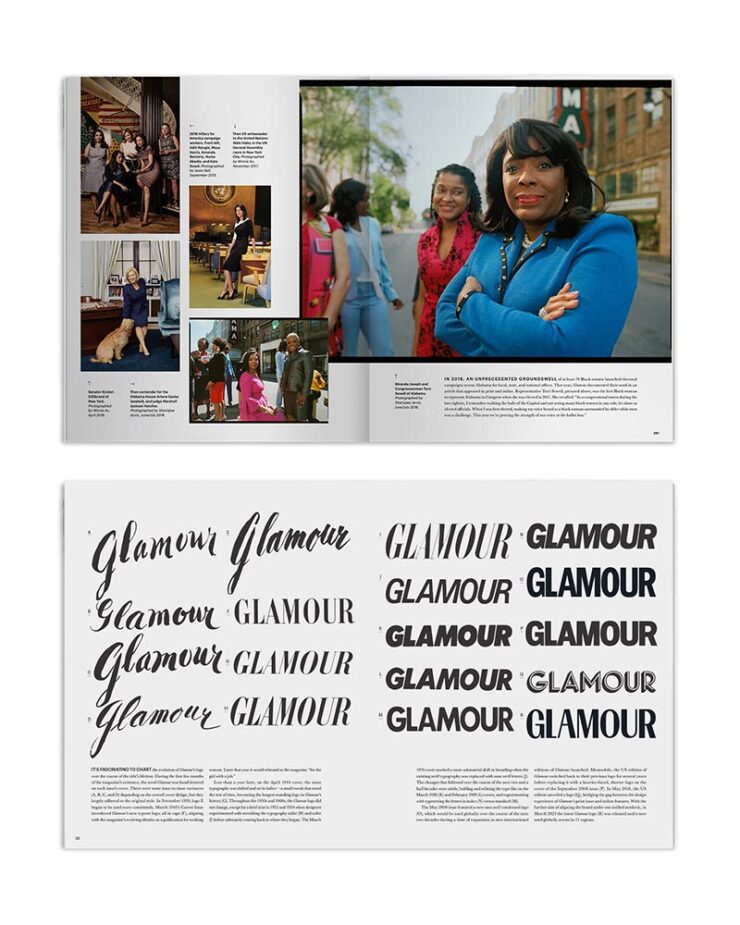
Book design by Alexandra Folino.

With the wealth that is Glamour‘s history to pull from, the designer here has wisely used that content to elevate this title beyond simple spreads to something truly compelling. Well done.
See more about this title.

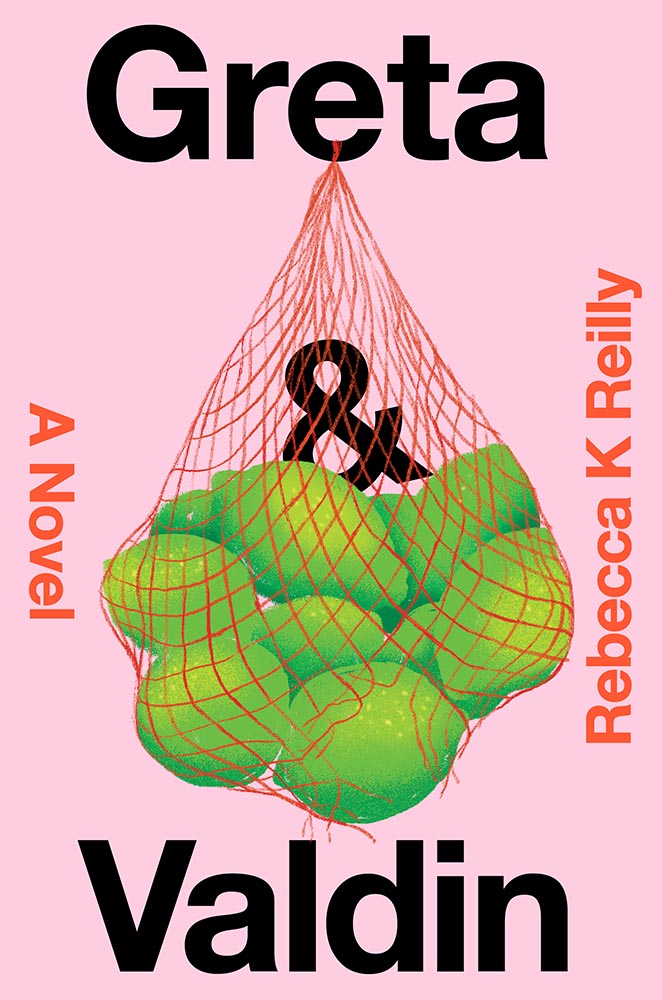
Cover design by Clay Smith.

“The bag of sublime slowly unravels,” none of the reviews said.
See more about this title.

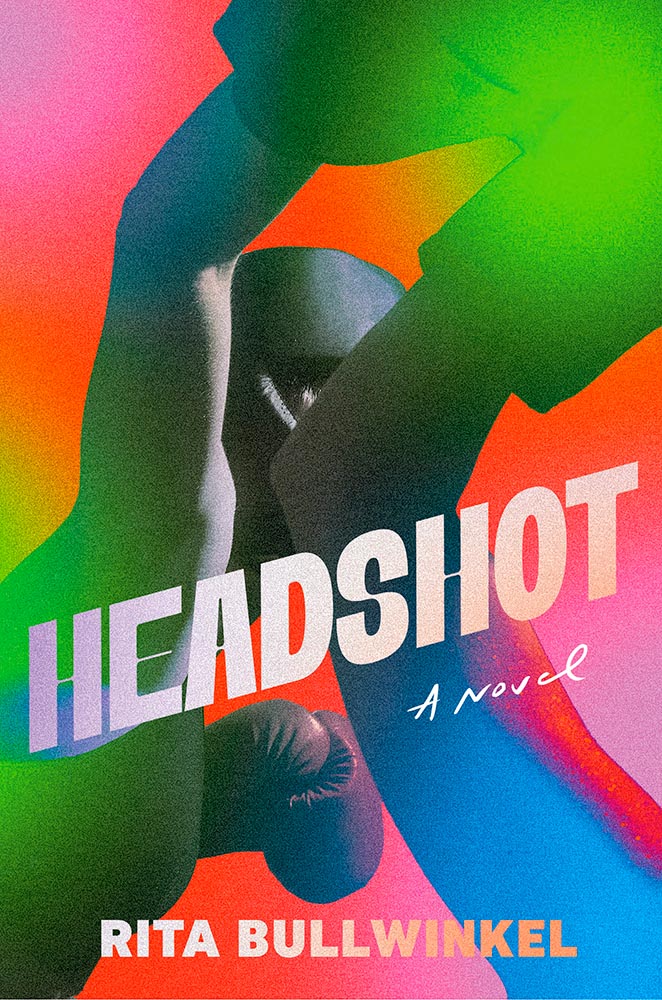
Cover design by Lynn Buckley.

Another great cover — the textures rock, the colors hit hard, the title text just right — backed up with a complimentary jacket:
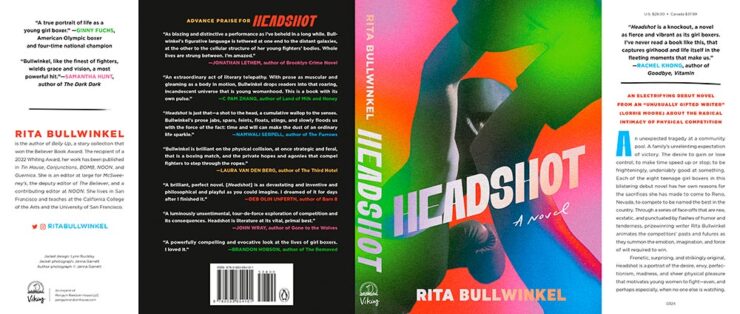
Jacket design by Lynn Buckley.

It was probably tempting to load up the design, possibly even with visual puns as bad as my descriptions, but instead it supports perfectly. Nice.

There is a link for this title, but it’s another sadly lacking any description.
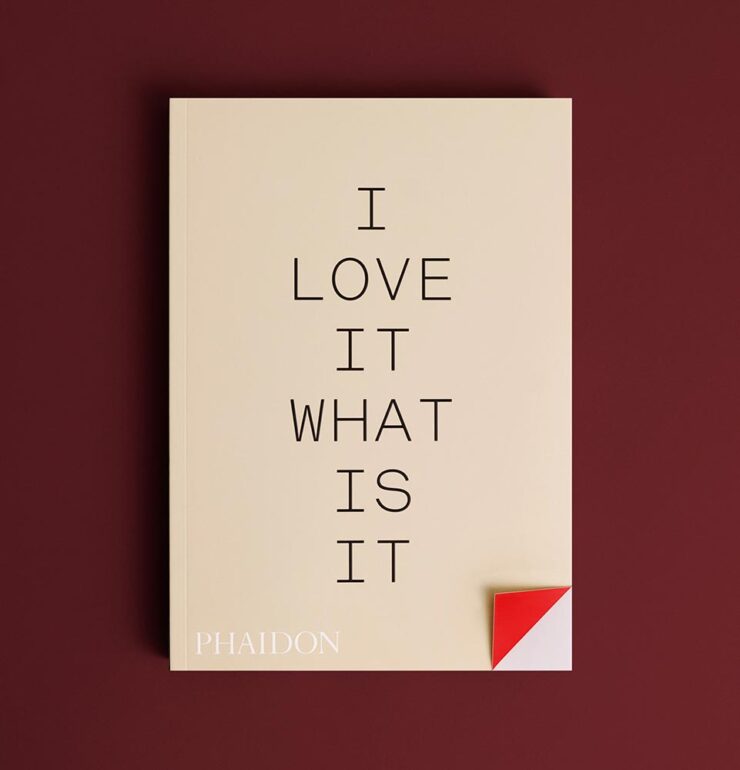
Book design by Andy Baron, Robert Williams, and Sarah Moffat.

The only title to get four images in this post. “Simply right,” taken to the next level.
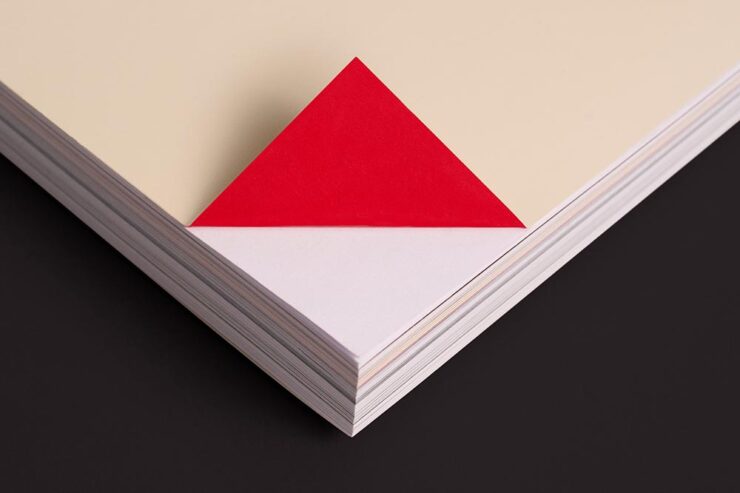
Book design by Andy Baron, Robert Williams, and Sarah Moffat.

Oh, and the interior:

Book design by Andy Baron, Robert Williams, and Sarah Moffat.

Books on graphic design can miss the mark surprisingly often, either through trying to hard and thus overwhelming the content or by attempting to let the content be the star in such a hands-off way that the book design winds up detracting. Here, every part of this supports with respect, with style, and with a smile. A real highlight.

See more about this title.

Cover design by James Ihira.

This cover is one of those multi-layer surprise-and-delight things. A closeup:
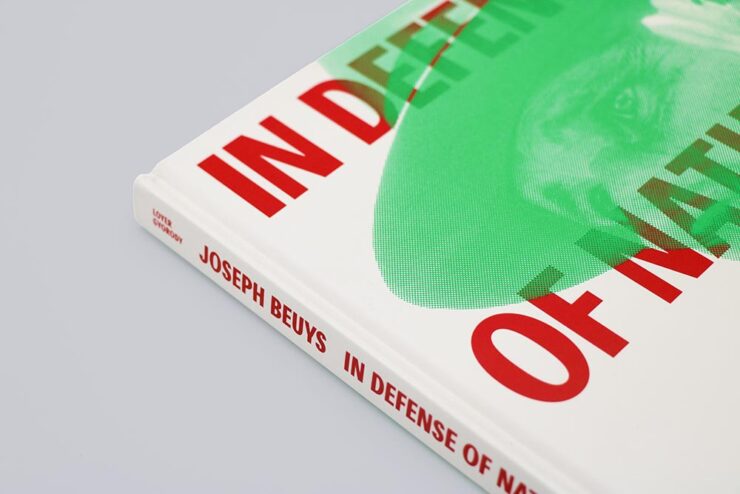
Cover design by James Ihira.

Halftone is the perfect way to handle that overprint. Excellent.

See more about this title.

Cover by Utku Lomlu.

“Screw it, we’ll just make it awesome.” (The title is Chilean, by the way — and apparently awesomely-written, as it’s the first work to be awarded the three most prestigious Chilean literary awards.)

See more about this title.

Book design by Victor Mingovits.

“‘Unexpected style,’ the Out-In-Left-Field department said. Overall pick, surely,” I said in a terribly-punny moment from my coverage of the 2025 Association of University Presses Show.

See AIGA’s page on this title.

Cover design by Leonardo Iaccarino.

No, he doesn’t look like a New Yorker. Why do you ask?
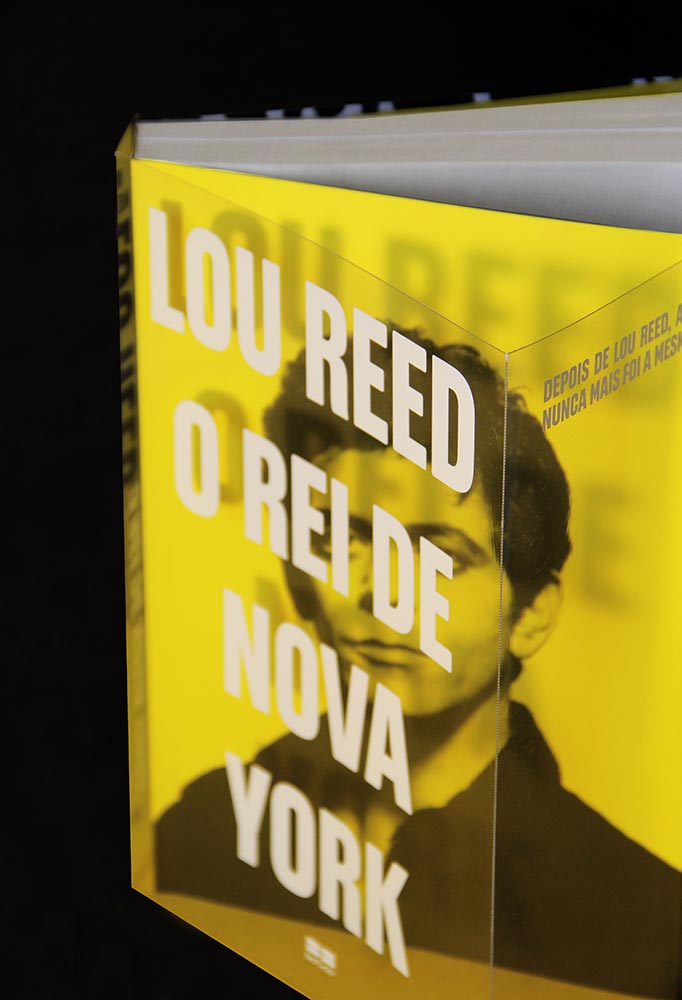
Jacket design by Leonardo Iaccarino.

The secret revealed. Awesome in any language.

See more about this title.

Book design by Alison Forner. Typography by Andrew Footit.

From another time, one of my four favorite cover designs of 2024 — and still fantastically transcendent.

Another unfortunately-blank AIGA gallery page, but here’s a link in case it’s been temporally teleported somewhere important.

Cover design by Mike Tully and Cat Wentworth.

One of those photographs that doesn’t quite do justice. Exploring a little more yields rewards:
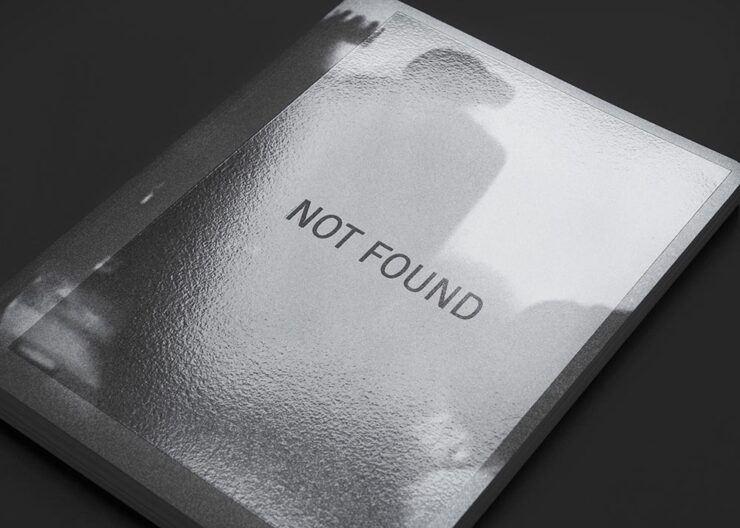
Cover design by Mike Tully and Cat Wentworth.

“Architecture is the perfect form on camouflage,” the description reads — and the book itself pulls a real varnishing act, inside and out.

The second journal on this list, by the way. Nice to see.
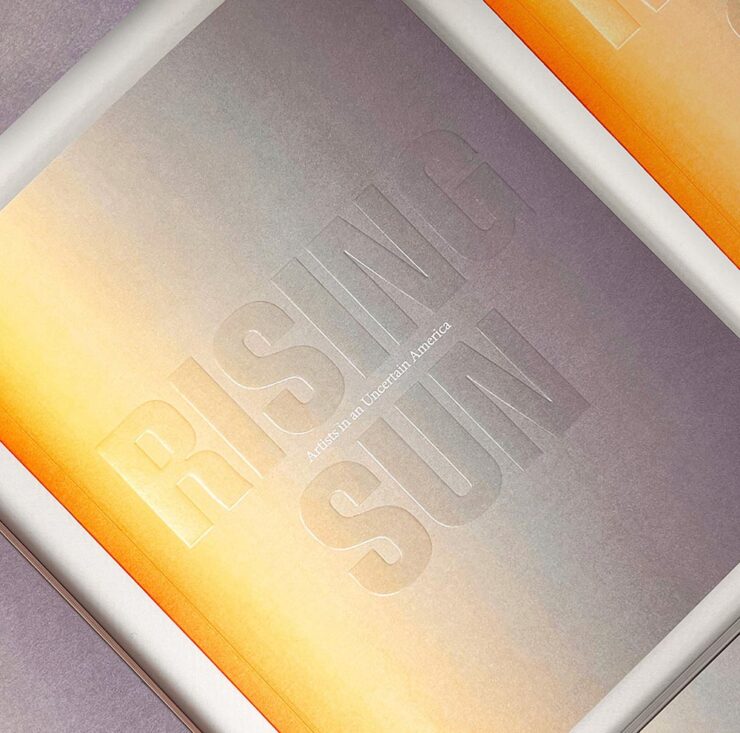
Cover design by Allan Espiritu, Kevin Kernan, and Jazel Panagsagan.

Treating the title (blind embossing and clear matte foil stamping) as reflective of the rising sun background is … genius. It’s also another entry from the awesome-flaps department:
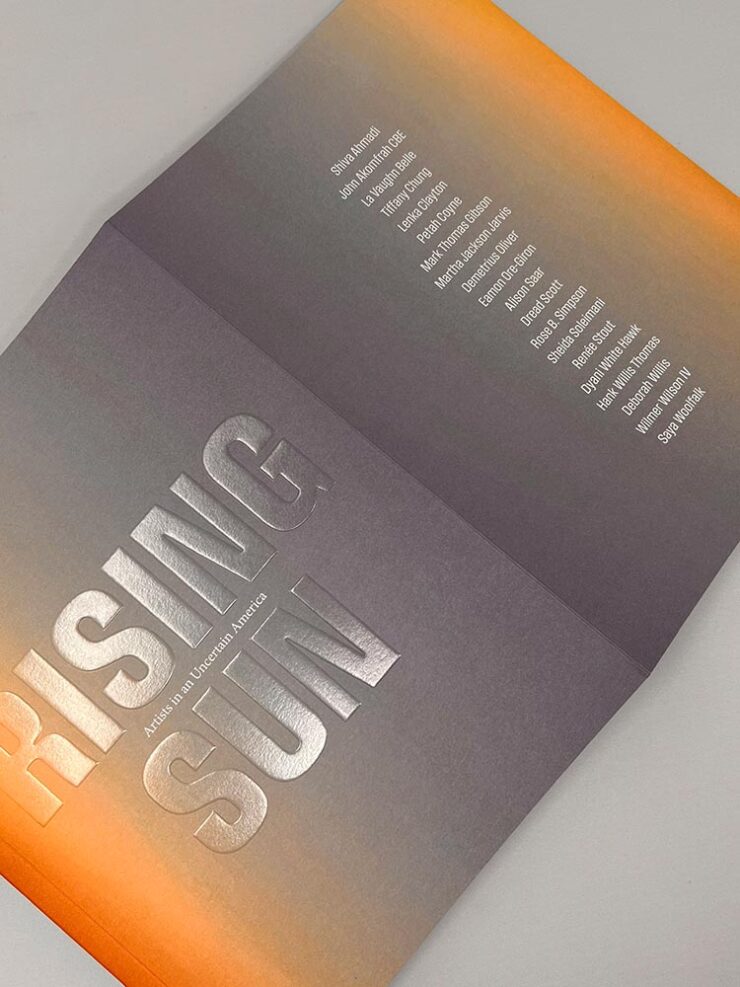
Cover design by Allan Espiritu, Kevin Kernan, and Jazel Panagsagan.

See more about this title.

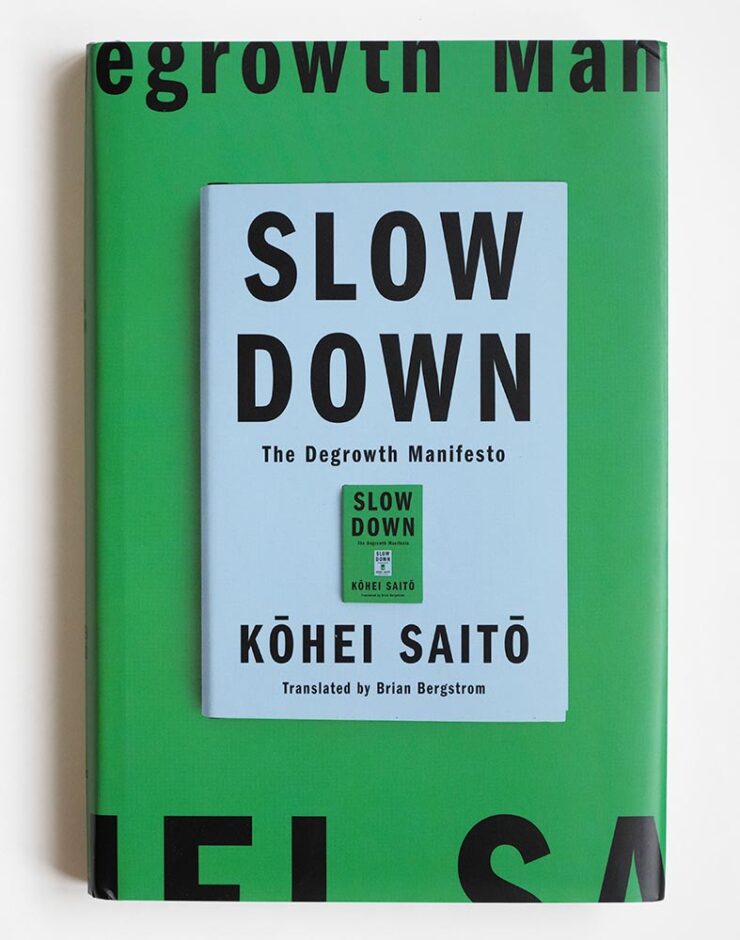
Cover design by Ben Demzer, Rodrigo Corral Studio.

It’s not necessary to slow down to appreciate the alternating, repeating covers — even at today’s drive-by speeds, it’s easily appreciated.

The becoming-familiar not-quite-blank gallery page at AIGA, but here’s a link anyway.
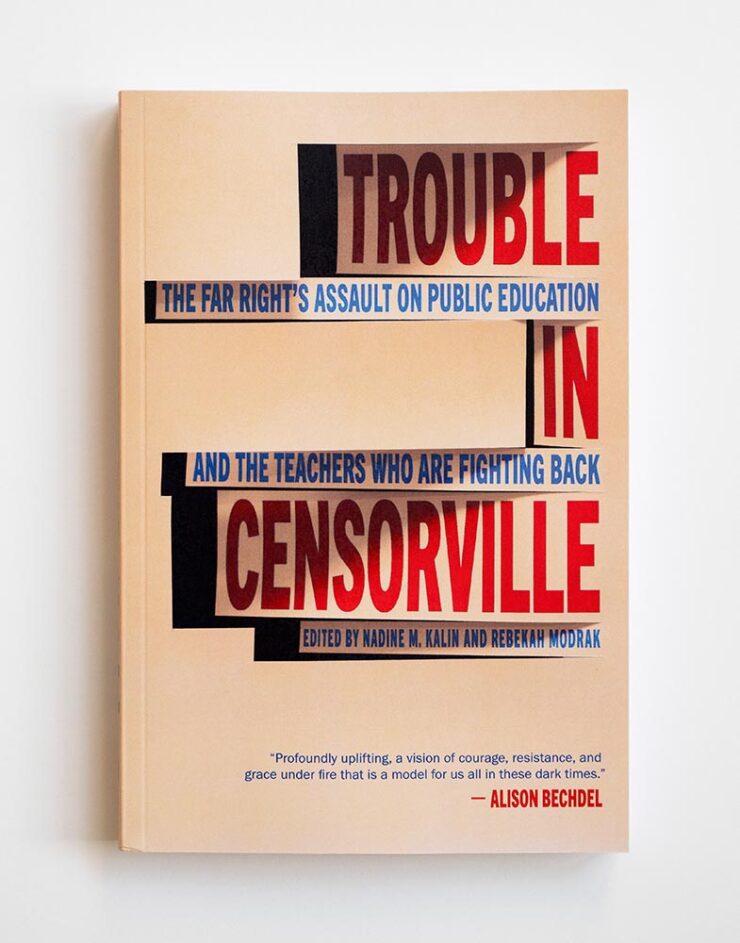
Cover design by Ben Denzer.

Two in a row for Ben, and in a completely different direction. Still, a simple concept done exceptionally well. (Rodrigo Corral Studio isn’t listed in the credits, by the way, hence the credit line here.)

See more about this title.

• • •

All of the 2024 winners can be viewed through AIGA’s online gallery, and I’d like to congratulate all for another good year. The 2024 titles will also join the growing AIGA collection at the Rare Book and Manuscript Library at Columbia University’s Butler Library in New York, one of my favorite things about this competition.

Thanks for taking a moment to share these with me!

50 Books | 50 Covers, 2023 Edition

AIGA’s annual deep dive into great book design is out — later this year, for some reason — and brings deep satisfaction with a huge variety of titles, foreign and domestic.

“One hundred years into this competition, the book seems to be as protean and chimeric as ever. At times confounded and delighted, we asked ourselves [during the judging process], Is this a course packet or a manifesto? A sculpture or a monograph? A glossary or a guidebook? Is this book contemporary or retro? Gauche or chic? We debated books that blended the grotesque with the goofy alongside books that were delicate, subtle, and difficult to emotionally classify. In the end, we felt we found some of the best of this year’s offerings, books that in every case seem to show what design can do to bring the experience of reading to riskier-yet-more-rewarding places.”

— Rob Giampietro, AIGA 50 Books | 50 Covers Chair

As pointed out above, it’s the 100th year of the competition, this time with 542 book and cover designs entered from 28 countries. In order to be eligible, submitted designs had to have been published and used in the marketplace in 2023.

Some of my favorites, in alphabetical order:

A Long Long Time Ago. Book design by You Kwok Ho.

Great texture, great graphics — on the theme of “observer.” Indeed.

A Long Long Time Ago (glow-in-the-dark detail). Book design by You Kwok Ho.

But wait: there’s more. This one observes more dramatically than it might seem, uh, at first glance.

A Long Long Time Ago (shelf detail). Book design by You Kwok Ho.

I want to get a copy just so one of my bookshelves will have this moment. Fantastic.

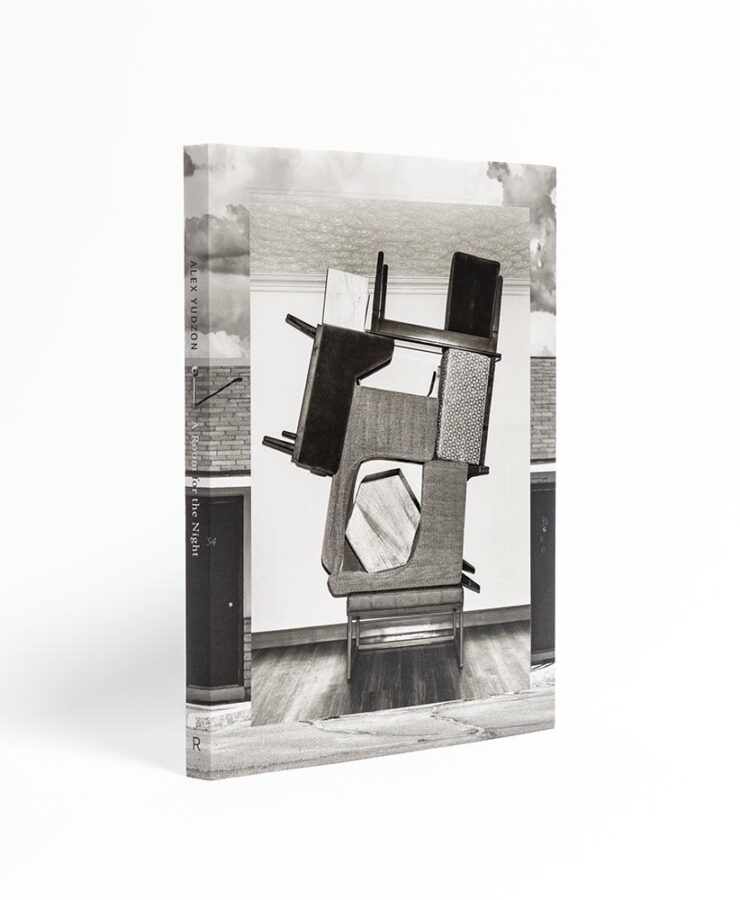
Alex Yudzon: A Room for the Night. Book design by David Chickey and Mat Patalano.

“Yudzon stacks, leans, and balances furniture [in the hotel rooms where he’s a guest] in configurations that transform these generic interiors into hallucinatory worlds where the laws of physics are suspended and dormant emotions released.” (After the installations are documented, crime-scene style, they are dismantled and the rooms returned to their original condition.) Really: who could resist? The compelling design isn’t even the icing on that cake — we’re well past that — it’s a fancy fork, ready to dig in.

Final Words: 578 Men and Women Executed on Texas Death Row. Book design by Michel Vrana.

I’m glad we have the whole cover here; the spine definitely adds to the overall, and the illustrations on the front add so much.

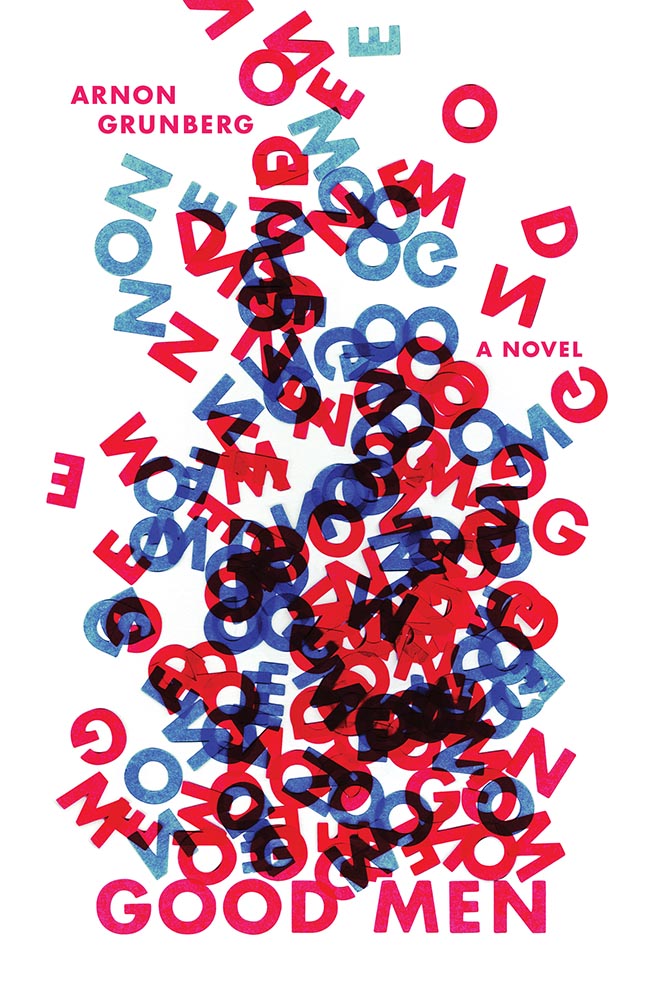
Good Men. Book design by Anna Jordan.

“I cut the letters of the title out of paper and arranged them in a way that is reminiscent of a fire – as if the words “GOOD MEN” are going up in flames. The letters rise up in a smoke-like form. Blue and red is used to emphasize the visual association with fire. The result is a visual metaphor for “GOOD MEN” blazing into entropic chaos,” designer Anna Jordan says of this novel about a firefighter, “an ordinary, sympathetic guy lost in a turbulent existence.”

Good Men (lettering detail). Book design by Anna Jordan.

Nice.

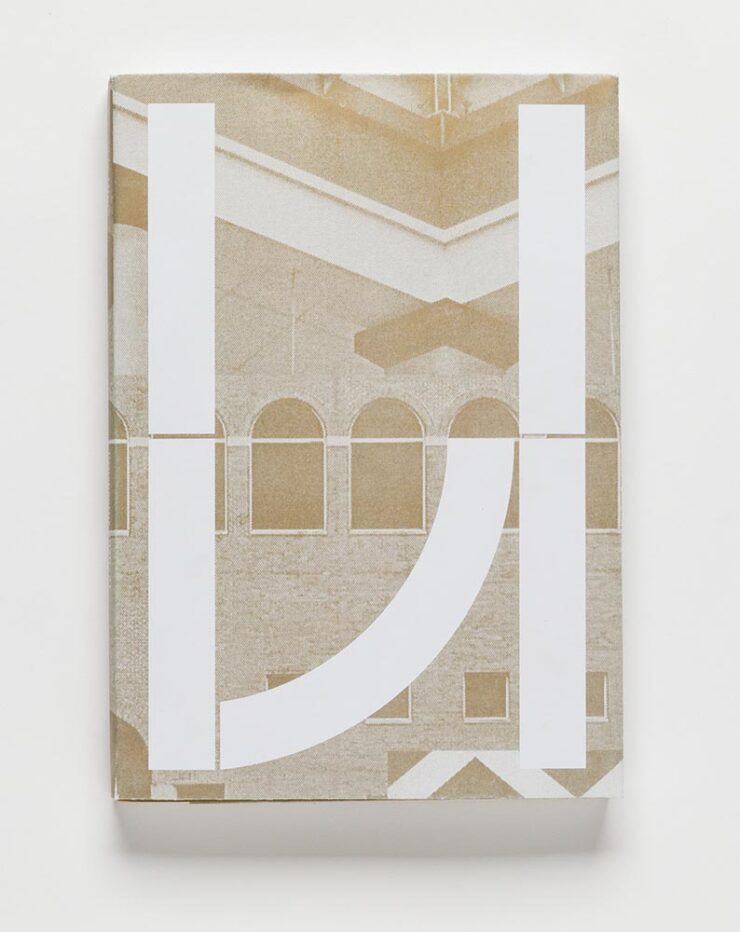
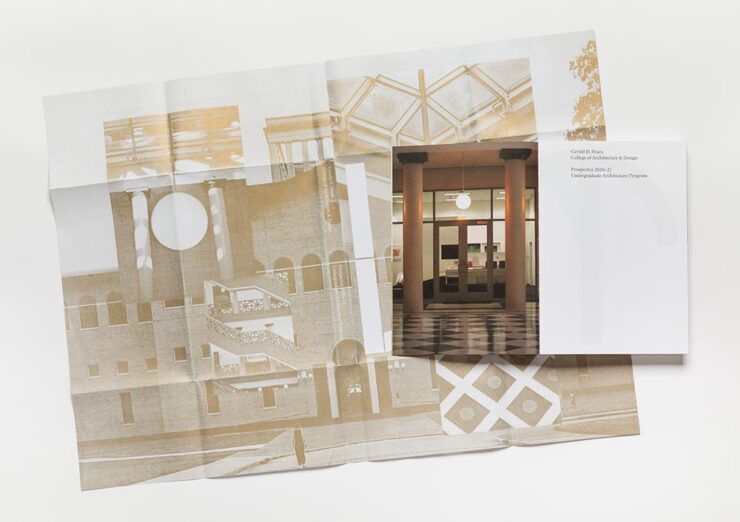
The Gerald D. Hines College of Architecture and Design: 2020–21 Prospectus. Book design by Renata Graw and Lucas Reif.

This prospectus for the University of Houston has a special bonus:

The Hines College 2020–21 Prospectus, with its jacket casually tossed over its shoulder. Book design by Renata Graw and Lucas Reif.

Design-driven impact, the dean says. Yep.

Irregular Heartbeats at the Park West. Book design by Brad Norr.

“Rural gothic,” they say. “Goodness,” I append.

Iwan Baan: Moments in Architecture. Book design by Haller Brun.

Each year, 50 Books seems to latch onto a particular theme. Last year, it was irregular page sizes (often multiple sizes in the same book); this year, it’s irregular, often hand-sewn bindings, seen here with a slip jacket starring the other recurring theme this year: translucency.

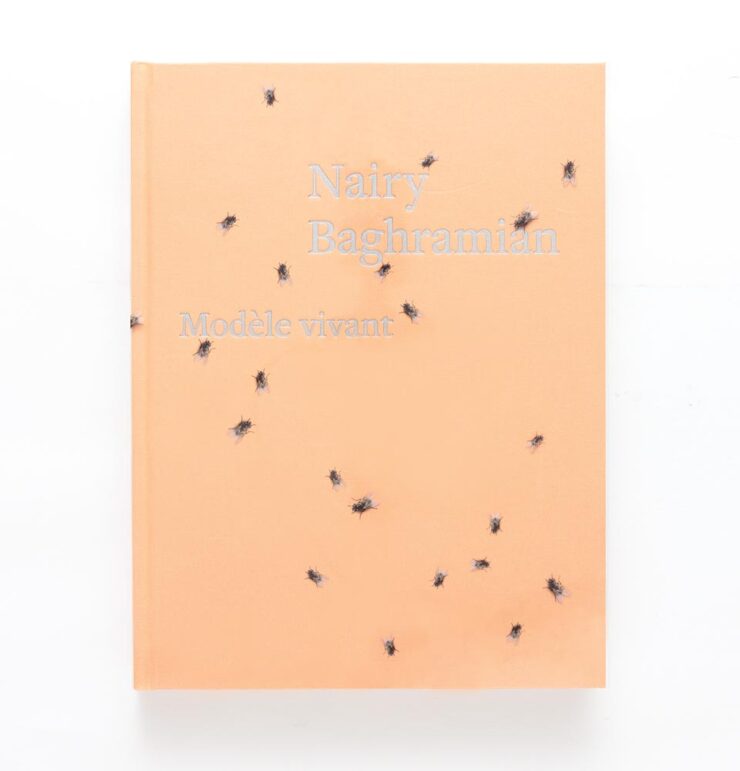
Nairy Baghramian: Modèle vivant. Book design by Green Dragon Office with Nairy Baghramian.

Speaking of translucency, this jacket is that … and something more, shall we say, eye-catching. Compelling, but does it make you want to pick it up?

Night Watch. Book design by Kelly Blair.

This title was in my folder of finalists for Foreword‘s Favorite Book Covers of 2023 but ultimately not selected. Glad to see it get some recognition. (Note that The Guest Lecture and The Nursery, two other 50 Covers winners, did make my list.)

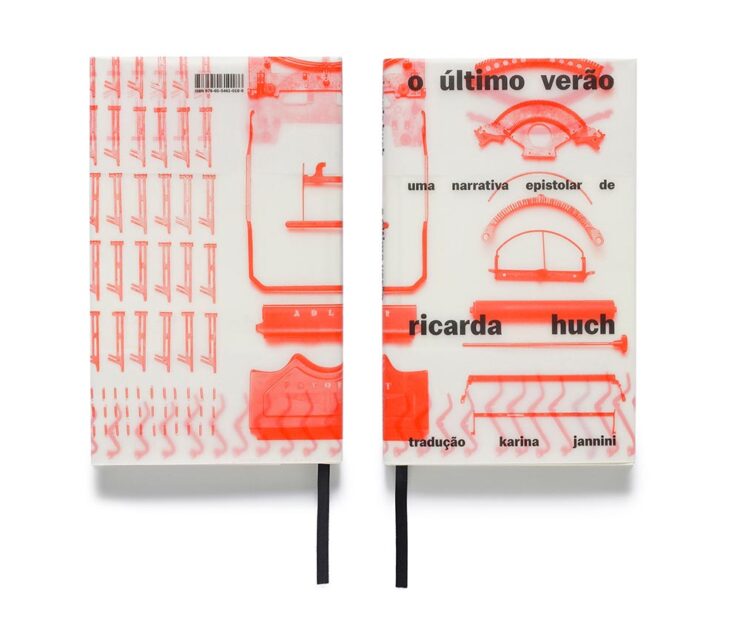
The Last Summer. Book design by Gabriela Castro, Gustavo Marchetti and Paulo Chagas.

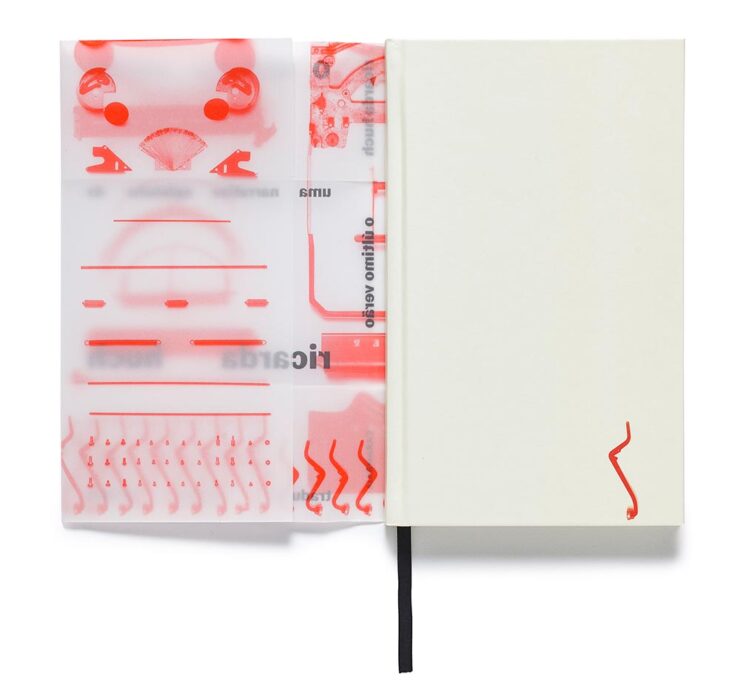
The translucency is back, this time covering — well, jacketing — a newly-republished 1910 detective novel set in pre-revolutionary Russia.

The Last Summer (jacket detail). Book design by Gabriela Castro, Gustavo Marchetti and Paulo Chagas.
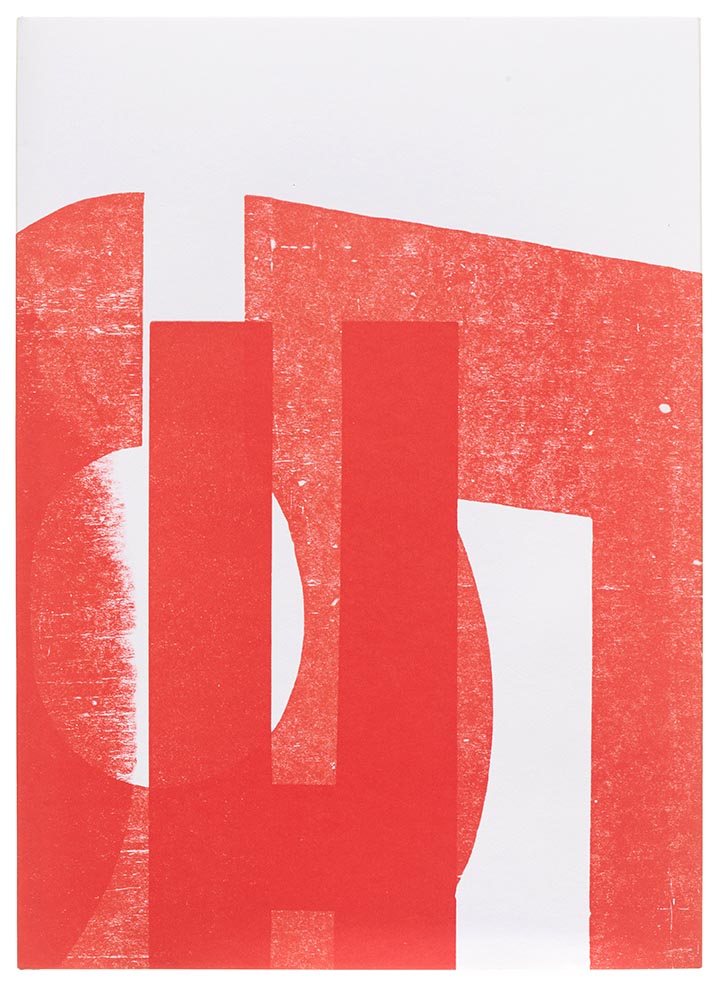
Only on Saturday. Book design by Chuck Byrne.

“Printing legend Jack Stauffacher’s experimental make-ready sheets informed both the cover and the jacket for the regular edition,” 50 Books says, in another red-and-white triumph.

Overlap/Dissolve. Book design by Nancy Skolos and Thomas Wedell.

Great three-dimensionality on this cover, with an equally compelling interior:

Overlap/Dissolve interior spread. Book design by Nancy Skolos.

“We set up compositional frameworks to express harmony, conflict, resolution, or both,” the designers write. “For us there is never one perfect design solution, but the process generates one idea that overlaps and dissolves into the next.”

Sketches on Everlasting Plastics. Book design by Renata Graw and Lucas Reif.

Sketches on Everlasting Plastics, which “explores the infinite ways in which plastic permeates our bodies and our world,” accompanied the exhibition Everlasting Plastics at the 2023 Venice Architecture Biennale. (Note the binding.)

Steel Like Paper. Book design by Wolfe Hall.

Debossed type, linen spine, great photographs. Nice.

And, last but certainly not least:

The Adult (full jacket). Book design by Kate Sinclair.

Simple at first glance, yet brings more on multiple levels. Great.

Each of the 2023 winners can be viewed through AIGA’s online gallery, and will become part of the AIGA collection at the Rare Book and Manuscript Library at Columbia University’s Butler Library in New York.

Via, as is often the case, PRINT Magazine.

50 Books | 50 Covers, 2022 Edition

AIGA once again surprises and delights in their annual competition of book design.

Since its inception in 1923 as the Fifty Books of the Year competition, this annual event highlights AIGA’s continued commitment to uplifting powerful and compelling design in a familiar format we know and love. As book jackets became more prevalent, the competition evolved with the field to acknowledge excellence in cover design. Beginning in 1995, the competition became known as 50 Books | 50 Covers. 

AIGA Press Release

The jury and I were very impressed with both the quantity and quality of the entries this year, which made choosing only 50 extremely difficult. Among the trending techniques this year were use of exposed bindings and elaborate page sequencing and mixed paper choices. For me, there was a greater overall sophistication in book design, with a mix of aesthetically beautiful and graphically brash approaches in the final choices.

Andrew Satake Blauvelt, Director, Cranbrook Art Museum (Chair)

As usual, there’s some overlap with various lists of “best of 2022” — here’s Forewords — but, as LitHub puts it, these are the best book [designs] of 2022 that you (probably) haven’t seen.

A selection of my favorites, in alphabetical order:

Cover design by Mary Austin Speaker

Simplicity itself — along with some awesome block type — add up to a great cover. (Love the angled blurb, too.)

Book design by Zack Robbins and Bentzion Goldman

One of the great things about this post is the “50 Books” part; this cover’s okay, and the spine more than okay, but it’s the interior design that really wins in my book (pardon the expression):

Book design by Zack Robbins and Bentzion Goldman

Kudos: the photography is great, but the spread above is artistic in wonderful way.

Book design by Kimberly Varella.

The trend, mentioned above, to mix paper stocks and styles is shown to full effect here. This book has too many great examples to post; see more.

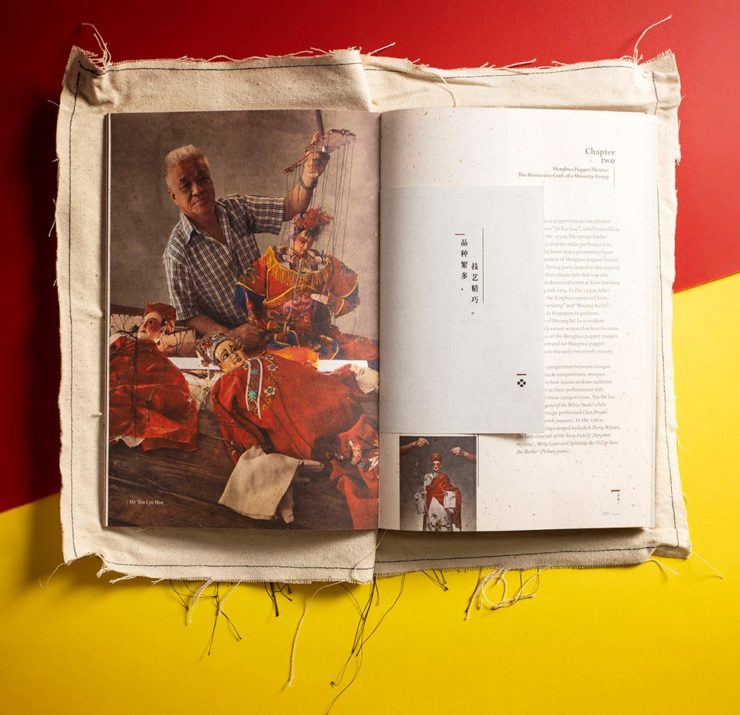
Meanwhile, Uncovering Singapore’s Traditional Chinese Puppets may not be a title you’d automatically reach for, but…:

Book design by Alvin Ng and Jesvin Yeo.

More mixed papers (sizes, too), more great stuff. (See additional examples.)

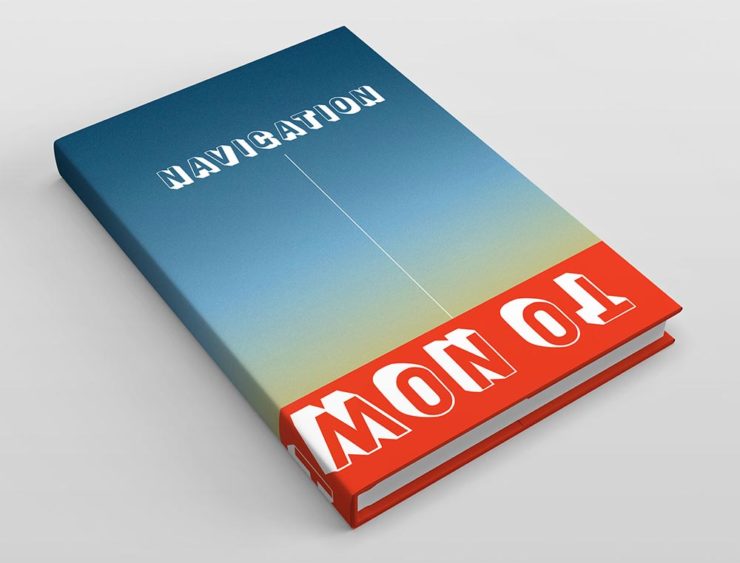
Cover and jacket design by Lindsay Starr.

This is an interesting, compelling cover and jacket design as shown above. However, once again, rather than post it all here, I’m just hoping to whet your appetite — you need to see this one unfold (literally).

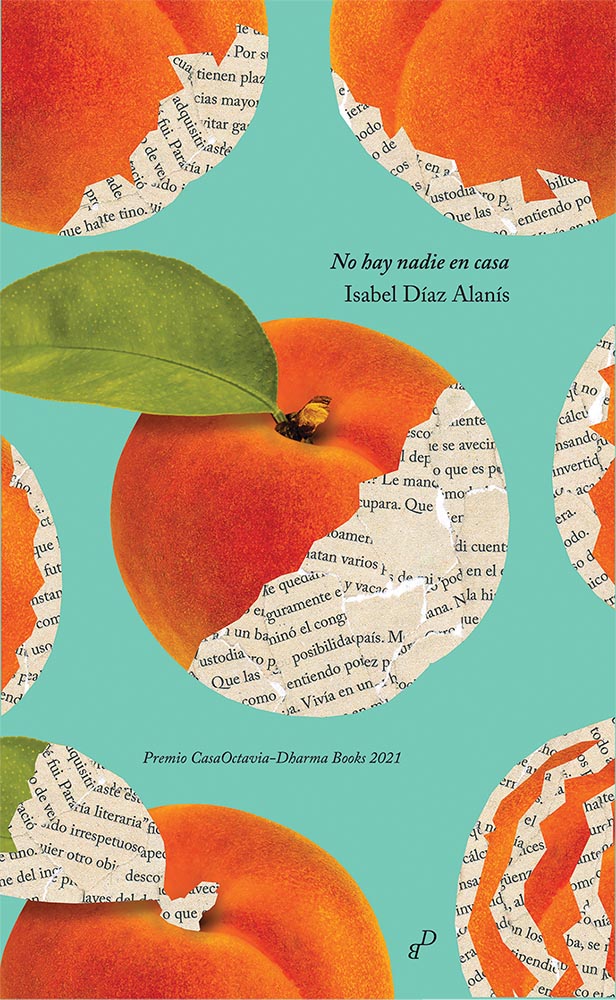
Cover design by Raúl Aguayo.

Great colors, great combinations, great cover.

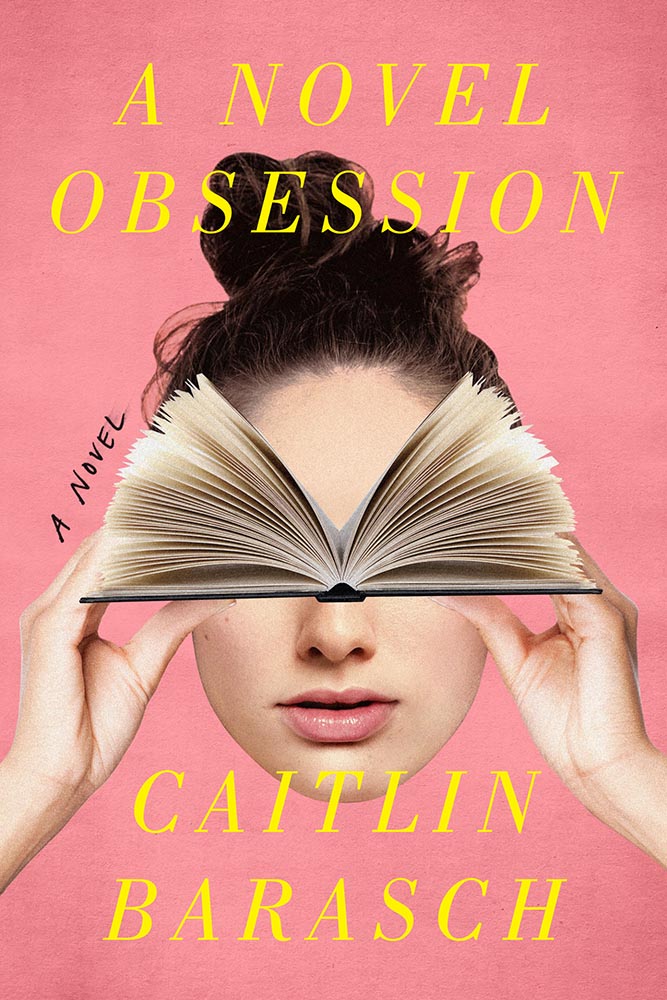
Cover design by Vi An Nguyen.

I’m always a sucker for photographs of practical items used in ways that make book covers great, and this one’s a shining (pink) example.

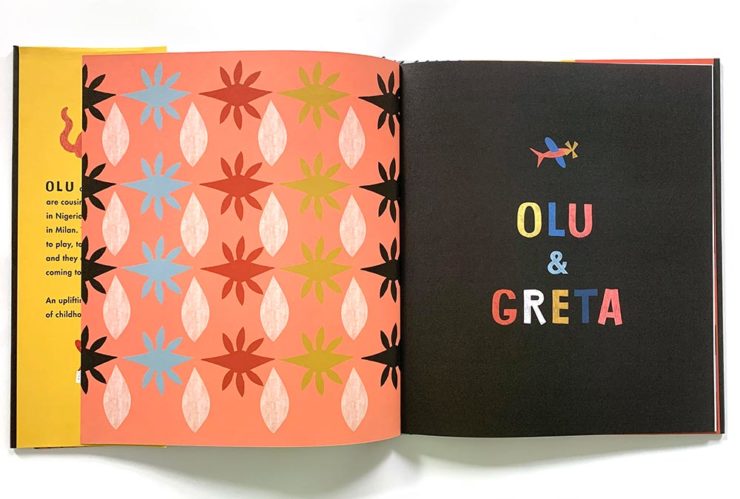
Book design by Maria Elias.

There’s so much great design work done in the children’s book market it’s not even funny. The first of two great examples. (See more from this title.)

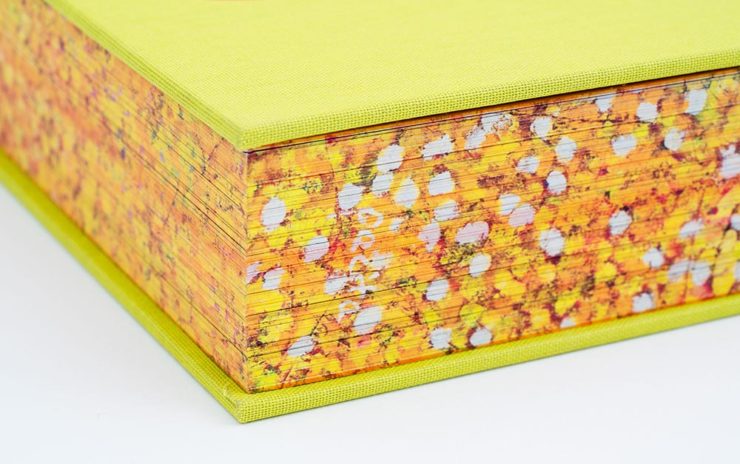
Book design by Mỹ Linh Triệu Nguyễn.

A book’s edges are so often a canvas left unexplored. Not with this book, Pacita Abad. (See examples from this title’s wonderful interior, too.)

Cover design by Christopher Sergio.

I’ve highlighted this design before, but every time I see it I like it more. Glad to see it as an AIGA 50 Covers winner.

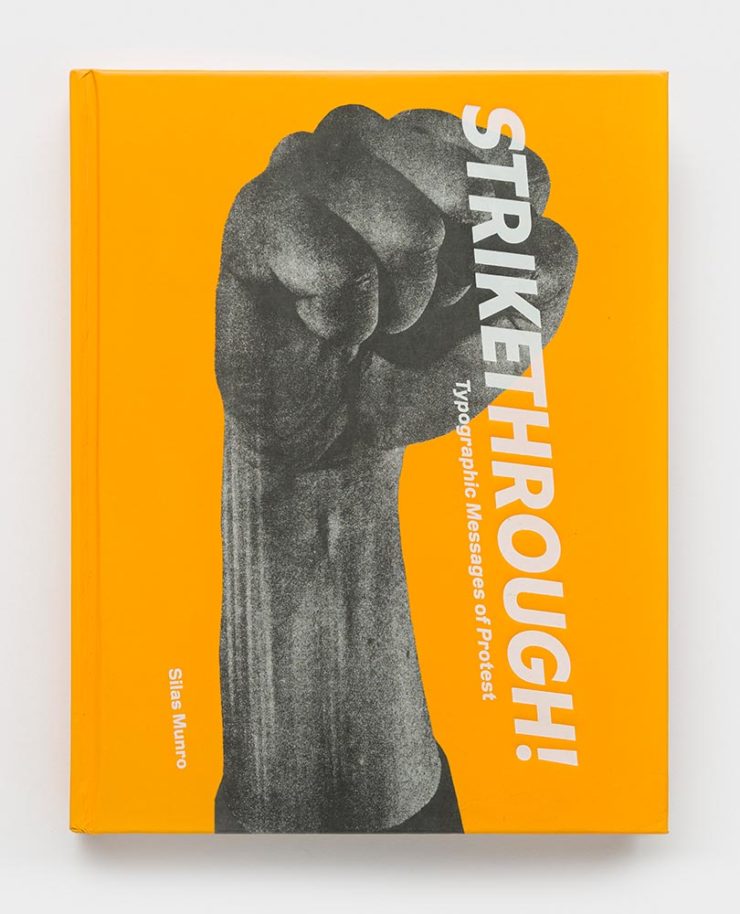
Book design by Brian Johnson, Michelle Lamb and SilasMunro.

Typographic Messages of Protest, indeed — done in an appropriately powerful way. The suggestion of motion is a great touch.

Cover design by Chris Allen.

“Block party,” defined. Excellent.

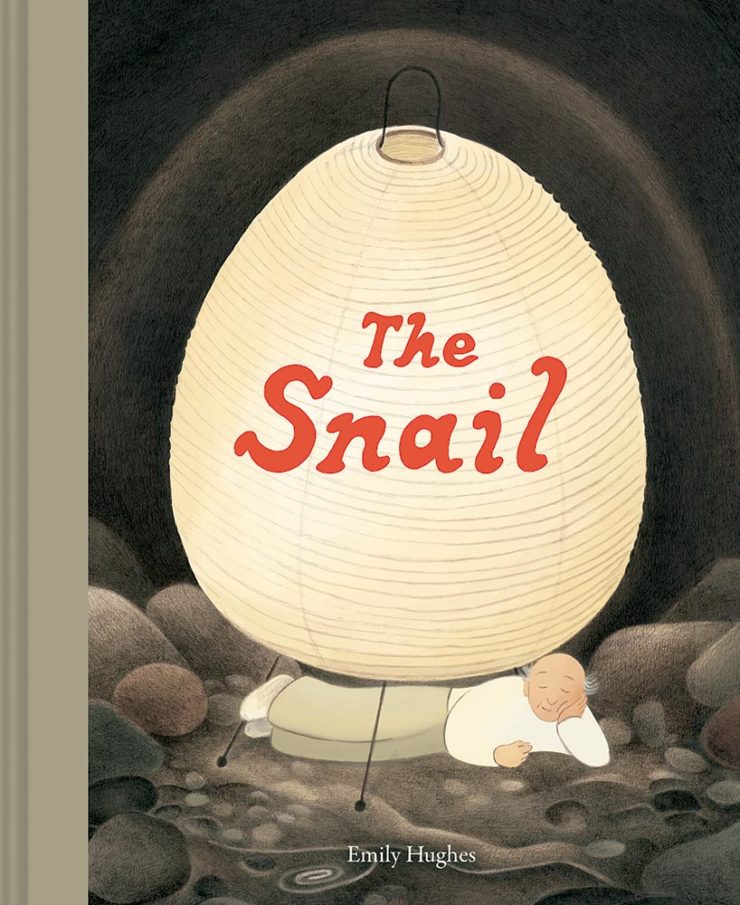
Book design by Jay Marvel.

The second children’s title on this list, including an interesting and distinctive style. (See the interior of this book.)

Again, these are only some of my favorites — there are many more, all of which deserve a look. Congrats to all the designers who made these title happen and thanks to the AIGA for this annual delight.

See also: Last year’s winners. Via: It’s Nice That.

50 Books, 50 Covers: 2021 Edition

AIGA has announced their winners of the 2021 50 Books, 50 Covers competition:

With 605 book and cover design entries from 29 countries, this year’s competition recognizes and showcases excellence in book design from around the world. […] Eligible entries for the 2021 competition were open to books published and used in the marketplace in 2021.

AIGA Press Release

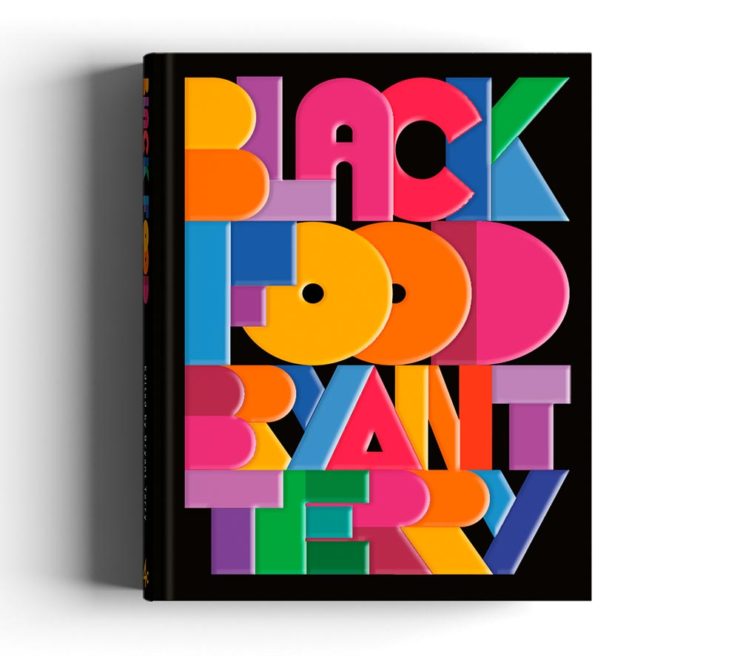
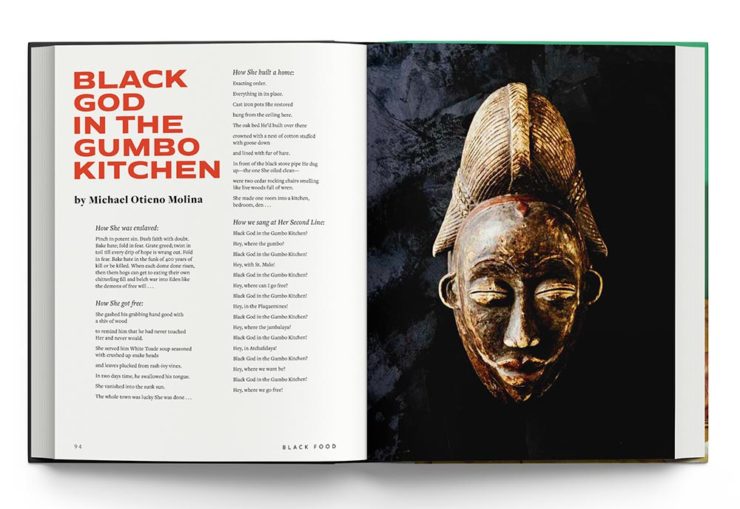
In this year’s competition, innovative book designs for topics ranging from designing and motherhood, African surf culture, stories of resistance, visual histories of Detroit, Black food traditions, and more all give our jury life, hope, and visible windows into new possible worlds. The covers and books we looked at had a diverse range of visual language and took aesthetic risks.

Silas Munro, AIGA [Competition] Chair

As usual, there are items here that I haven’t seen before, along with several that surfaced on others’ “best of 2021” book design lists (see that Foreword post for my faves). Also as usual, there are some excellent choices.

Further, there’s something in this competition that you don’t see in the usual “best of” posts: interiors. Half of the competition is covers, sure, but the other half considers the whole book design — and sometimes, as I can definitely attest, an underwhelming cover can lead to a treasure within.

But enough talking. My favorites, in no particular order:

Cover by George McCalman.
Book design by George McCalman.

This is one from the 2021 “best of” finalists that I didn’t post about — but now that I’ve seen the interior…. So very worthy. (See more.)

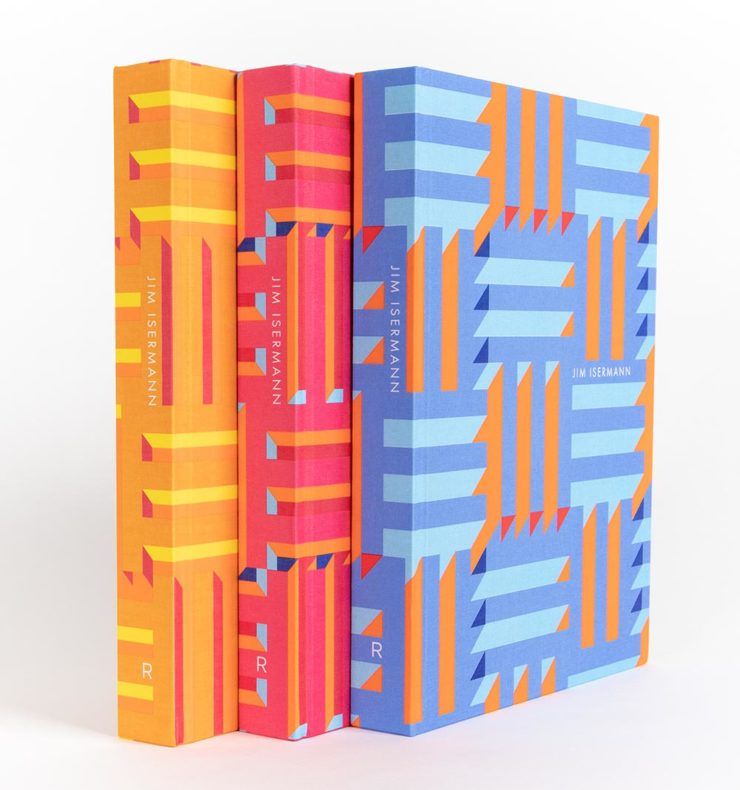
Cover design by David Chickey and Mat Patalano.
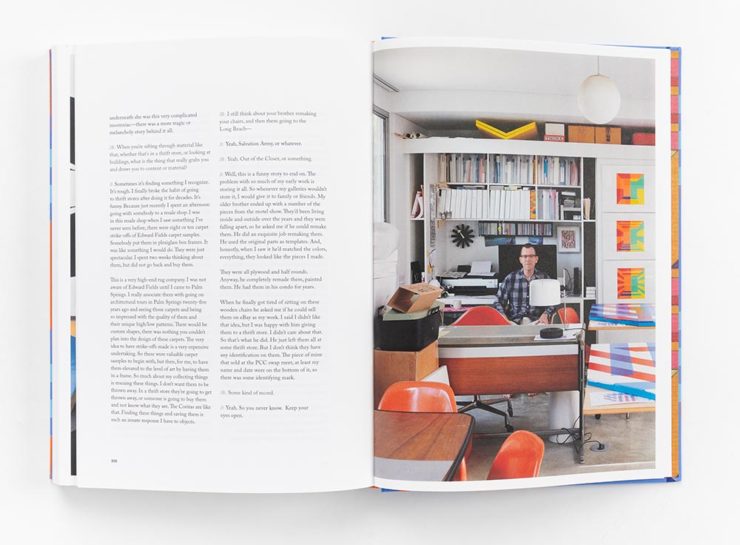
Book design by David Chickey and Mat Patalano.

This series of three books not only have striking covers I’d not seen before but exceptionally competent interiors done on matte paper, a personal favorite. (Click through for more examples.) Excellent.

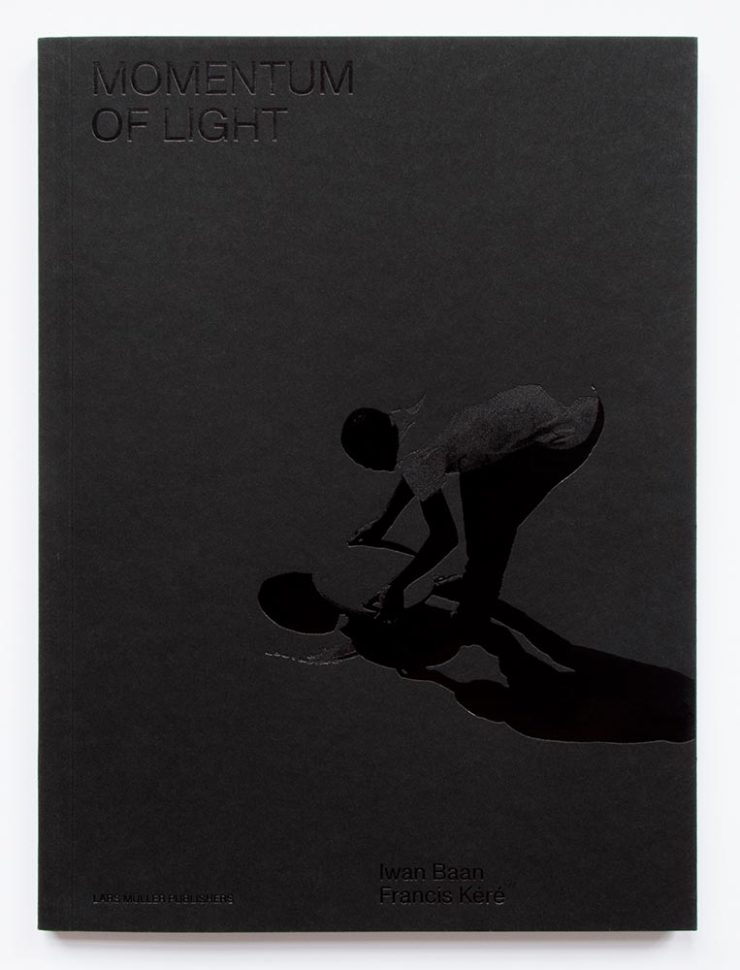
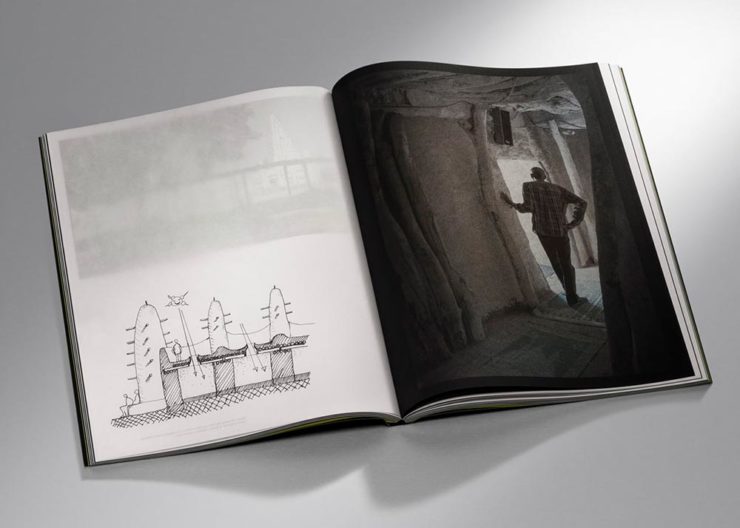
Design overseen by Haller Brun.

In this fascinating book, architectural photographer Iwan Baan and (Pritzker-winning) architect Francis Kéré “set out to capture how the sun’s natural light cycle shapes vernacular architecture.” While I may be slightly biased in terms of architecture and photography, this one’s a winner. (Read the AIGA’s take.)

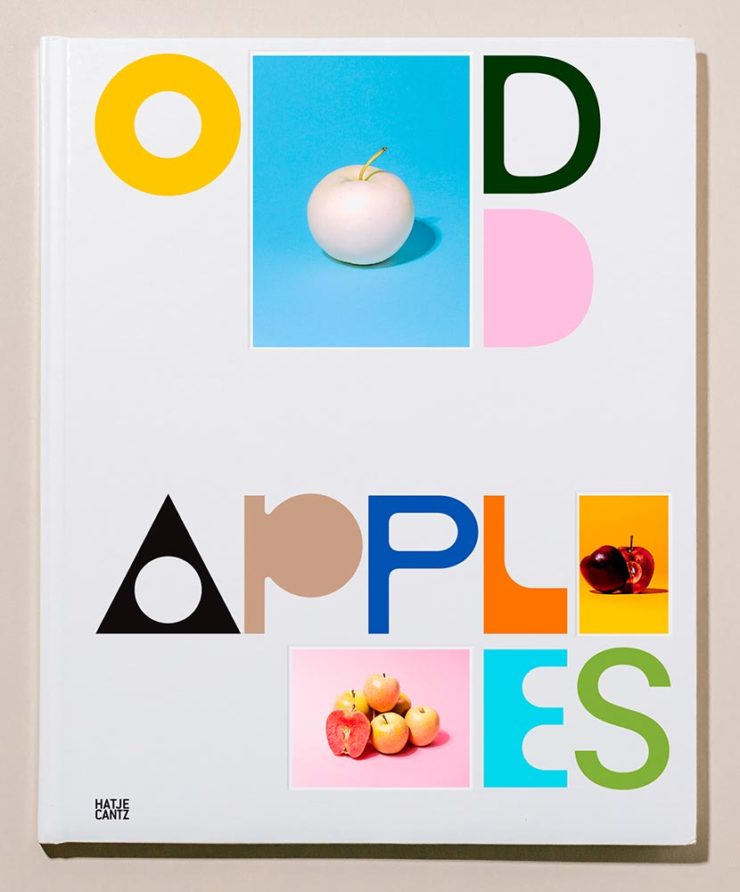
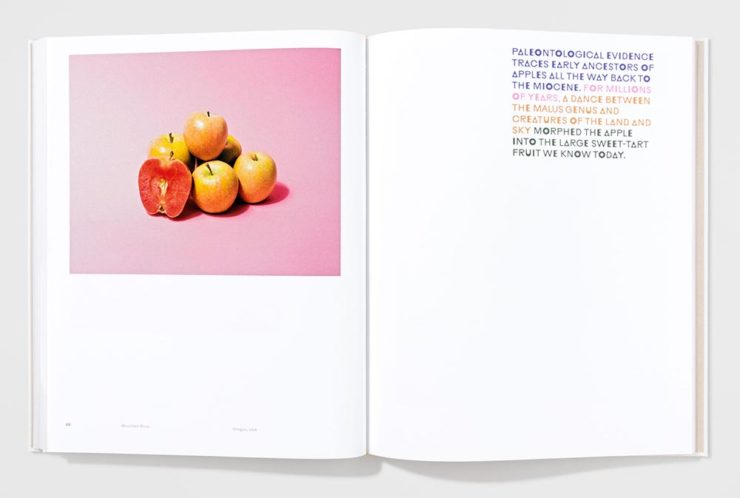
Cover by Andrea A. Trabucco-Campos.
Book design by Andrea A. Trabucco-Campos.

“A little overly precious,” the AIGA says … while awarding it a prize. Completely fresh, I say, with interesting content presented in a way that does considerably more than interest. Well done. (See them apples.)

Cover by Gary Fogelson and Ryan Waller.
Book design by Gary Fogelson and Ryan Waller.

“The type on the cover and in the body is perfect, in all ways and choices. The use of the gutter for captions is a great understanding of the art and a perfect way to save space. The page numbers too.”

Brian Johnson, AIGA Judge

This is one of those books that you have to say, “I wish I’d done that.” Great stuff. (See its individual entry.)

The Time Formula. Cover by Honza Zamojski.
Book design by Honza Zamojski.

There always seems to be some projects that violate book design “rules” — this one doesn’t have a title on the cover, has page numbers in the gutters, and more. Yet this book, about a sculpture project, makes for interesting viewing indeed. (See more.)

Last, we have a couple that are only covers:

Cover by Janet Hansen.

This was considered for my favorites of 2021 (and made it onto others’ lists). I’m glad to have been given the chance to call it out. Excellent in its simplicity. (See the AIGA entry.)

Last, but certainly not least:

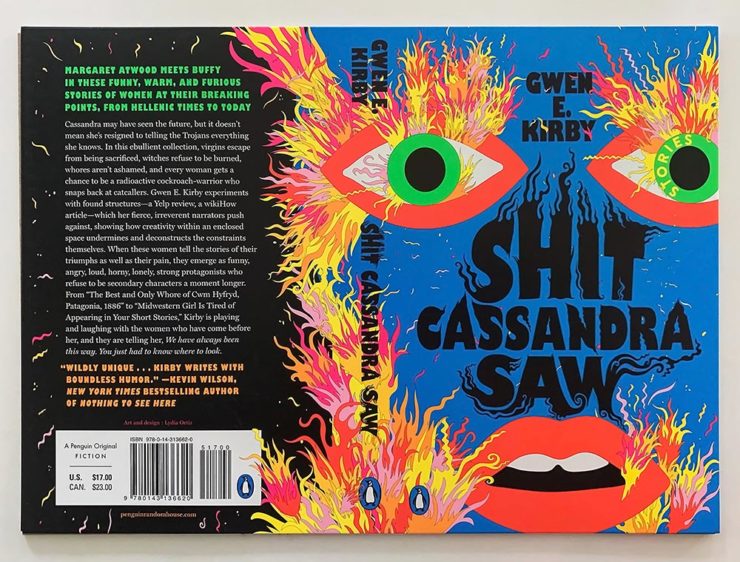
Cover by Lydia Ortiz.

Another advantage of this competition: seeing more than the front cover. And this cover, front, back, and spine, is so much more — especially in person: black plus four neon inks. Wow. (See the AIGA’s praise.)

Many, many more to choose from at AIGA: set aside a little time, wander through all of the projects chosen, and truly enjoy. (Via Locus.)

FYI: See last year’s 50 Books, 50 Covers, too.

Washington Post’s Best Book Covers 2021

WP Best Book Design 2021

The Washington Post has an article from book designer Kimberly Glyder with her favorite book covers of 2021. Her bio:

Kimberly Glyder’s studio specializes in book design, illustration and lettering. Her work has been featured in the AIGA 50 Books/50 Covers show, the Type Director’s Club Annual Exhibition, Print magazine, American Illustration, the American University Presses Book Jacket and Journal Show, and the New York Book Show.

Check her “best of” at the WP, and stay tuned for more 2021 lists next month.

50 Books, 50 Covers

50 Books 50 Covers

It’s time once again for AIGA’s 50 Books, 50 Covers:

This time-honored competition aims to identify the 50 best-designed books and book covers. With 696 entries from 36 countries, the juror-selections from this year’s 50 Books | 50 Covers of 2020 competition exemplify the best current work from a year marked by unparalleled change.

Picking favorites from this list is always fun, and often includes books and/or covers that I haven’t seen before — especially 2020, when seeing things in person was often … difficult. So without further ado (in no particular order):

Accidentally Wes Anderson

The unique destinations of Accidentally Wes Anderson. This 50 Books item catches the eye with the cover and the photographs carry you inside and to places heretofore unknown. Great stuff. Design by Mia Johnson.

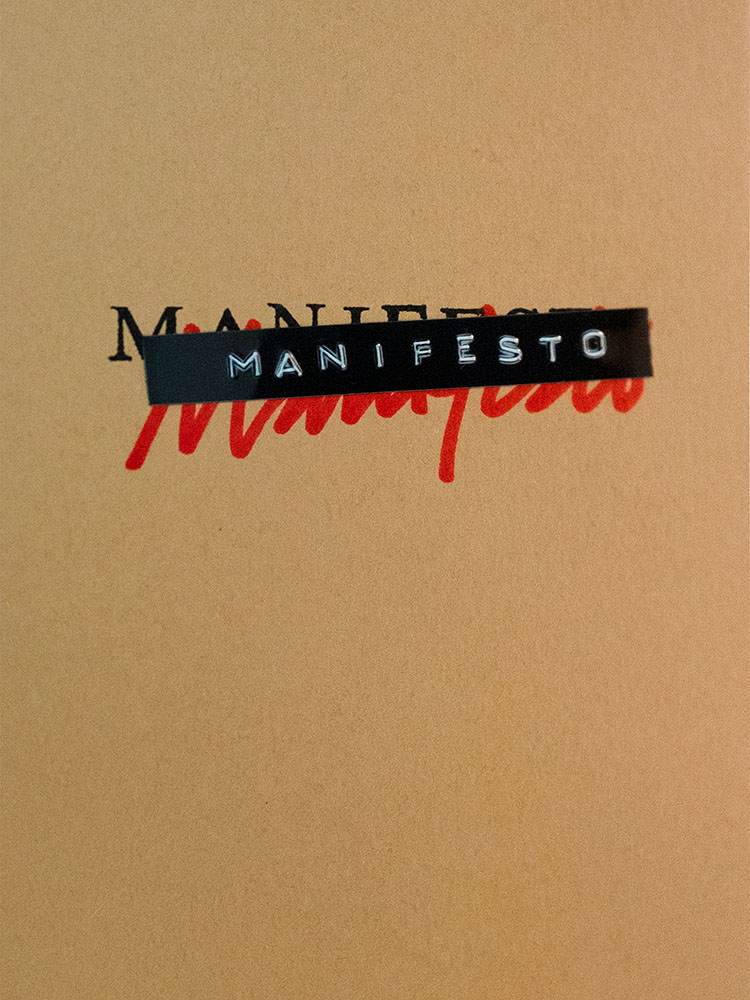
Manifesto - Cover

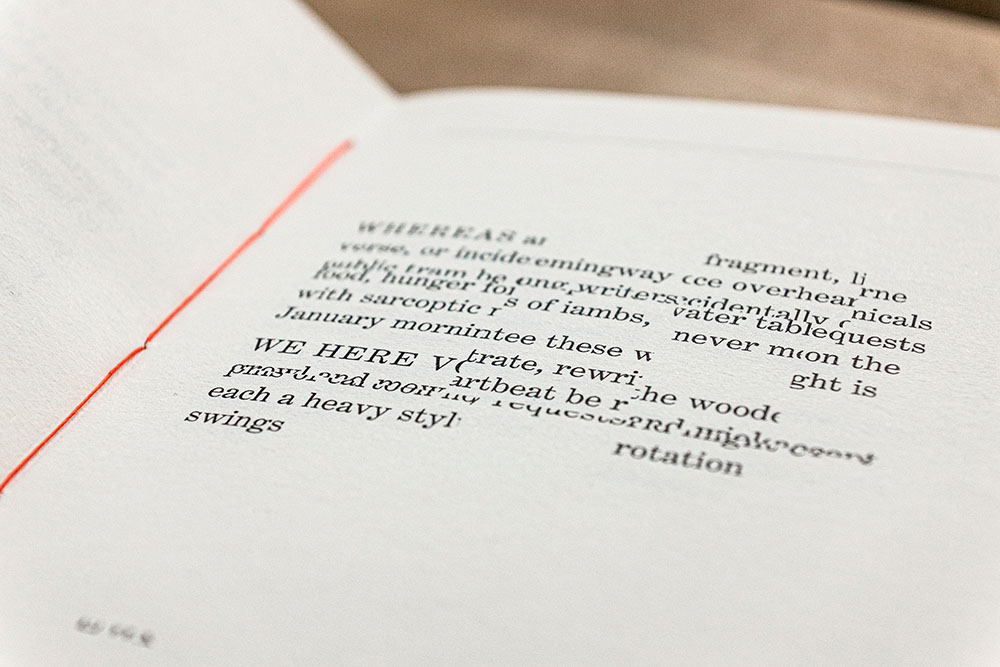
Manifesto is more than meets the eye, even though the cover does an excellent job leading you in. It’s easier to quote the existing description than write one, so: “The opening pages contain an original text employing the sort of bombastic rhetoric traditionally associated with the manifesto genre. The typeset text is then cut up and reassembled, repeating throughout the book, each iteration becoming source material for subsequent cut-ups. The project takes a critical approach to book arts to explore authorship, readership, and the materiality of language.” Yeah:

Manifesto - interior

It’s tiny, too: 4.125 by 6. The design, by Victor Mingovits, is anything but. Well done!

DR. ME

Not Dead of Famous Enough, Yet compiles 10 years of work from a design firm into one place, with this surprisingly modest cover. DR. ME, as the duo of Ryan Doyle & Mark Edwards became known, not only do quality work, they know how to stitch together a quality book — to a point where they picked up a prestigious award. See more.

Talking Animals

Talking Animals violates one of my usual cover-design rules: it’s not immediately apparent which title word is first. Nonetheless, it’s eye-catching enough to warrant an exception — and a 50 Covers award. Design by Na Kim.

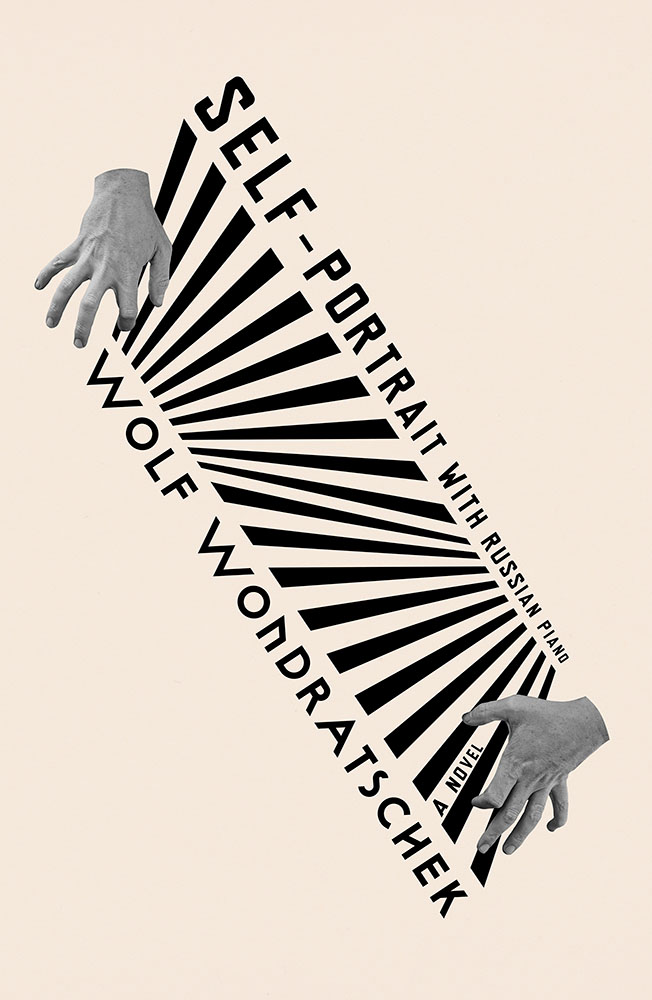
Self Portrait with Russian Piano

Na Kim makes another appearance with Self Portrait with Russian Piano. Kudos for something that’s equally eye-catching yet about as completely different as humanely possible — talent, defined.

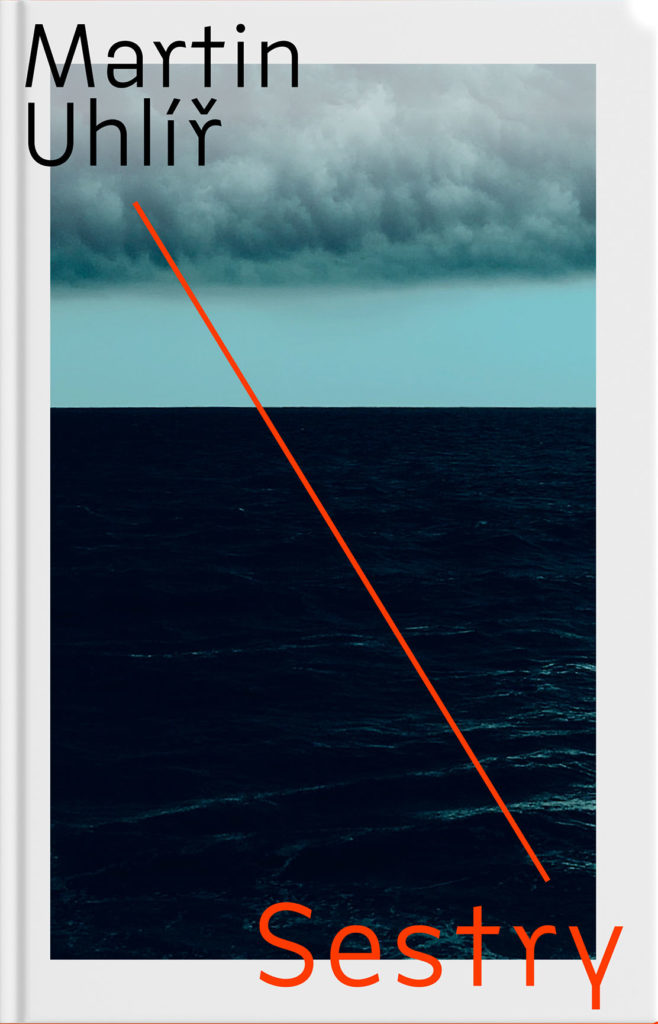
Sestry

“Eye-catching and mysterious,” says the entry for Sestry. “Oppressive and mysterious,” says the description. Both work — it’s certainly mysterious enough to catch your attention, grab it off the shelf, and investigate further. Design by Jan Šabach.

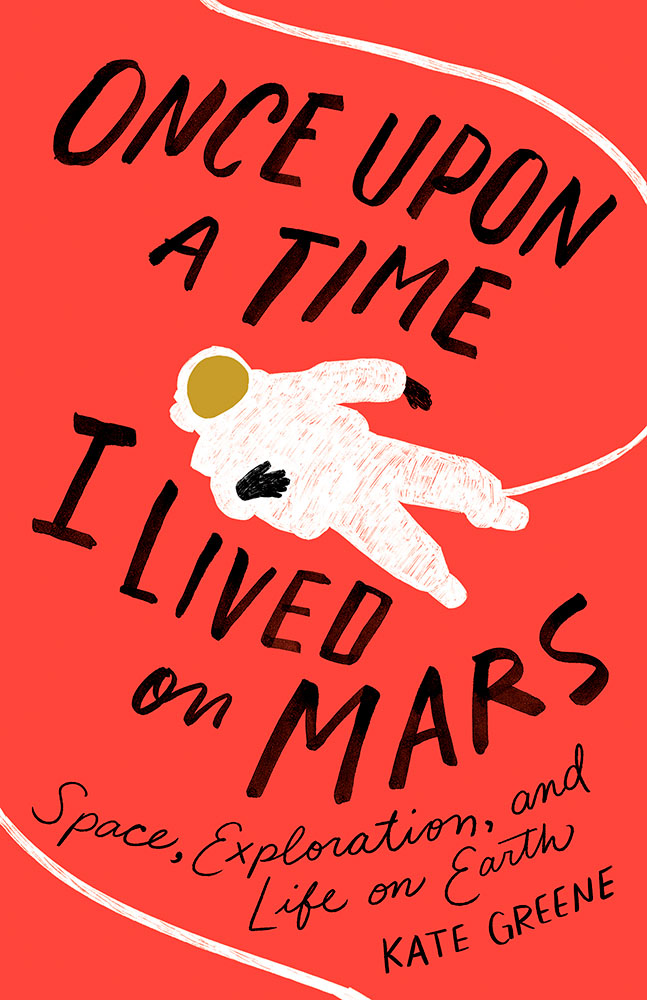
I Lived on Mars

Once Upon a Time, I Lived on Mars: Space Exploration, and Life on Earth is a loooooong title/subtitle combination. It’s something that, as a cover designer, you dread — but Johnathan Bush knocked it out of the park with this hand-lettered illustrated piece that’s 180 degrees from where you’d expect.

The Turn of the Screw is probably my favorite of the whole collection:

Turn of the Screw

Almost simplistic … until you really look at it; the kind that makes you think, “I wish I’d done that.” Fantastic work by Kaitlin Kall.

Lastly, two covers previously mentioned here:

Verge

Verge, where unexpected choices lead to great new places here, especially with the yellow band overlaying the wolf. So, so good. Design by Rachel Willey. And:

Zo

Zo, which uses illustrations to huge effect — but this time with a huge typography effect to go along with it, and lo, it works. Great design choices by Janet Hansen.

Again, see the whole list at AIGA: 50 Books, 50 Covers. Props to Hyperallergic for the heads up.